




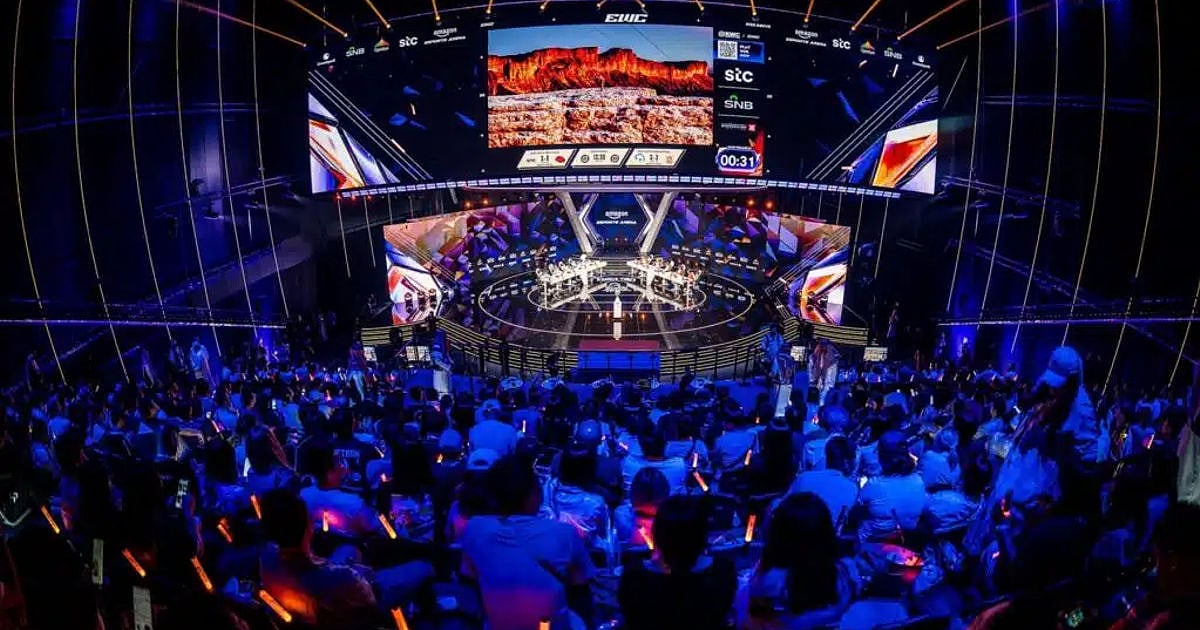
Highlights
- The Esports World Cup Foundation secured $120M in sponsorships, funding a $290M move to host the 2026 Esports World Cup in Paris.
- France expects a $700M economic boost from the event, providing logistical support to tap into the massive 3.32B global gaming audience.
- The foundation utilizes a tiered partnership model and self-financing to fuel growth in the booming $5.13B global esports market.
The Esports World Cup Foundation has just pulled in a staggering €106 million USD ($120 million) in sponsorship revenue for 2025. This record-breaking commercial haul is fuelling their next massive leap: a confirmed €250M ($290M) investment to bring the highly anticipated 2026 Esports World Cup to Paris, France. During the recent Choose France summit, French authorities celebrated this massive influx of cash.
While the French government is not handing over any direct financial funding for the tournament, they are rolling out the red carpet through a special interministerial task force designed to fast-track visas, handle marketing, and secure venue access. For Paris, the payoff is expected to be huge. The government anticipates the 2026 tournament will generate around €600M ($700M) in indirect economic boosts, bringing a massive wave of tourism, hospitality spending, and new local jobs to the region.
Sponsorships remain the absolute lifeblood of esports revenue, and the foundation's latest numbers prove just how critical brand partnerships have become for major tournament organizers. In a recent interview with the Sport Business Club, the Foundation's Chief Commercial Officer, Mohammad Al Nimer, broke down how they hit that $120M milestone. The secret is a tiered partnership model.
Brands wanting to be "Global Partners" invest several million euros for worldwide visibility across all broadcast assets, while "Regional Partners" zero in on specific, massive gaming markets like China or the Middle East, as per EsportsRadar.
EWC/Official Site
Funding Pipelines: Self-Financing and Saudi Support
Right now, deals specific to the French market are a bit more accessible, typically sitting in the hundreds of thousands of euros. This lower investment level is simply due to the tighter runway of time before the Paris event kicks off. Even so, Al Nimer noted that French brands and local sponsorship agencies are already lining up with strong interest to get involved with the local activations.
When it comes to pulling off a state-of-the-art Paris broadcast with massive prize pools, Al Nimer made it clear that the event is completely self-financed by the foundation through two main pipelines. The first is government support from the Kingdom of Saudi Arabia, though he specifically clarified that this money does not come from the country's Public Investment Fund (PIF). The second is a massive commercial revenue machine, which bundles the newly secured sponsorships, media rights, ticket sales, and merchandise into one incredibly lucrative package.
This financial boom isn't happening in a vacuum; it mirrors the explosive growth of the entire video game world. The global esports market has surged to an estimated $5.13B in 2026 and continues to see aggressive, double-digit annual growth. With the broader gaming market now valued at over $247.10B and charging toward an estimated $650B by 2035, corporate sponsors are waking up.
In 2026, the global gaming and esports audience will have reached a mind-blowing 3.32B people. Brands are eagerly shifting their traditional advertising budgets to capture this highly engaged younger audience, proving that esports has firmly evolved from a niche venture into a dominant, primary driver of global sports entertainment.