




Highlights
- Sweden captures 20% of global PC gaming revenue, with Stockholm driving 16% of the market.
- Hits like R.E.P.O. and Battlefield 6 have pushed the sector's value to $19 billion.
- Record revenues haven't boosted jobs as investors prioritize profit over expansion
United States-based studios have faced a notable drought, failing to secure a Game of the Year award since The Last of Us Part 2 in 2020. In contrast, Sweden is currently outperforming much of the global market. According to a new report from Alinea Analytics, this nation of just over 10 million people has secured 20% of revenue on the world's largest PC gaming platform. This dominance is particularly concentrated in the capital city of Stockholm, which alone accounts for a staggering 16% of that market share.
The financial resilience of the sector is backed by robust data presented by Dataspelsbranschen (Swedish Games Industry). In 2024, domestic revenue climbed to SEK 37 billion (approximately $4 billion USD), marking a solid 6.4% year-on-year increase. When foreign subsidiaries are included, the total revenue for the Swedish industry reached a massive SEK 73 billion ($7.7 billion USD). Alinea Analytics estimates the total gaming sector is now worth around $19 billion, a valuation driven by high returns per studio rather than just volume.
This surge is fueled by an incredibly high "hit density,” meaning Swedish developers are producing a disproportionate number of successful titles relative to the number of active studios. In the 2024-2025 window, Swedish developers delivered five of Steam's global top 10 bestsellers.
A standout performer was R.E.P.O., developed in Uppsala, which reportedly represented 3% of all games sold on Steam in 2025. Uppsala was also home to the latest Indiana Jones and the Great Circle title from MachineGames, contributing to the First-Person Shooter (FPS) market.
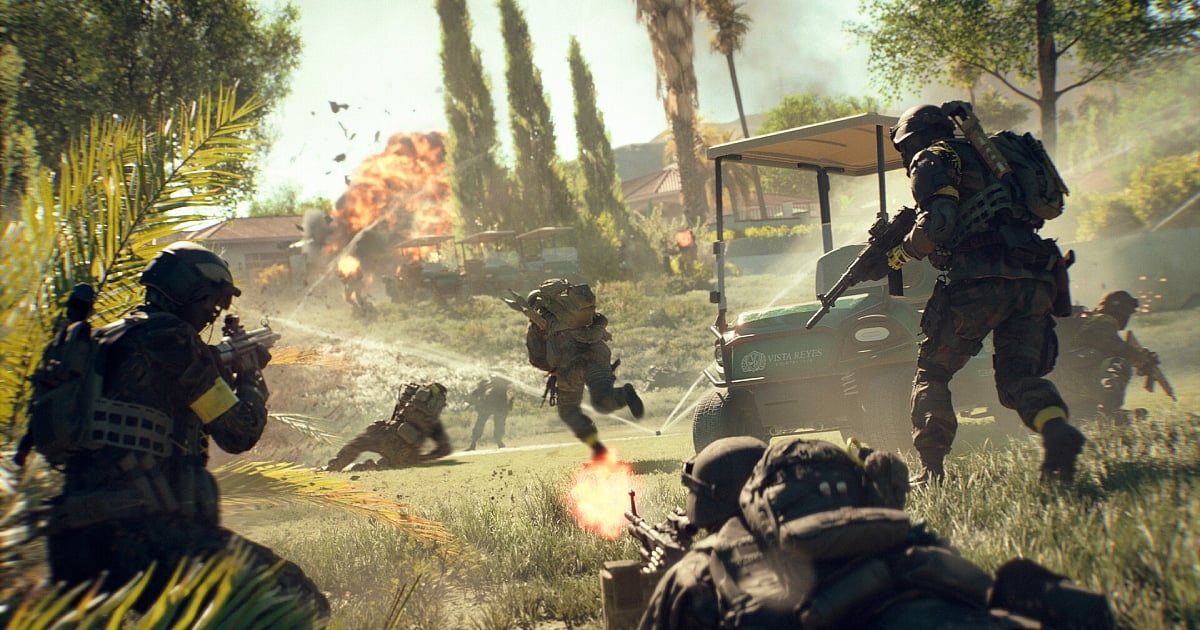
The success of the region is widespread across various cities. While Stockholm led revenue with heavy hitters like Arc Raiders, DICE’s Battlefield 6, Split Fiction, and Peak, other hubs provided critical successes. Skövde produced Abyssus and RV There Yet, the latter being one of Steam's best-selling Indie games. Meanwhile, Gothenburg developers released The Midnight Walk, Keep Driving, and Lost in Random: The Eternal Die.
Titans, Live Service, and Economic Realities
Established titans continue to provide the financial backbone for this growth. The top five companies by revenue, King, Mojang, Paradox Interactive, Embracer Group, and EA Dice, have diversified their portfolio across mobile, PC, and console markets.
Live-service titles like Helldivers 2 and the upcoming The Division entry from Ubisoft’s Massive studio are expected to prop up revenue further. Despite these record-breaking figures, the industry faces the same consolidation trends seen globally. While the number of game companies in Sweden rose to 1,101 in 2024, employment numbers remained largely flat.
Investors have adopted a "profit over growth" mentality, resulting in layoffs, though 230 new positions were filled in the same timeframe. Nevertheless, the sector now accounts for over 3% of Sweden’s total service exports, proving that even in a turbulent economic climate, Swedish gaming remains a critical pillar of the modern economy.