



Highlights
- FIFA World Cup 2026 song Goals brings Lisa, Anitta, and Rema together in a K-pop–Latin–Afrobeats fusion that received mixed fan reactions.
- The song is being compared to classics like Shakira’s Waka Waka, with opinions split between nostalgia for older anthems and acceptance of a new contemporary sound.
- The debate showcases a shift from universally appealing football-specific World Cup songs to more experimental, globally fused pop-driven tracks further influenced by K-pop.
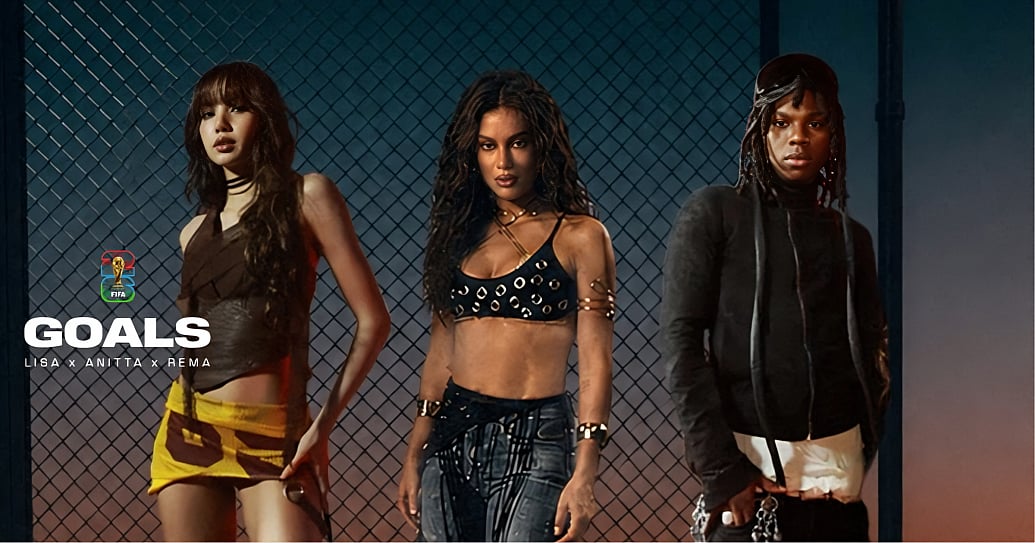
K-pop sensation BLACKPINK’s Lisa, Brazilian superstar Anitta, and Nigerian rapper Rema have come together for Goals, the official FIFA World Cup 2026 song. The song that was released on Thursday (May 21, 2026) blends flashy choreography, street football visuals, and electronic beats. It is produced by Grammy-winner Cirkut alongside Bava, PinkSlip, and Tropkillaz, featuring a fusion of Latin pop, K-pop, and Afrobeats.
Speaking to Billboard regarding Goals, Lisa said that it was “exciting” working on the song and highlighted that “music always unites people across the world.” She further stated that it “has been an honor to work with Anitta and Rema” on this song. Notably, Goals has gained 2,650,360 views in 13 hours according to YouTube’s metrics. Yet, global audiences continue to have split opinions regarding the track's suitability for the world’s largest sporting stage.
Lisa’s FIFA Song Divides Fans Amid Shakira’s Waka Waka Comparisons
Although many people have liked the upbeat nature of the song, it remains overshadowed by the enduring legacy of Shakira’s 2010 FIFA World Cup track Waka Waka. Fans online have been debating how a song that does not showcase the essence of the larger-than-life scale of football can be a part of the World Cup. The sport, notably, has been a source of freedom, escape, and a form of expression for many countries in Latin America and Africa.
As many people have viciously called Lisa’s World Cup song a “downgrade,” some have come to her defense by highlighting that the “modern” generation is “moving past the days of generic, Euro-centric stadium pop.” In fact, netizens have also compared the song to Jungkook’s Qatar World Cup track titled Dreamers (2022), highlighting the reliability of the tune more than Lisa's.
Screen Captured from X
The comparison between Lisa and Jungkook has become more cutthroat since both artists are part of internationally well-known groups, BTS and BLACKPINK. Fans of both groups, ARMYs and BLINKS, recently fought against each other online regarding the precise wording used to describe the artists' status in FIFA's 2026 World Cup entertainment lineup announcements.
Screen captured from Instagram
Is K-pop Reshaping Global Sports Music Culture?
K-pop has recently leaped beyond the “K” and is experimenting with different kinds of music and its listener base to try to incorporate them into its production. The industry is potentially trying to gain a greater share of the world’s entertainment industry. An example of such fusion is Arirang of BTS, which tries to fuse traditional Korean music (albeit short in length) with contemporary music, helping to disseminate the Korean identity and culture through their production.
From what it looks like, Lisa’s World Cup song aspires to capture that same level of cross-cultural, global momentum. The song, including her part, seems very close to the general K-pop genre, beginning with a piano version of a typical Latin tune, and ending with a high-end rap from Rema. It has a very concert-like vibe overall. With the global popularity of K-pop and its increasing tie-ups with the sports sector, the 2026 FIFA World Cup song looks like a product born out of an integrated live entertainment economy, instead of a title track that is purely made for the World Cup.
Nevertheless, for the generation of people who have grown up listening to Shakira's Waka Waka (2010) and La La La (2014), or Latin singer Chawki’s songs like Time of Our Lives, Magic System, and Magic in the Air, the song might come off a bit strong. Even as the market moves towards hyper-globalized, genre-fluid anthems, audiences remain anchored by the nostalgia of legendary songs like K'Naan’s Wavin’ Flag, whose popularity was further fueled by Coca-Cola campaigns. As sports entertainment enters a highly digitized era, the ongoing debate regarding the title track proves that actual global scale needs something more than just marketing clout and industry dominance (or, integration) to become a permanent cultural phenomenon.