


Highlights
- Record-breaking tourist spending is pushing South Korea to become one of Asia's strongest retail destinations.
- From trendy apparel to K-beauty to luxury items depict how new spending patterns are emerging – especially from Chinese travelers.
- The spending boom shows how South Korea is utilizing its cultural popularity to gain economic power.
Global tourist spending in South Korea has smashed historical highs, crossing the ₩2 trillion ( $1.30 billion USD) mark in a single month for the first time. Data analyzed by the Korea Tourism Organization said that foreign visitors spent ₩2.12T (~ $1.38B) via credit cards this May, marking a 67.1% rise year-on-year. Notably, this is the sharpest growth rate recorded since 2023.
How Tourist Spending is Reshaping South Korea's Retail
While a 200% spending burst by Chinese visitors boosted the macro-economic baseline, analysts indicate a deeper foundational shift within the data: a clear dichotomy of consumer habits. The percentage showcases that South Korea has converted itself from a passive sightseeing destination into a highly monetized retail playground, driven equally by high-end luxury buyers and a youth crowd, who are eager to consume local lifestyles in real time.
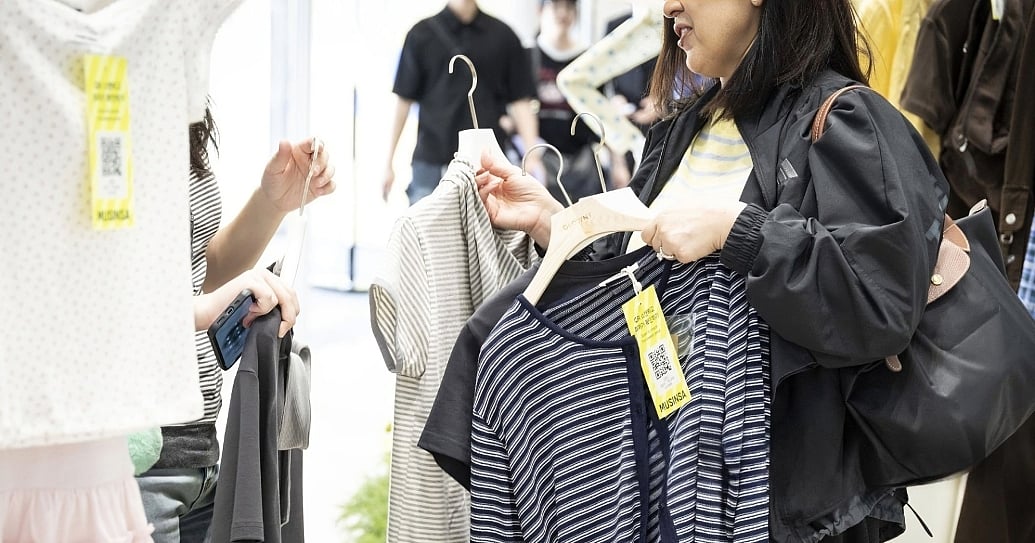
For younger travelers, the itinerary nowadays focuses more on experiencing the daily routines of Seoul’s tastemakers. For instance, in trendy and commercial places like Seongsu-dong and Myeong-dong, “gorpcore” outdoor hiking gear is being worn as urban streetwear. This clothing pattern has driven an 84.5% spike in sports apparel sales, according to The Korea Times. As for this cohort, they are heavily prioritizing experiential retail, queuing for customized footwear at special flagship stores, while also looking for limited-edition pop-up character merchandise, which bolstered toy and entertainment spending by 191%.
K-Beauty, Luxury, and the New Tourist Spending Wave
The global tourist spending is also visible in South Korea’s booming medical, as well as K-beauty ecosystem as well. Notably, drugstore expenditure skyrocketed by 206%, unveiling a highly systematic pipeline. In this pipeline, tourists visit local dermatology clinics for specialized skin treatments, then instantly head to pharmacies to stockpile medical-grade skin-repair topicals.
On the other hand, wealthy travelers are spending at a much higher level. The effect is visible in southern Seoul's affluent Cheongdam-dong district, where watch and jewelry sales climbed 135%. Boosted mainly by Chinese buyers who are trying to find items that are sold out everywhere else in the world, the average single purchase in this luxury bracket hit a mark of ₩12.15M (~ $7,902.26).
From luxury watches to local streetwear, this staggering wave of tourists depicts how South Korea has turned retail into a powerful economic tool using its cultural popularity. Global visitors are no longer just tourists; they have become potent boosters of highly specific areas of the market.