




Highlights
- Take-Two CEO Strauss Zelnick jokes that AI should replace Elon Musk before creative workers.
- Zelnick sees AI as a productivity tool for mundane tasks, not a replacement for human originality.
- He argues that technological shifts historically boost GDP and create more employment long-term.
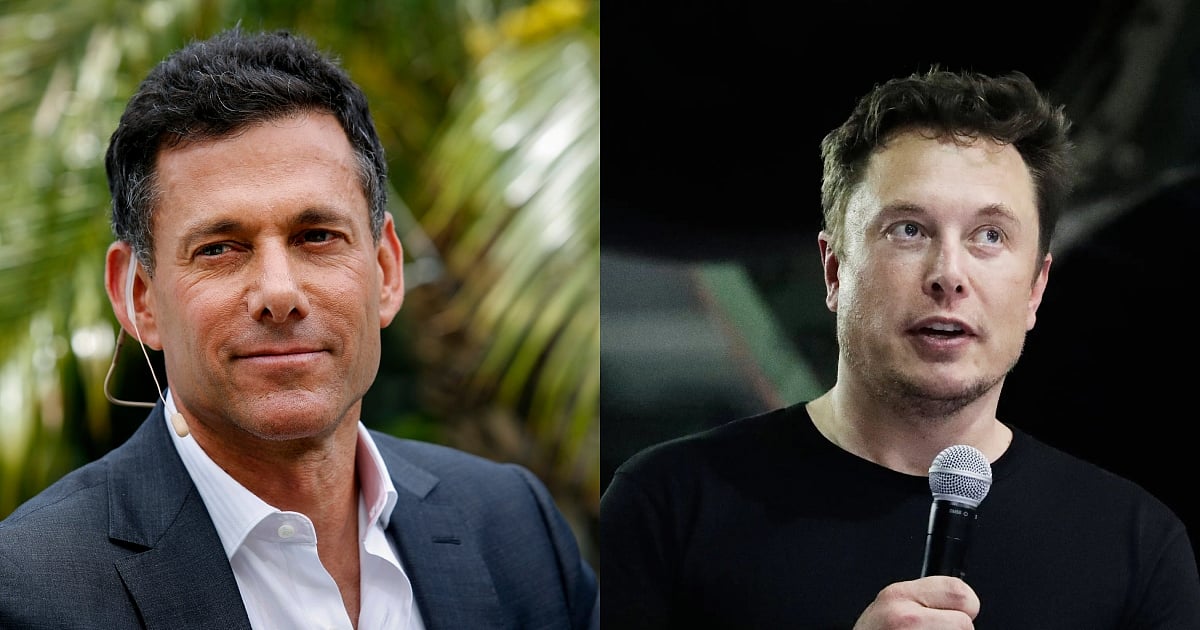
The head of the gaming empire behind Grand Theft Auto isn't sweating the AI takeover. In fact, Take-Two Interactive CEO Strauss Zelnick thinks that if artificial intelligence is truly designed to replace human labor, it should set its sights on a much bigger target: Elon Musk. Speaking at the Semafor World Economy 2026 panel, Zelnick dismissed the widespread doom-and-gloom narrative surrounding AI in the creative sector. Instead of worrying about the job security of his artists and developers, Zelnick argued that highly resourced executives are the most logical candidates for replacement, pointing directly at the Tesla and xAI boss to make his point.
Addressing the workplace anxieties brought on by the AI boom, Zelnick took a playful jab at Musk’s famously grueling schedule. "If AI were going to get rid of employment, the richest man on Earth, Elon Musk, knows a little something about AI, last time I checked," Zelnick said during the panel. "He has unlimited financial resources, and he has unlimited human resources, and he has, apparently, an unlimited amount of ideas. The man works 20 hours a day. If AI were going to take anyone's job, wouldn't it take his job? Wouldn't that be like job number one for AI to take? Why is he so busy?"
Zelnick even joked to the audience that Musk's endless output might mean the billionaire is actually a computer simulation himself, adding that if he had to choose one person who was a simulation, Musk would be his number one choice, as per PC Gamer.
The confidence creates an ironic contrast with Musk's own warnings. During the VivaTech 2024 conference, Musk predicted AI could eventually eliminate most human jobs, suggesting it wouldn't be a bad thing if society adopted a universal high income. Zelnick, however, flips that script, suggesting the endless administrative workloads of AI evangelists make them the perfect candidates for automation, while the human creativity that AI lacks will keep artists employed.
Rockstar Games
Automating Mundane Game Development
When it comes to developers at studios like Rockstar Games and 2K, Zelnick sees AI as a powerful heavy lifter rather than an executioner. He explained that AI is perfectly suited to handle mundane, repetitive coding and design tasks.
To illustrate this, Zelnick looked back at the evolution of game development. He noted that when he started in the business in 1993, an artist had to create individual blades of grass, otherwise a digital lawn would just look like green concrete. Today, an artist can just press a "lawn button" and AI handles the busywork on steroids. This doesn't mean artists are out of a job; it means they no longer have to care about the grass and can instead focus their energy on designing incredible, high-quality creatures and worlds.
We have already seen this practical application of machine learning cutting out busywork across the entertainment industry. For example, World of Warcraft franchise director John Hight previously noted their team is prepared to use machine learning to automate certain processes, even if they aren't buying into the full generative AI rush. Similarly, the animators behind 2018's Spider-Man: Into the Spider-Verse utilized machine learning to help seamlessly redraw thousands of comic book ink lines on existing frames.
Defeating the "Creature Button" With Human Originality
But what happens when AI evolves to have a "creature button," threatening to swallow up even more complex artistic jobs? Zelnick remains unfazed. He argues that AI is inherently backward-looking because it relies strictly on existing data. To create massive cultural hits, developers need to be forward-looking, and data-driven AI simply cannot match human originality in storytelling or property development.
However, pushing back against recent industry layoffs tied to tech shifts, Zelnick said that the history of technology proves it ultimately creates more employment. Technology creates productivity, productivity boosts GDP, and a higher GDP creates jobs.
"Remember the paperless office?" Zelnick asked. "We were promised that because of digital technology, we'd have a paperless office. We use more paper in offices today than ever before." To round it all off, Zelnick asked one final question: Why is he working harder than ever despite totally accepting AI into every part of his life?
Perhaps it's because many current AI tools aren't actually meant to help productivity at all. Instead, they often act as a Trojan horse, worming their way into every part of our day regardless of efficiency, simply because they are developed by people who have bet too much money on their success. For now, at least at Take-Two, it seems the human touch remains the most valuable asset in the room.