



Highlights
- Honor of Kings (HoK) calls India a priority market, backing its launch with a long-term ecosystem strategy.
- HoK entered India with HOKWC slots, city tours, and INR 1 Cr in creator incentives.
- The game is focusing on localization, accessibility, and grassroots esports to grow beyond battle royale dominance.
Honor of Kings (HoK) officially entered India on March 11, 2026, nearly four years after its global launch in June 2022. The game is entering one of the world's most competitive and fragmented mobile gaming markets with a strategy that stretches far beyond simply launching a title.
For most global games, entering the Indian market often means local servers, marketing campaigns, and partnerships. For HoK, the approach appears broader. The Tencent-backed title is positioning India as a long-term ecosystem play, built around esports infrastructure, creator incentives, student communities, grassroots tournaments, localized in-game content, and hardware accessibility.
In an interview with Outlook Respawn, the HoK team outlined why India has become a priority now. They also detailed how the game plans to tackle a market dominated by battle royale titles like Battlegrounds Mobile India (BGMI), and what they see as the foundation for sustainable growth in one of mobile gaming's fastest-growing regions.
“India is one of the most exciting gaming markets globally, driven by a highly engaged mobile-first audience, growing esports participation, and a rapidly evolving creator ecosystem,” the team said.
That statement frames the company’s broader thinking. India has become one of the largest mobile gaming audiences in the world, but it remains uniquely difficult to crack. Player habits vary sharply across regions. Languages shift from state to state. Device quality can range from entry-level smartphones to premium flagships, often shaping player retention as much as gameplay itself.
For HoK, entering now was less about speed and more about readiness. “We wanted to ensure that when we entered this market, it would be with meaningful and authentic initiatives, content, and programs that celebrated our Indian players,” the company said. “Our focus is on growing alongside this highly passionate community for the long term.”
That long-term framing now defines every part of its rollout.
Honor of Kings India's Localization Strategy Goes Beyond Devara
For many global games, localization often starts and ends with translated menus or region-specific cosmetics. HoK says its India roadmap is intended to go much deeper.
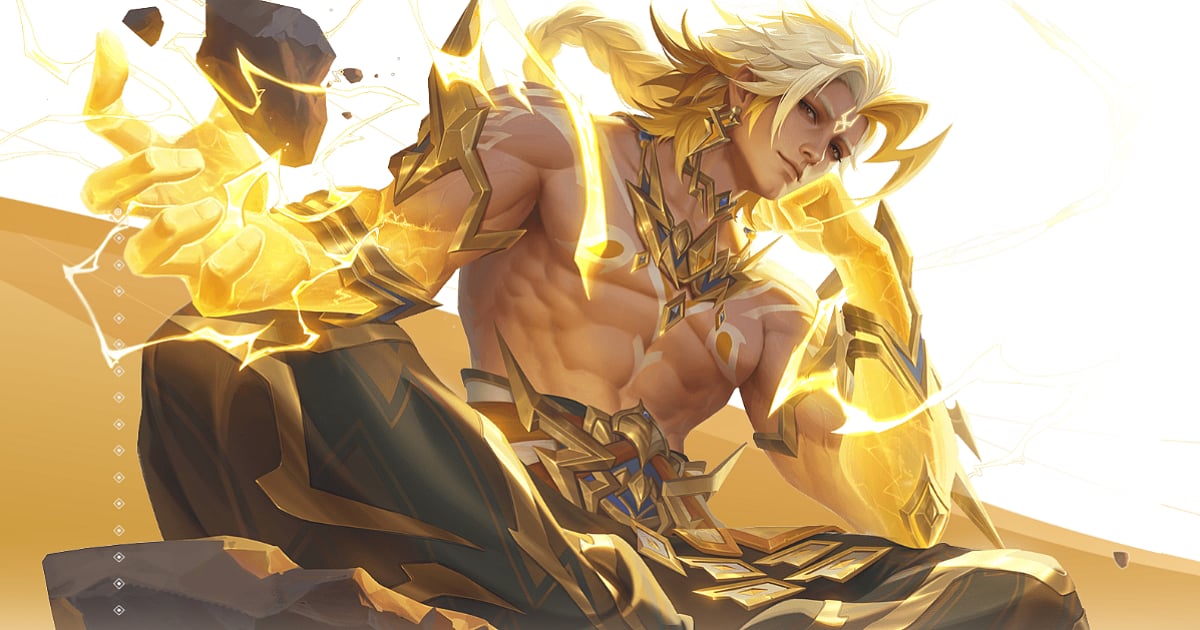
The June 2026 release of Devara, an India-inspired hero, marked the most visible part of that push. But the publisher says Devara is only the beginning.
“Our localization approach goes beyond a single hero or cosmetic integration, including the campus events and the incentive program for creators,” the HoK spokesperson explained. “India is a highly diverse market, so our focus is on building a broader player experience that reflects local player behavior and preferences.” That broader vision reflects India’s complexity, as the company acknowledges that India’s diversity requires more than symbolic additions.
One of the clearest examples of that came through its Hindi voice-line co-creation campaign, which invited players to contribute culturally rooted Hindi lines for Devara’s release. The selected entries were later integrated into the game.
That process effectively made players part of the content pipeline, not just consumers.
“Beyond this, we are committed to creating culturally relevant content, creator collaborations, campus initiatives, city tours, grassroots tournaments, and mobile-first optimization for a wide range of devices to ensure Indian players feel genuinely represented within the Honor of Kings community.” That commitment suggests HoK is attempting to localize at the ecosystem level rather than simply at the product level.
Day-One Esports Infrastructure Signals Long-Term Intent
Perhaps the strongest indicator of HoK’s India ambitions is how aggressively it has approached esports from launch.
Rather than wait for player adoption before introducing structured competition, the game launched with two Indian qualification slots for the Honor of Kings World Cup (HOKWC) at the Esports World Cup 2026 (EWC 2026). It also rolled out the KINGS' Arise City Tour across Mumbai, Bengaluru, and Delhi alongside this. That level of immediate competitive integration is unusual for a market joining years after global rollout.
“We see esports as an important pillar of long-term community building rather than something introduced later,” the company pointed out. That line conveys how HoK sees competition as a foundational part of player engagement, not just a late-stage monetization or retention layer.
The company believes India already has the audience for it. “India already has a highly competitive and passionate gaming audience, and we wanted to make sure players have clear progression pathways from day one, from grassroots participation all the way to the international stage.” That progression ladder matters. It gives players an immediate sense of direction, connecting local competition to global stakes.
“The two slots of KWC at EWC 2026 and the KINGS’ Arise City Tour across Delhi, Mumbai, and Bengaluru are our way of introducing India to Honor of Kings’ global competitive ecosystem from the very beginning, not as an afterthought, but as a priority market with its own pathway, its own stage, and its own stories to tell,” the HoK spokesperson noted. “As the community grows, we look forward to deepening our investment in India’s esports scene over time.”
That framing is notable because it positions India not as an extension of Southeast Asia’s ecosystem, but as a standalone competitive market.
Stadium-Scale Ambitions Remain Under Consideration
“India has enormous potential as a live esports and gaming-entertainment market.” While city tours and qualification slots signal strong competitive investment, HoK says it is not yet rushing toward stadium-scale productions.
That potential is clear. India’s live gaming events have grown significantly over the past few years, with battle royale tournaments drawing large audiences both online and offline. The Battlegrounds Mobile India Pro Series 2026 (BMPS 2026) ended with record numbers as GodLike Esports secured its first BMPS title in Jaipur on June 21, 2026. The Grand Finals peaked at 729K concurrent viewers, surpassing the previous national record of 600K set during the Battlegrounds Mobile India Series 2026 (BGIS 2026). Meanwhile, more than 12K spectators attended the three-day LAN at the Jaipur Exhibition and Convention Centre (JECC).
However, HoK says its current priority is building local foundations first. “Right now, our immediate focus is on building strong grassroots engagement through campus initiatives, city tours, creator programs, and competitive pathways.” HoK’s team noted. “As the community continues to grow, we’ll continue evaluating larger-format experiences for Indian players.” That means the company is prioritizing density over scale, making sure there is a stable player and fan ecosystem before moving into larger venue-based events.
In the shorter term, that ecosystem will expand through Honor of Kings Open Series Split 6, which opens later in 2026 to Indian grassroots players. The series “will provide Indian grassroots players with an opportunity to participate in the tournament later this year,” the company disclosed.
Taking on BGMI and Free Fire with a MOBA-First Proposition
India’s mobile esports economy is heavily concentrated around Battlegrounds Mobile India (BGMI) and Free Fire (FF), while Mobile Legends: Bang Bang (MLBB) has already established an early foothold in the MOBA space. That battle royale dominance, however, has left limited room for Multiplayer Online Battle Arenas (MOBAs) to break into the top tier of India’s esports ecosystem.
HoK is entering that environment fully aware of the challenge, saying, “We recognize that India’s esports ecosystem has historically been dominated by battle royale titles.” Yet the company believes there is space for another competitive format. “We believe there is a growing appetite for strategic, team-oriented competitive formats.”
That is the game’s central pitch.
Rather than attempt to pull battle royale players directly into the game overnight, the company says its strategy is gradual. It describes HoK as a team-oriented competitive experience that emphasizes coordination, role mastery, and tactical gameplay depth.
“Our focus is on lowering barriers to entry through grassroots tournaments, creator education, campus competitions, and structured competitive pathways that help both players and organizations engage with the MOBA genre more organically over time,” said the HoK spokesperson. That approach may prove critical if it hopes to bring in top Indian organizations.
HoK Studio and Campus Series Expand the Creator Pipeline
Outside of esports, HoK is making one of its biggest India bets on creators.
The launch of HoK Studio in India includes over INR 1 Cr in creator incentives, but the company says its goal is broader than simple financial rewards. It has also signed Indian gaming creator Tanmay Singh, better known as Scout, as a brand ambassador. Additionally, Honor of Kings has appointed Nischay Malhan, widely known as Live Insaan (or Triggered Insaan), as its official Creator Ambassador for India as part of its broader creator-led expansion strategy. “HoK Studio is designed to support creators across multiple stages of their journey, including emerging creators from cities across India.” This fact is especially important in Tier 2 and Tier 3 cities, where gaming audiences continue to expand rapidly.
“Beyond financial incentives, creators can unlock benefits such as official traffic support, early access to upcoming content and updates, participation in creator missions and campaigns, and visibility opportunities across Honor of Kings channels,” the HoK team explained.
The company sees this as a sustainable system. “Our goal is to build a sustainable creator ecosystem where creators can grow alongside the game over the long term.” The same logic applies to students through the Honor of Kings Campus Series (HOKCS). “The Campus Series is intended to make competitive gaming more accessible at the grassroots level by creating entry points for college communities and first-time competitive players.”
The initiative combines online and offline competition to expand participation beyond major cities. The company added that gaming cafes, creator communities, and student-led gaming groups will play an important role in strengthening local engagement and building a competitive ecosystem.
Performance, Privacy, and Accessibility Remain Critical
Beyond content and competition, HoK faces two major practical concerns in India: data privacy and device performance.
As a Tencent-linked title, infrastructure scrutiny remains inevitable. "We take data privacy, compliance, and player trust very seriously.” The company says its operations remain aligned with Indian laws and regulatory requirements. “Our priority is to ensure Indian players have a safe, secure, and reliable gameplay experience while remaining compliant with applicable regulations.”
On the hardware side, the challenge is even more immediate. Players on lower-end devices have flagged performance issues during crowded fights, particularly in the 2 gigabyte (GB) to 4 GB RAM segment. “Performance optimization remains a major priority, especially in mobile-first markets like India,” the company stated.
The company also said it is continuously improving rendering efficiency, gameplay stability, and device compatibility. It added that optimization is an ongoing process and that player feedback plays an important role in prioritizing future improvements.
Likewise, accessibility, it says, remains central.
The company stated that competitive fairness should remain accessible to all players regardless of their hardware. That philosophy shapes its technical priorities. “The game is built to run smoothly across a wide range of hardware, from entry-level smartphones to flagship devices, so that a player’s skill, not their phone, decides the outcome of a match.”
That could ultimately be one of the most important factors in its India journey. “For India specifically, we’ve worked to ensure that even players on budget devices can enjoy stable frame rates, low-latency matchmaking, and the full competitive feature set.”
For HoK, India is not just another launch. It is a long-term structural test. If its ecosystem-first strategy works, it could establish a different model for how mobile MOBAs grow in a market long shaped by battle royale dominance.