Highlights
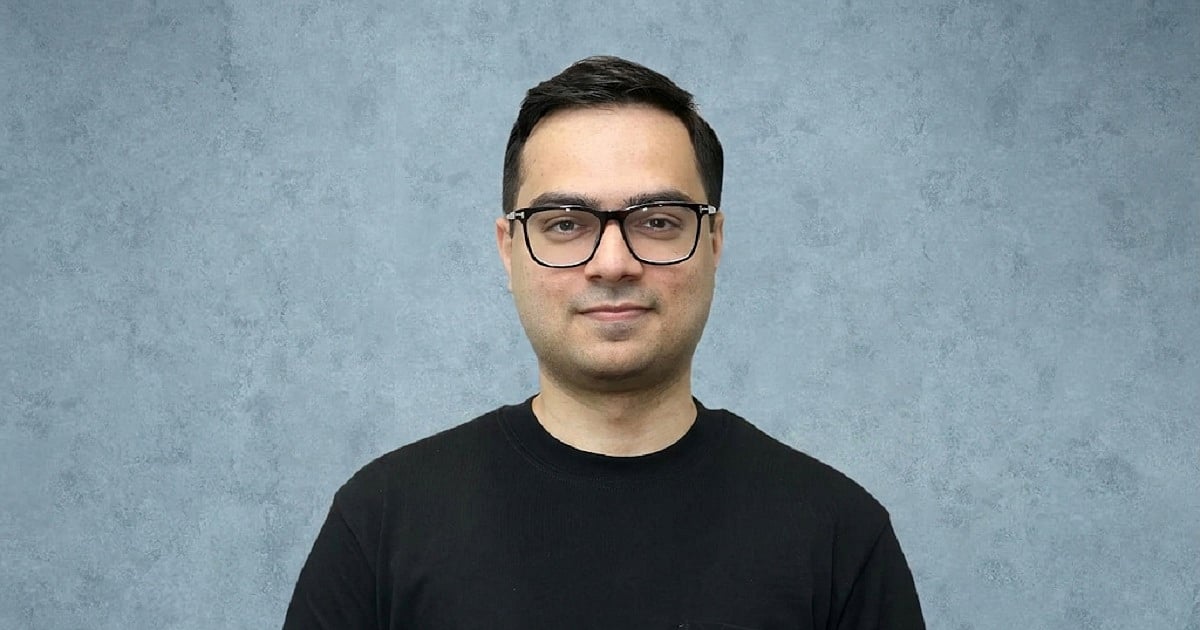
- Lumikai principal Aditya Deshpande says he is cautious about standard casual free-to-play mobile titles in the current market.
- He sees Roblox and Fortnite’s UEFN as newly opened “blue ocean” surfaces.
- Deshpande says India is still waiting for a breakout mobile hit, and expects one big success to change how young talent thinks about gaming careers.
Ask a gaming investor what changed in the past year, and you will hear the same two letters: AI. AI now appears in countless pitches that reach Aditya Deshpande, Principal at Lumikai, India’s gaming-focused venture fund. When nearly every deck mentions it, the hard part is telling them apart.
Deshpande has a method for identifying games worth investing in. Outlook Respawn spoke with him at India Game Developers Conference (IGDC) about how he screens AI pitches, which categories he is wary of, what the youngest founders bring to the table, and what he says Indian gaming is still waiting for.
The Four-Question Test
According to Deshpande, the shift towards AI in the industry is easy to describe. He said, “One thing that has changed significantly is obviously AI showing up in pitches more. Studios are more and more open to implementing AI in their pipelines and seeing where that takes them.”
Lumikai’s response is a framework called CIDE, which stands for creation, interaction, distribution, and economics. Each letter is a place AI can show up in a game business. Creation covers art, ad creatives, and code. Interaction is how the game personalizes or adapts to a player in real time. Distribution is using AI to acquire users faster and cheaper. Economics means monetization, such as showing the right offer to the right person. Any studio that has AI in three out of the four of those parameters is a serious contender to secure Lumikai’s support.
Creation is the one that earns the least credit, because it is the one thing everyone has. Deshpande said, “If it’s just creation, a lot of it is table stakes now, and a lot of it is available to a lot of people. If you are able to do it cheaply, so is everyone else, so your ability to design things properly, taste, and then distribute all start mattering a lot more.”
The test changes what a founder has to prove. The question stops being whether a studio uses AI and becomes where it uses AI in ways competitors cannot copy by buying the same tools.
Where the Money is Looking, and Where it is Not
Deshpande is most interested in places that did not exist as business opportunities a few years ago. He pointed to Roblox and to UEFN, the toolset that lets creators build and publish their own experiences inside Fortnite. These are great opportunities that have opened up in a world where your traditional app stores like Google and Apple have become very difficult to compete on.
The app store problem, as he described it, is money. A new studio competes with globally well-funded players who can outspend it on marketing. Lumikai’s portfolio shows the tilt. The firm led a $400K pre-seed round in Metafashion, a company building digital fashion on Roblox.
He is more cautious about standard free-to-play mobile, especially casual and match-3 style games. His apprehension comes from competition and not the market demand, Turkey and Vietnam are two of the biggest competing markets according to him. Government incentives support studios in those countries and there is deep talent, alongside bigger established developers.
Deshpande was also candid about how little certainty anyone has in the gaming market. “It’s difficult to say what won’t work. If I knew what will and won’t, I probably would have made a lot more money by now,” he joked.
Other trends he sees in pitches include more Indian studios targeting players outside India, a move from ad-only monetization to hybrid models that add in-app purchases, platforms that aggregate many games to keep players in one ecosystem, and indie developers aiming at PC and console.
The Founders Walking in are Younger
Lumikai’s first Pixels Pitch Day drew more than 150 applications but only six made it to the next stage. The pattern that stood out to Deshpande was who was applying. The founders are much younger compared to the past, and he sees an advantage in that. According to him, “They’re not coming from established sets of rules and conventions that they want to follow, so they’re able to think outside the box.”
Lumikai
The two winners reflect Deshpande’s observation. SwaVid is a gamified interactive education platform for school kids, run by founders just out of college. Yum Yum Labs is rethinking casual free-to-play games, which is the category Deshpande is otherwise wary of. That suggests his caution applies to the standard model rather than to the genre itself.
When asked whether he would lean toward a game built for Indian players or for international ones, Deshpande declined to pick. The global route has a far bigger total addressable market, meaning the number of players and spending available to chase. But Lumikai is also competing against some really “large incumbents who have massive war chests,” existing games that are built around legacy IP.
The Indian route has the opposite problem. Lumikai’s last report counted nearly 555M gamers in India, and it has likely grown since. Yet few India-specific games have broken through. Deshpande said, “Outside of 'Ludo King,' maybe 'Carrom' or 'Teen Patti' on the app stores, nothing really has taken off.” The opportunity is still open for Indian developers.
His filter is the same either way. “What is your right to win in whatever market you’re playing, and are you able to really execute? That’s what it comes down to,” he said.
What Does a Second Round Demand?
For a studio that has raised a first round, Deshpande’s checklist is specific. According to him, “You should have demonstrated the ability to ship a game…take a game through execution and ship it live.”
Then comes the data. Retention and engagement. He wants the LTV-CAC equation to make sense. LTV is the lifetime value of a player, and CAC is what it costs to acquire one. A game is only a business if the first clearly exceeds the second.
After that, he looks for repeatability. Studios should be able to consistently put out games that deliver what the audience wants. Deshpande also warned about the gap between a prototype and a company. He said, “You can make a prototype, you can make something that works, but actually turning it into a business is a whole different thing. You have to worry about operations, you have to worry about HR, you have to worry about paying your taxes, you have to deal with investors. I think a lot of people underestimate that side of the journey.”
Waiting for One Big Hit
Deshpande closed on a belief he says he would like to see confirmed rather than changed. He believes Lumikai can build a world-class gaming studio out of India. A mobile studio that can compete with the ecosystems in Turkey and the U.S. is also in mind, and he said he is still waiting for the evidence.
What is missing, in his view, is a single visible success. He said, “Once we have that one big hit, then gaming becomes a lucrative enough option for other people. Right now, people can go work in AI; they can start a quick commerce company. A kid coming out of IIT Bombay is not thinking, ‘Hey, I want to go join a gaming company’.” In Turkey and Vietnam, he said, gaming is a lucrative career for many people.
That is why the pitch he wants goes beyond a clever use of AI. He is looking for the studio that proves the path, and, as he put it, “a lot of this structure in sociology will change.”