




Beast of Reincarnation
The Difference Between Game Freak's Games is Who Builds Them
Five months apart, Game Freak shipped a game at 89 on OpenCritic and one at 74, built under different production structures.

Highlights
- Beast of Reincarnation sits at 74 on OpenCritic, while Pokémon Scarlet and Violet sit at 71.
- Scarlet and Violet sold 10M units in their first three days, the largest three-day software launch in Nintendo's history.
- Pokémon Pokopia, co-developed after The Pokémon Company brought in Koei Tecmo, sits at 89 on OpenCritic.
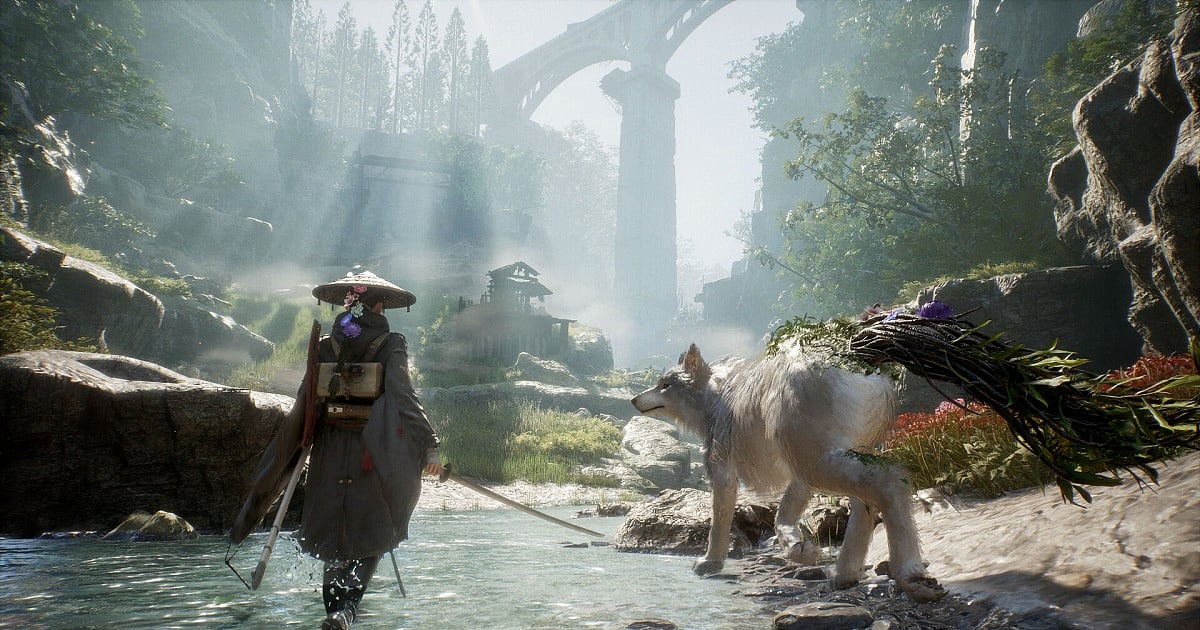
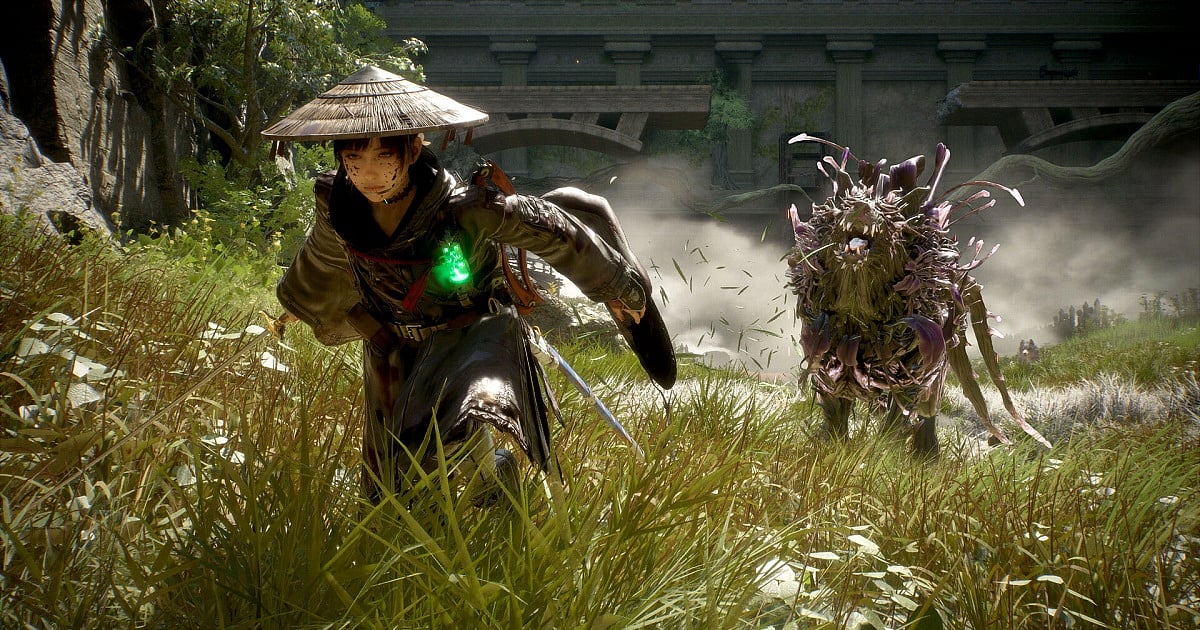
On Aug 4, 2026, Game Freak released Beast of Reincarnation, an action role-playing game set in a post-apocalyptic Japan of the year 4026. It follows a girl named Emma and her dog Koo, against Blight-infested monsters and corrupted machines; her swordplay combines with command-based abilities for him. It is the largest project the studio has ever shipped outside Pokémon. Nine days later, on Aug 13, its director apologized. That same day, Nintendo and The Pokémon Company announced that a different Game Freak game had passed 5M copies.
Kota Furushima, who directed and wrote the game, and serves as a deputy department head in Game Freak's development division, told the Japanese site 4Gamer he was sorry parts of the game "haven't provided a sufficiently enjoyable experience." He also set out what the studio would fix: story pacing, camera behavior, the option to skip cutscenes, and frame generation support. A first patch had gone out on Aug 9.
The 5M-copies game was Pokémon Pokopia, a life simulator that shipped in March 2026. It is currently the second best-selling title on the Switch 2, and the best-selling game Koei Tecmo has ever released.
Same studio, same year, five months apart. The temptation is to read that as a story about Pokémon being a crutch, or about a studio that only performs when Nintendo is watching. Neither survives contact with how the two games were actually assembled. What separates them is where the production expertise sat.
Where the Reviews Agree
The critical response to Beast of Reincarnation is varied. Famitsu gave it 36 out of 40. Game Rant gave it a 5. IGN and GameSpot both landed on 6, Wccftech on 8.5, PC Gamer on 73. The aggregate settled at 74 on OpenCritic across 100 reviews, with 52% of critics recommending it. On Steam it holds a Mixed rating: 56.3% positive across 3,963 reviews as of Aug 17.
Underneath that spread the reviews converge on which parts of the game work. Emma and her dog Koo, the parry system that ties them together, the art direction, the score, the general mood of a Japan taken over by hostile plant life. Several of the lowest-scoring reviews name those same strengths. What varies is how much weight each reviewer gives everything else: bosses recycled without narrative reason, regions that blur into each other, cutscenes with stiff animation and long silences, and a technical state that stutters when the combat asks for precision.
That distribution is more informative than the average. Critics differ on how much the problems hurt the game, not on what those problems are.
One number is missing from all of this. Beast of Reincarnation launched day one on Game Pass, routing an unknown share of its PC and Xbox audience. Steam peaked at 15,001 concurrent players on launch day and has since settled near 4K, but Steam is one storefront of three. How many Game Pass players would have otherwise bought it there is unknowable. Anyone circulating a sales figure for this game is working from an assumption.
Back to Scarlet And Violet
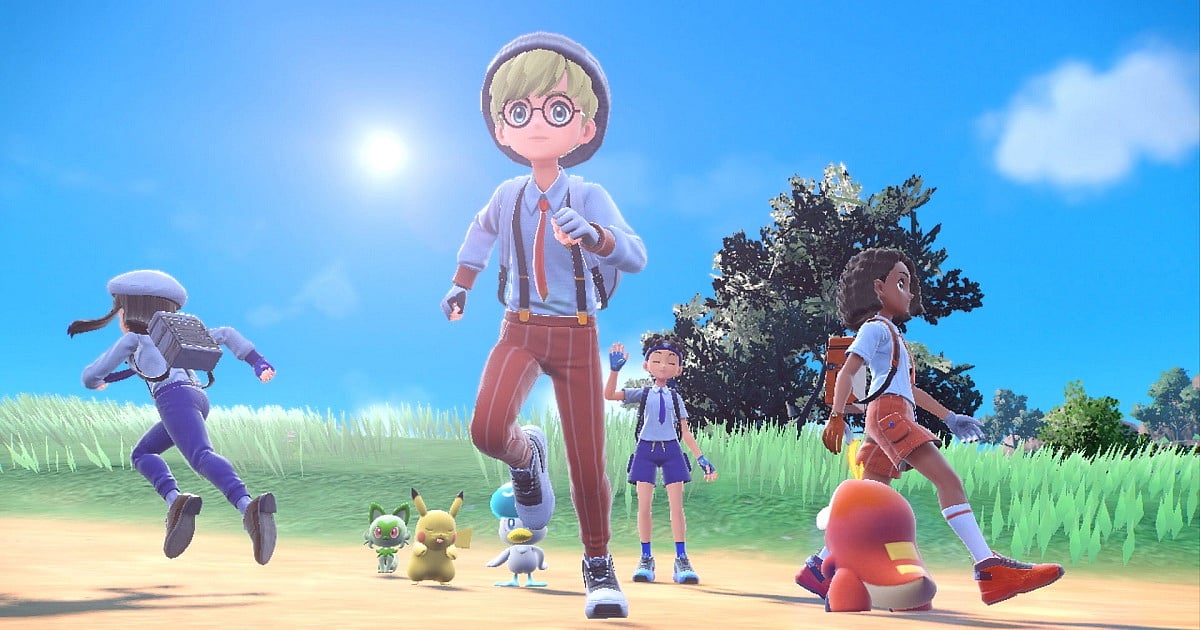
Pokémon Scarlet and Violet, released in November 2022, gave the series an open world and a non-linear progression with three parallel storylines. They also shipped in a condition Nintendo publicly apologized for two weeks later, conceding in the version 1.1.0 patch notes that players might hit performance issues and adding, "we apologize for the inconvenience."
The aggregate on those games was 71 on OpenCritic across 143 reviews, with 48% of critics recommending them. Beast of Reincarnation is 74 across 100, with 52%. Four years, two entirely different projects, and the same score band. Nintendo's apology was a corporate line in release notes; Furushima's was a passage inside a wide-ranging interview about the game's design, offered when he was asked how the reception had landed.
Nintendo
What Scarlet and Violet also did was sell 10M copies in 72 hours, the highest three-day figure for any software on any Nintendo platform.
What followed was a smaller design footprint. Pokémon Legends: Z-A, out in October 2025, confined itself to a single city rather than a region. It scored 79 on OpenCritic, with 65% of 127 critics recommending it against Scarlet and Violet's 48%, and the complaints changed. Reviewers mentioned buildings duplicated across the map, an absence of voice acting and wild zones that felt cordoned off rather than discovered. Whichever way the decision was reached, the result was a game built inside the limits of scale that Scarlet and Violet had exposed.
Why Pokopia Was Different
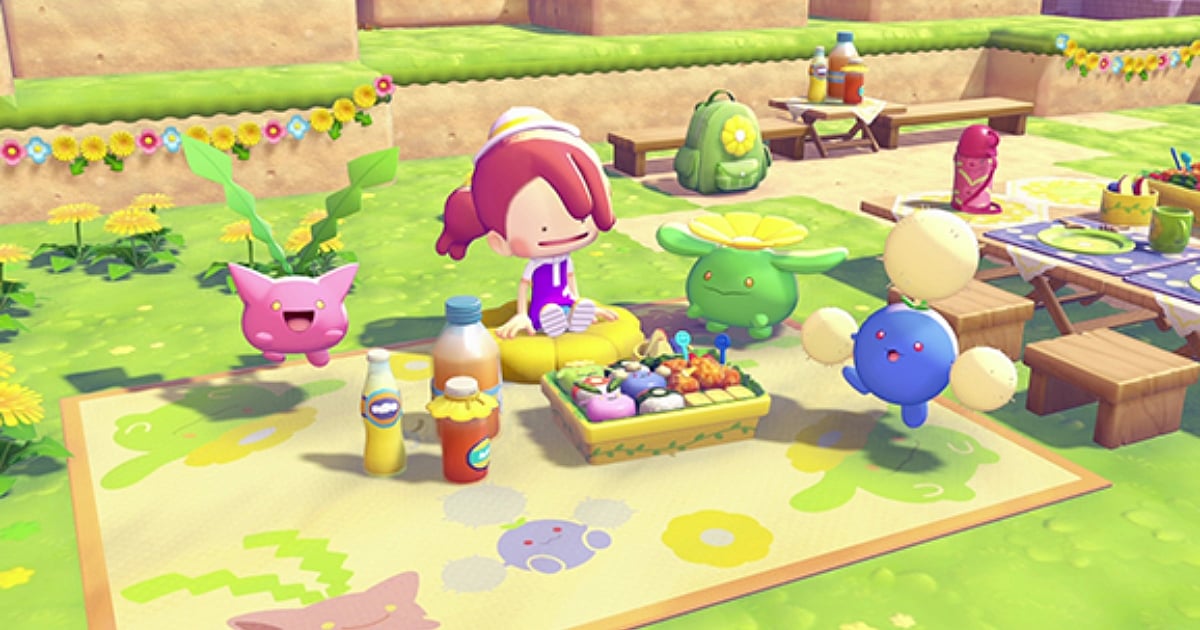
Pokopia began as a prototype by Shigeru Ohmori, the Game Freak senior director who had run Scarlet and Violet. He wanted players to build Pokémon habitats rather than battle in them, an idea he traced back to his own early work laying out maps for Ruby and Sapphire.
Then he said something studios rarely put on the record. Speaking to Famitsu, Ohmori acknowledged that despite having a prototype, "Game Freak had almost no development know-how in this genre."
Pokémon
After the first trial build, The Pokémon Company brought in Koei Tecmo, whose Omega Force division had shipped Dragon Quest Builders 2 and Wild Hearts. Producer Kanako Murata's account is that TPC selected the partner. Omega Force then assembled the largest team in its history, pulling in Dragon Quest Builders 2's game director Takuto Edagawa and art director Marina Ayano.
Game Freak held supervision, concept and Pokémon design. Omega Force ran the bulk of production: the sandbox and slow-life systems, technical implementation, multiplayer, art direction. TPC handled localization and promotion, and published in Japan while Nintendo published everywhere else.
Nobody in that arrangement asked Game Freak to do something it had not done before. Its job was the job it had held for 37 years.
Building Beast Of Reincarnation
Beast of Reincarnation was announced in May 2023 under the working title Project Bloom, as a partnership with Private Division, the Take-Two label later sold to Haveli Investments and renamed Fictions. Game Freak has put its development at six years. It is the studio's first project on Unreal Engine 5, shipping simultaneously on PlayStation 5, Xbox Series X and S, and PC, with a day-one placement on Game Pass.
Asked at January's Xbox Developer Direct whether the studio had scaled up to handle a game this size, Furushima said the team was large but that not all of it was Game Freak, and that the studio had sought out partner companies capable of realizing the vision.
A PR representative then called IGN back after the interview to clarify that the internal Game Freak team was "relatively small" while still leading direction and management. No numbers were given for either figure.
Nintendo
Outsourcing at that ratio is not remarkable in itself. Pokémon Legends: Z-A credits roughly 30 partner companies. Pokopia handed its primary sandbox and technical production to another studio entirely and came out at 89 on OpenCritic, with 97% of 119 critics recommending it against Beast's 52%, and in the 99th percentile against Beast's 63rd.
Game Freak knew it lacked experience with this kind of game, and The Pokémon Company brought in a studio that had it. Beast of Reincarnation did not have that same arrangement. Game Freak originated the concept, held creative direction, and by its own account led a large external production across three platforms on an engine it had not shipped a game on.
On a large production, someone has to make sure all of those pieces still work as one game. That job means holding a single technical specification across vendors working in different offices with different schedules. It means arbitrating when the team tuning parry windows and the team building boss attack patterns have made incompatible assumptions, owning a frame time budget that no individual vendor owns, and refusing work that breaks it. On a Pokémon project some of that authority sits with The Pokémon Company and some of it with Nintendo's certification process. On Beast of Reincarnation it sat with a small team at Game Freak, on an engine that team was still learning.
Reviewers catalogued assets and encounters reused past the point of intent, environments that feel the same zone to zone, audio looping across areas and a technical layer that still needs work. Schedule pressure and thin QA produce some of the same symptoms, and no review score can separate them. What the production's structure does establish is where the responsibility sat.
The Gear Project Experiment
For 14 years Game Freak has run an internal scheme called Gear Project, which invites staff at any level to pitch original games during gaps in Pokémon production. It has produced HarmoKnight, Pocket Card Jockey, Tembo the Badass Elephant, Giga Wrecker and Little Town Hero.
In 2019 the studio went further than that and told Video Games Chronicle it was prioritizing Gear Project over Pokémon. Programmer and director Masayuki Onoue described two production teams, one for original titles and one for Pokémon, and said the company wanted to make something as exciting as its main franchise. On Pokémon, he said, "you're one of many programmers."
Directing Giga Wrecker showed him the whole of game creation, up to the point where players had it in their hands, and he brought that back to the Pokémon team. In the seven years since, the only original games Game Freak has released are Little Town Hero that October and a 2023 Apple Arcade remake of a 3DS title.
Nintendo
Gear Project turned specialists into people who could own a project. On that measure it worked. Furushima is the case for it, a developer who rose inside Game Freak to direct and write a game whose best-received qualities are in authorship: the pair at its centre and the world they move through.
Gear Project taught developers how to take a game from idea to release. That is different from learning how to run a large production across multiple teams. None of the Gear Project titles required the multi-vendor, multi-platform coordination structure Beast of Reincarnation did.
Onoue is credited as the program director on it. The developer who said Gear Project showed him the whole of game creation worked on the game that found the edge of what the scheme could teach.
What Pokémon's Success Means For Game Freak
The Pokémon Company closed its financial year on Feb 28 with net sales of ¥531B, operating profit of ¥144B, and net profit of ¥120B, up 70.7% on the year. All three are records. The figures come from filings in the Japanese government gazette Kanpo, read annually by the Tokyo analyst Serkan Toto. He notes each time how any of it is shared with the company's three owners, Nintendo, Game Freak and Creatures Inc., has never been disclosed. Nintendo's 32% of voting rights is the only piece of the ownership structure that is public.
The record establishes that Pokémon is extraordinarily profitable and does not disclose what proportion reaches Game Freak, or what Game Freak does with it.
A pair of games at 71 with fewer than half of critics recommending them set Nintendo's all-time three-day sales record. Whatever the execution problem cost in reputation, it did not show up in the launch figures. Nothing in that outcome required Game Freak to become a company that could integrate its own large productions, and the company's own corporate page lists 207 employees as of March 2024, counting permanent and contract staff only. That is roughly the size Game Freak has been through four console generations.
Game Freak has spent decades making Pokémon without having to solve this particular problem. Beast of Reincarnation just exposed the cost of that gap.

Author
Tanmay is a contributor at Outlook Respawn who writes about the business and craft of game development. A lifelong gamer rather than an industry insider, he focuses on the stories behind the games: how studios are run and funded, and how their design choices shape the way games are sold and played.
Tanmay Sheth
Author
Tanmay is a contributor at Outlook Respawn who writes about the business and craft of game development. A lifelong gamer rather than an industry insider, he focuses on the stories behind the games: how studios are run and funded, and how their design choices shape the way games are sold and played.