


Highlights
- Larian bans GenAI for concept art in Divinity, ensuring all visuals rely on human craftsmanship.
- Machine learning remains solely for pipeline efficiency, automating tasks without replacing creative assets.
- Contracts now explicitly protect voice actors by forbidding the training of AI voice models on their work.
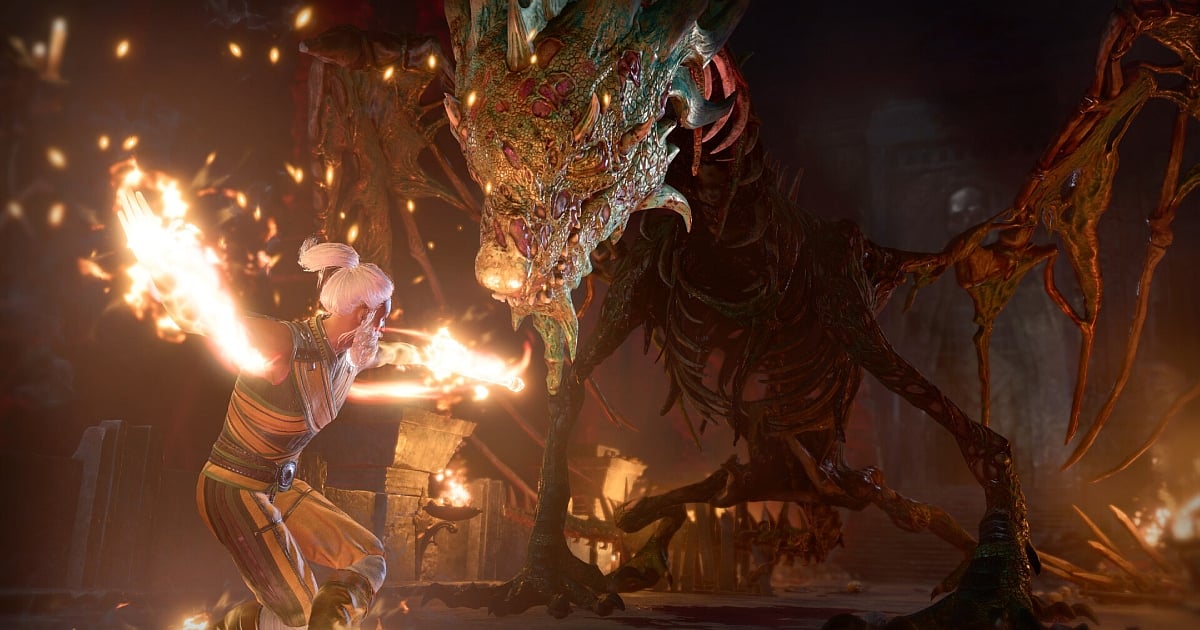
Larian Studios, the acclaimed developer behind Baldur’s Gate 3, has officially clarified its position on the use of generative artificial intelligence (GenAI) in its upcoming game, Divinity, following a wave of fan concern. In a recent Reddit "Ask Me Anything" (AMA), the studio announced a significant policy shift: it will no longer use generative AI tools for concept art development, a practice it had previously explored. The decision comes in the wake of a controversy sparked by comments made by CEO Swen Vincke to Bloomberg, which suggested the studio was pushing hard on the technology, threatening the immense goodwill earned by the studio's previous successes.
The controversy began shortly after Larian presented a trailer for Divinity at The Game Awards 2025. While fans were initially eager for the next installment in the beloved franchise, excitement turned to apprehension after Vincke discussed the studio’s use of AI for "exploring ideas" and "fleshing out" presentations in an interview with Bloomberg.
Fans and industry observers expressed fears that the studio might be pivoting away from the handcrafted quality that defined Baldur's Gate 3 in favor of automated, machine-generated content. In response to the growing outcry, Larian used the Reddit AMA to draw a firm line in the sand, assuring players that human creativity remains central to their development process.
Banning GenAI in Concept Art
Addressing the issue directly, Vincke stated that to ensure there is no room for doubt, the studio has decided to completely refrain from using GenAI tools during the concept art phase. This marks a departure from their previous approach, where such tools were used for rapid ideation and exploration. Vincke acknowledged that while the earlier method was never intended to produce final game assets, the mere association with GenAI created confusion regarding the origin of the studio’s artwork. By removing these tools from the concept pipeline entirely, Larian aims to guarantee that all artistic output is indisputably the result of human craftsmanship.
However, the studio stopped short of a total ban on machine learning technology, distinguishing between creative generation and development efficiency. Vincke and Larian’s Machine Learning Director, Gabriel Bosque, explained that the studio will continue to experiment with machine learning to reduce "mechanical legwork" and speed up iterations behind the scenes, as reported by Polygon.
The critical distinction, according to Vincke, is ownership and consent: Larian will not generate any "creative assets" that appear in the final game unless they are 100% certain of the training data's origins and have the explicit consent of the creators. Gabriel Bosque provided further insight into these "behind-the-scenes" applications, specifically citing the immense logistical challenge of managing over 100,000 voice lines recorded by hundreds of actors.
Steam
Machine Learning for Efficiency
Bosque described machine learning as a powerful tool for streamlining these pipelines, freeing up developers to focus on rewarding creative work rather than repetitive tasks. He emphasized that the studio’s ML R&D team is focused on state-of-the-art experiments that influence the future of their proprietary game engine, rather than replacing human talent.
Perhaps the most significant commitment made during the AMA concerned the protection of voice actors, a profession increasingly threatened by AI cloning. Bosque revealed that Larian has explicitly committed in its actor agreements not to use recordings to train or build AI voice models.
He noted that the studio understands the sensitivity of artificially generating an actor's voice and stated that, even if an actor were willing to consent to such usage for compensation, Larian does not currently feel comfortable including AI-generated voices in their games. It remains to be seen if these assurances will fully restore fan confidence.
By dividing its approach, rejecting GenAI for creative concept art while retaining ethical machine learning for technical efficiency, Larian is attempting to navigate the complex intersection of modern technology and artistic integrity. As development on Divinity continues, the studio appears dedicated to proving that its tools will serve its artists, rather than replace them.