Highlights
- Funcell Games says a new engine and AI-automated creative process let it replicate a game concept in two and a half months.
- COO Shaurya Veer Kajaria says 80% of its revenue comes from the U.S.
- Funcell wants to build multiple self-published hits and become India’s biggest mobile game publishing company.
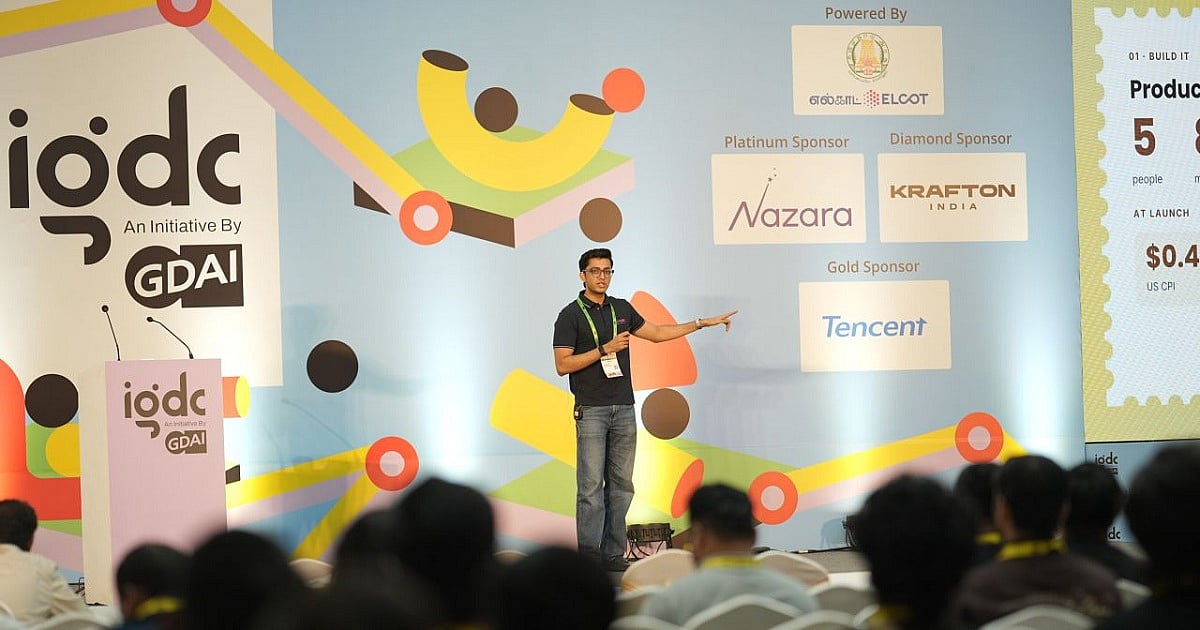
Funcell Games spent a year and a half building Pawn to Don, its first self-published narrative game. Shaurya Veer Kajaria, the studio’s COO, says the same concept can now be replicated in two and a half months. Kajaria detailed this shift in an interview with Outlook Respawn at the India Game Developer Conference (IGDC) 2026, held in Chennai.
Funcell is an India-based mobile studio known for Dog Life Simulator, Mom Life Simulator and Project Eva. Kajaria credits the faster timeline to an engine the team built over the past year and an AI-automated creative process. The figures are the company’s own and were not independently verified, but the approach shows how modern mobile production is changing. Outlook Respawn spoke to Kajaria about how it works.
What Changed Between Before and After AI
Kajaria talked about how AI has sped up game development for his studio. He said, “Over the last year, we have built an engine where we can replicate games like 'Pawn to Don' much faster. It took me a year and a half to make 'Pawn to Don,' so now I can replicate the same concept in two and a half months with our new engine.”
Funcell’s creative process is fully automated by AI, and the main work has been “building a playbook” which can be used to replicate the process across multiple titles. Two and a half months is not the time to invent a game from scratch. It is one to build a new game on a concept the first one already proved. Kajaria did not detail how the engine works, but the logic is familiar in mobile. Reusable systems mean a studio does not rebuild the basics every time. AI handles repetitive creative work. A written playbook records what worked, so the next game starts from a proven structure instead of a blank page.
Test First, Build Second
Funcell’s process starts with the market and not the story. As soon as the studio starts testing its games, it also begins CPI (Cost Per Install) tests. These tests are used to find out how much it costs to get one person to download a game after seeing an ad for it. Studios rely on them to see whether an idea attracts players without heavy investment before they commit to months of development. A low cost suggests demand while a high cost is a warning for the marketing team.
Funcell conducts these tests because that is where the money is for the studio. Kajaria revealed, “For ‘Pawn to Don,’ 80% of our revenue comes from just the U.S. market, and the remaining 20% is the global audience. We don’t make games with an Indian context and try to push that outside. We make games for a global audience which anyone can relate to.”
Ads at the Cliffhanger
Funcell’s approach to player retention depends on where ads go. Kajaria was clear that in-game ads exist to earn money, not to hold players. He revealed, “We’ve put our ads in placements where we could have the lowest churn. It’s not possible to have an ad placement and no churn.”
Funcell Games
Churn means players leaving. To limit it, Funcell places ads at the story’s hook points so that players wait for the game to continue. It’s a common tactic in TV shows and theater intervals, which the studio replaces in its video games.
The studio also promotes its own games inside each other. Kajaria revealed, “We cross-promote all of our own games internally, so people can go from one product to the next. Because we have a lot of similar games, that has in fact helped us improve retention.” That strategy pairs with the faster engine. The more games a studio can ship in a familiar style, the more places there are to send an existing audience. Following Perfect Lie’s success, Funcell has been building that audience through several narrative titles.
What Comes Next For Funcell?
Pawn to Don is currently close to the top 300 globally on mobile storefronts, according to Kajaria. The target for Funcell is the global top 10. The larger plan is to evolve into a publishing company. Kajaria shared his long-term plans, stating, “Once we have multiple self-published hits, we want to be India’s biggest mobile game publishing company. We want a lot of studios to reach out to us to publish games for them.”
Whether speed becomes an advantage or just a baseline is an open question. Funcell’s bet is that its playbook and its audience are the harder parts to copy. Over the next few releases, the studio will find out whether a faster engine turns into hits or just more games.