



Highlights
- Mina the Hollower sold 500K copies, which Sean Velasco had thought enough to continue without cuts or outside money.
- Shovel Knight and its spin-offs grossed more than $40M, but were left with $13M after additional expenses to fund the studio's future.
- Wanderstop studio Ivy Road, shut down in March 2026 after estimated sales of around 100k copies could not fund a second game.
The day after Yacht Club Games delayed Mina the Hollower indefinitely, three weeks before its planned October 31, 2025 launch, the television in the studio's conference room began to smoke. Bloomberg's Jason Schreier, visiting for a story on the studio's make-or-break moment, wrote: "Reporters usually have to search harder for a metaphor."
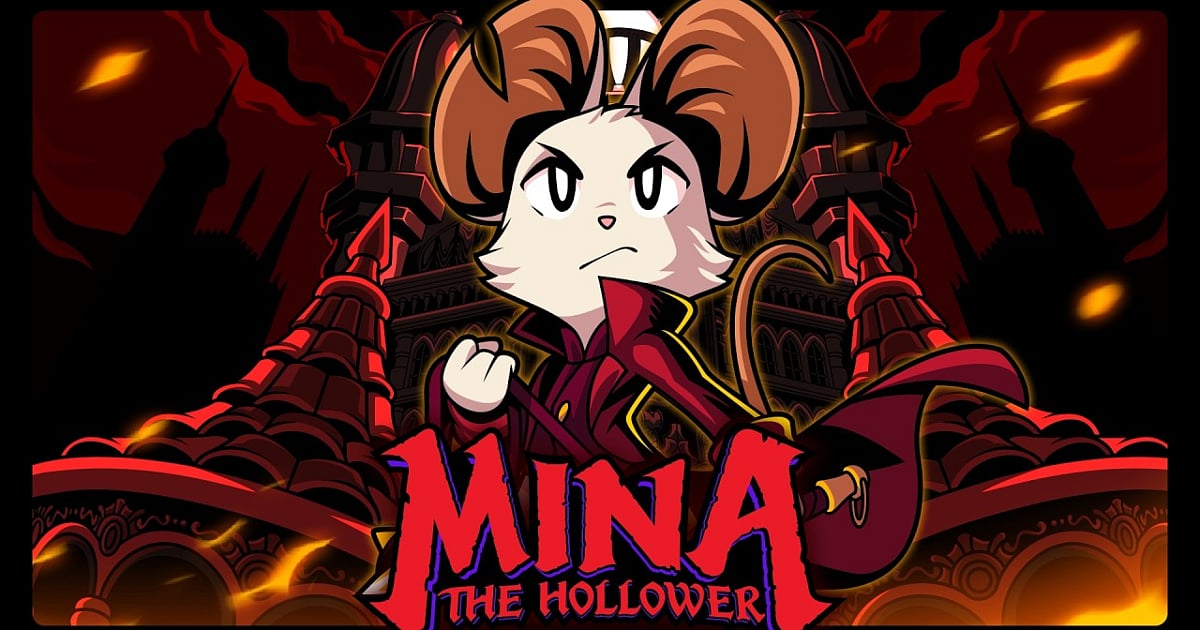
Seven months later, Mina the Hollower is the highest-rated game of 2026 on Metacritic, with a score of 92, and Yacht Club is still standing on its own. Yacht Club Games co-founder Sean Velasco had told Bloomberg that selling 500K copies would be "golden;" the number that would let the studio continue without cuts or outside investment. Less than two weeks after the May 29 launch, the game hit it. A year earlier, the same studio had most of its cash gone and a second project shelved.
What 500K Sales Actually Bought
Velasco told Bloomberg: "If we sold even 200,000, that would be really, really great. If we sold, like, 100,000, that's not so good." Half a million was the golden number.
He has since told Nintendo Life the real goal is one million copies, and that he would be disappointed to fall short.
Mewgenics, another adored 2026 indie, sold a million copies in its first week. Velasco, watching Mina top the review charts without matching that pace, told Game Informer he feels "a big fire lit to close that gap."
The launch price was set at $20 USD so nobody would wait for a discount, because a game only gets one launch. A studio with reserves could have afforded a slower burn and a later sale, and possibly higher revenue over time. Yacht Club priced as if it could not afford the wait. It needed the sales, and the revenue, fast.
The studio was so low on funds that the game got minimal marketing. It was carried by critical acclaim and word-of-mouth. The game still has a long tail ahead and may yet reach one million copies, but the rescue was not bought. The game had to be good enough to spread itself. There was no safety net.
How a Hit Studio Ran Out of Road
Yacht Club's first game, Shovel Knight, was crowdfunded on Kickstarter with a minimum goal of $75K. The campaign collected $311,500. Since its 2014 launch the game has sold nearly three million copies, and the franchise has grossed more than $40M. About $24M of that survived platform cuts and taxes, and after development costs the studio was left with $13M to fund its next two games.
Mina the Hollower began as a side project of designer Alec Faulkner, an intern turned director, and was never meant for commercial release. In 2020 the studio split into two teams to build Mina and a 3D Shovel Knight game at the same time, and hired more staff, which churned through capital. It raised another $1.4M on Kickstarter in 2022 for Mina, and still had to make layoffs in 2024. It froze the 3D game and went all in on Mina. At one point there was a plan to close the office and go fully remote. Development ran six years in all, and the indefinite delay came three weeks before the planned Halloween release.
$13M dollars is a lot of money. Split between two teams across six years, it was not enough. And the biggest drain predates all of it: the free DLC.
Shovel Knight's Kickstarter had promised free post-release DLC as stretch goals. Those promises grew into four expansions, each roughly the size of the base game, given away free over about four years. The goodwill was enormous. The revenue was not. The studio itself has said the free DLC "didn't really boost our sales to an enormous degree."
Co-founder and programmer David D'Angelo has since put the takeaway bluntly to Kotaku: "No free DLC." Mina the Hollower's Kickstarter was deliberately tight, built to avoid open-ended promises.
Every Principle has a Price
Yacht Club runs on a design-first, consensus-driven philosophy in which any team member can contribute anywhere, and it has refused outside money to keep its decision-making independent. Its employees are treated well by the industry's standards, though the studio is not immune to crunch.
Each of those choices has a cost. The company's own careers page concedes that "this level of democracy can slow the development process." Consensus lengthens development, which raises the cost of every game, and refusing outside money removes the option of buying more runway. Time is the one resource no one can buy back.
The same model also produced the studio's best-reviewed game to date and a second flagship IP.
The Road Ahead
Yacht Club's next project is likely the 3D Shovel Knight game paused in mid-development, which the studio has described as more than halfway done and not far from being showable. A Mina the Hollower sequel is in early concept discussions, though DLC for the first game is unlikely, and free DLC is off the table.
Velasco told Bloomberg that the model now is to make games one at a time. If the studio could hold the late-development momentum it found in Mina "in perpetuity, that's all we would need," he said, and its games would not take so long. For a studio like this, sustainability is slow and deliberate, and each release is probably still a bet on the company.
The 500K figure is the floor of golden, not the million Velasco would be disappointed to miss. A single strong game with half a million sales does not instantly rebuild years of drained reserves. The studio gets to continue without outside funding or a publisher. For now.
The Studios That Don't Get the Break
Ivy Road, the studio behind the acclaimed cozy game Wanderstop, shut down at the end of March 2026 after failing to secure funding for its second project, with the team calling it a tough time for raising game funds. Yacht Club refused outside money and survived because one game sold really well. Ivy Road needed outside money because Wanderstop did not earn enough to fund the studio's next game.
Yacht Club self-published and kept roughly 70% of gross revenue, while Wanderstop was published by Annapurna Interactive, and publishers generally recoup their costs before the studio sees a cent. With estimated sales of 75,500 to 128,100 copies, according to sales tracker Gamalytic, Wanderstop may not have earned much past the publisher's costs.
Ivy Road was founded by Davey Wreden (The Stanley Parable), Karla Zimonja (co-creator of Gone Home) and Daniel "C418" Rosenfeld, the composer of Minecraft's music. Wanderstop launched with built-in attention, much as Mina did through Shovel Knight's reputation, and it reviewed well, with several 9s and 10s. Pedigree and acclaim buy attention. They do not save a studio on their own. A cozy narrative game about burnout was always going to have a smaller ceiling than a Zelda-like action game. And the problem goes beyond Ivy Road.
John and Brenda Romero's Galway studio nearly went under in July 2025 when Microsoft pulled funding for its unannounced shooter. The studio survived but cut from more than a hundred staff to nine. Brenda Romero has called the industry "definitely crashier" than the actual 1983 crash, and John Romero pointed out that it is not even about failed games, citing EA cutting staff while Battlefield 6 performed strongly.
The industry lost at least 3K developers and 13 studios in the first three months of 2026 alone, and the pattern is older than that. Mimimi Games, the studio behind Shadow Tactics and Desperados III, chose to wind down in 2023 despite its success because the model was not sustainable. Roll7, the BAFTA-winning maker of OlliOlli World and Rollerdrome, was shut by Take-Two. Tango Gameworks made the surprise hit Hi-Fi Rush, and Microsoft closed it anyway; Krafton later revived it.
Ivy Road is the rule. Yacht Club may be the exception. Mina the Hollower hitting its golden target is a near miss with shutdown, not a triumph.
What the Win Doesn't Fix
Mina the Hollower cleared its co-founder's golden bar on reviews and word-of-mouth, with little marketing and no safety net. One of the best-reviewed games of the year had to claw its way to the sustainable number just to keep the lights on. A studio that made an equally loved game closed months earlier for want of funding.
Mina the Hollower landed on the right side of the line. The studios on the other side of it were not doing anything more wrong. The indie games category has never looked healthier, and the individual studios that make it have never been more exposed.