



Highlights
- Scholars around the world are coming together to examine why BTS and its fandom have become a defining force in the next chapter of the Korean Wave.
- From AI and fandom culture to a rare BTS documentary discussion, the conference will explore ideas on how K-pop is becoming a structural power.
- The event will also spotlight how fan communities are progressively influencing culture, sustainability, and global conversations beyond music.
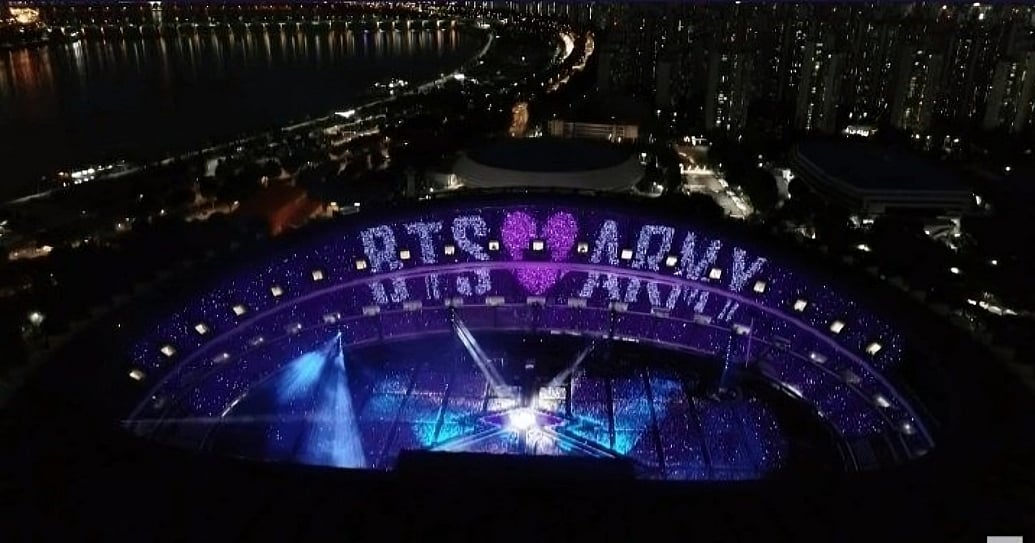
As BTS rebuilds its global reach on the world stage after the completion of compulsory military service, the academic world is coming together to discuss the next stage of the Korean Wave. The 5th BTS Global Interdisciplinary Conference, which is set to convene on July 2–3, 2026, at Jeonbuk National University, will bring together 50 presenters from 10 countries. They, reportedly, will deliver a multidimensional assessment of the BTS and ARMY fandom phenomenon at the conference.
Conference to Explore BTS, its ARMY Fandom and Hallyu Evolution
What began in 2020 as a global stream of K-pop research has formalized into an academic discipline. Hosted by the International Society for BTS Studies (ISBS), this year's K-pop conference will carry high stakes for entertainment industry stakeholders. Researchers will focus on how glocalization has remodeled Hallyu, converting it from a one-way cultural export into a hybrid phenomenon influenced by local cultures. Academic tracks will study subjects spanning transplantation of Latino identity into the K-pop production system to the impact of generative AI on gender identity and global fandom culture.
Bao Nguyen Will Unpack BTS' Return Documentary
The conference will also offer pop culture enthusiasts a closer look at the exclusive behind-the-scenes of the Netflix documentary, BTS: The Return (2026). In a featured session, the documentary director Bao Nguyen will also be present, discussing the impact of the group. In a preliminary interview, Nguyen talked about the observation-centered gaze, which captured the members as seven distinct individuals moving through post-conscription life.
Nguyen compared the group's transition period with the ancient Greek myth The Odyssey. “BTS was like Odysseus departing for the battlefield, and ARMY was like Penelope waiting for their return,” Nguyen stated, as noted by The Seoul Economic Daily. He framed the highly anticipated BTS comeback as a narrative of mythical resilience rather than a typical commercial comeback.
Fan Activism, Sustainability and Hallyu's Future
There will be another screening of a separate BTS documentary Forever We Are Young, which is based on BTS’ global fandom ARMY. Post the screening, a subsequent Q&A session will be conducted between the director and academic researchers. Regarding ARMY, the conference will also try to study their network less as a traditional consumer base and more as a global community driving social change. As a case in point, a dedicated session by climate action platform Kpop4Planet will detail via examples how fan-led activism has effectively forced major corporations to adopt eco-friendly governance policies.
The conference will close with local heritage and Jeonbuk tourism, where Jeonju pansori singers will deliver a traditional gugak reinterpretation of Arirang, a central theme of the group’s new album. Professor Lee Ji-haeng of the university's Department of K-Entertainment, who will be delivering the keynote address, noted that the phenomenon requires an analytical approach that reflects its structural complexity.
“This conference is a venue that illuminates BTS and Hallyu not as mere pop culture content but as a complex global phenomenon combining technology, society, ethics, and politics,” Lee said to The Seoul Economic Daily. “It will be an important turning point for exploring the direction and sustainability of the next generation of Hallyu.”