



- India’s creative sector grows faster than the global market, but makes up just 2% of it.
- Limited infrastructure and uneven regulations hamper investment and regional job growth.
- Global-standard training and industry collaboration are needed to close talent gaps in animation, VFX, and digital media sectors.
India’s media and entertainment economy is currently at a key juncture. The Confederation of Indian Industry (CII) highlighted on Tuesday that only a unified policy with an infrastructural push can propel the creation of a solid $100 billion USD creative sector for the country.
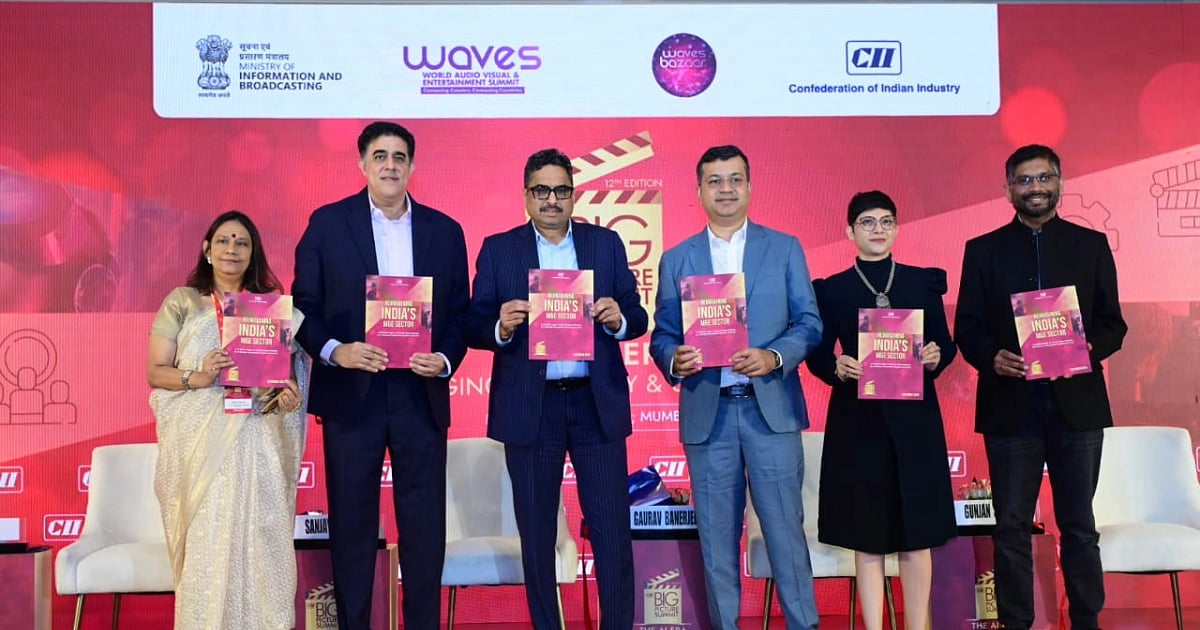
The call was made in the company's current M&E Sector Report, which was revealed at the CII Big Picture Summit 2025 in Mumbai. According to its projections, the Indian media and entertainment sector is expected to create more than five million jobs by 2030, marking a milestone for India's creative economy.
Why is CII Pushing to Accelerate India’s Creative Economy?
Even as the global media and entertainment industry reaches $3.5 trillion USD by 2029, India's creative sector growth is growing rapidly at the rate of 9.8%, which is only 2.6 times the global average. Nevertheless, India's creative economy accounts for just over 2% of the global share and 1% of the national GDP.
This is exactly why CII is advocating for a stronger and unified creative economy policy for India. It would help eliminate siloed laws, preserve IP, and drive new growth in emerging disciplines like digital media and gaming, while also providing creators a platform.
Infrastructure limitations, such as strained studio facilities, inadequate production systems, and limited digital-ready networks, continue to be major obstacles. All of these factors continue to drive capital out and are stifling local employment. To maximize India’s creative sector growth potential, the study highlights the requirement for investing in high-quality studios, greater 5G networks, and deeper tech integration.
India’s Creative Sector Growth Hinges on Industry Collab & Infrastructure
Alongside support for the physical infrastructure, CII also seeks smoother commercial support. A single-window digital portal and tighter anti-piracy regulations would help improve the business workflow and attract both domestic and foreign investment. The organization also advocates for exclusive export strategies, believing that streamlined procedures and targeted financing can help Indian media reach audiences worldwide.
CII has also identified a skill shortage in the sectors of animation, VFX, and digital media, and is also pushing for a global-standard training and more academic-industry collaboration. This would not only satisfy the demand and drive India's creative jobs growth, but also boost the country's position in the global creative economy.