




Highlights
- K-pop is converting South Korea’s convenience stores into thriving retail hubs for idol merchandise and fan-driven sales.
- Entertainment agencies are now utilizing convenience store networks to test the popularity of K-pop lifestyle products.
- Tourist demand and BTS’ comeback are further boosting the rise of K-pop-themed fan spaces inside convenience stores.
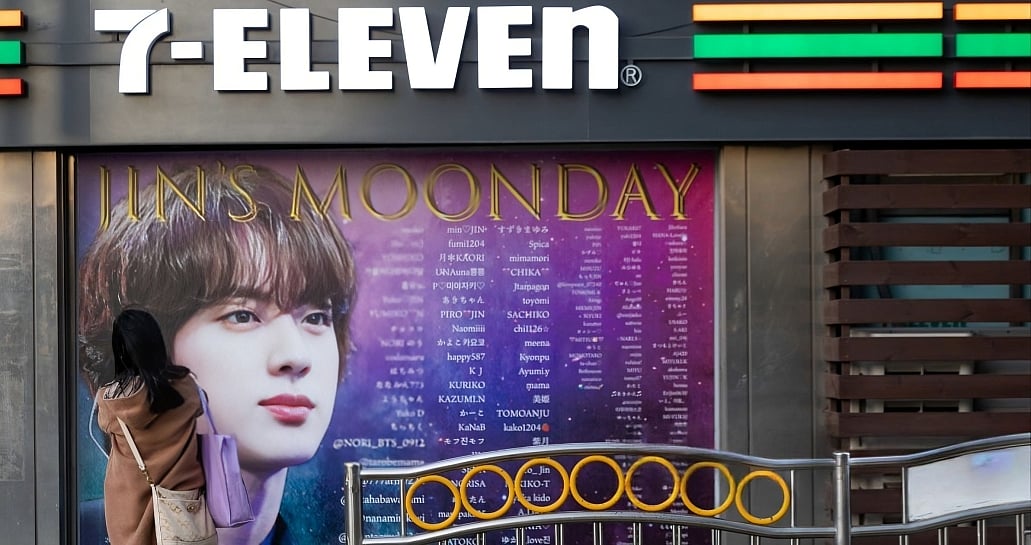
K-pop has been helping convenience stores reach new heights. The street corners of Seoul, where one would go for a quick grab of instant noodles or coffee, has grown to be a major hub for South Korea’s biggest cultural export. As reported by The Seoul Economic Daily, key retail chains of the country are now capitalizing on international fandoms who seek to buy products related to their idols.
The data reported by the media outlet suggests a noticeable shift in how creative intellectual property is consumed. Last year, the industry’s biggest convenience stores did not just experience growth, rather they surged. Emart24 led the pack with a remarkable 130% increase in idol-related sales, while Seven-Eleven and GS25 followed with spikes of 68% and 55%, respectively. Even CU, the market's well-known titan, logged a 23% climb. The metrics show that the market behavior is not a retail fluke, but a strategic evolution.
Convenience Stores Become K-pop Retail Labs
Noting these changes, entertainment giants are now capitalizing on these metrics and the nationwide networks of these stores to meet the “regional gap,” offering fans outside major cities with immediate access to albums and limited-edition photocards via integrated apps like “Pocket CU” or “Our Neighborhood GS.” The convenience stores have literally become “test beds” for popular labels to judge consumer appetite and feedback for idol-oriented lifestyle products in real-time. Examples of such products include CU's “An So-hee Shimmer Wine” and “QWER Wine,” as well as Seven-Eleven's “Wish Doll,” which NCT WISH members helped to design. Interestingly, the ability to launch packaged products featuring artist imagery via partnerships with entertainment companies is deemed to be an industry strength.
From Corner Stores to Fan Experience Hubs
A move like this marks something beyond simple merch; it indicates the creation of curated experiences which is best visible in districts like Hongdae and Myeongdong. In these places, usual layouts have been changed in favor of “music libraries” and “specialty zones,” which serve as offline gathering spots for trading photocards and track release dates from various K-pop acts. Such a framework effectively acts as permanent, low-cost alternatives to the expensive and temporary pop-up stores.
Tourist Boom Fuels K-pop Retail Push
Compounding this momentum was the global influx of tourists. Notably, GS25 and CU logged record-breaking first-quarter sales to international visitors, climbing 73% and 65.1% respectively. With the BTS comeback acting as a global proof-of-concept, the idea of the convenience store as a genuine K-pop distribution channel has been solidified.
By utilizing a structure that targets the people of 20s and 30s, South Korea’s convenience store operators are not just selling items, rather they are anchoring a global culture. As per a statement from an industry official, cited by the Seoul Economic Daily, the K-pop–Convenience Store culture is pushing the physical and financial boundaries of conventional marketing.