



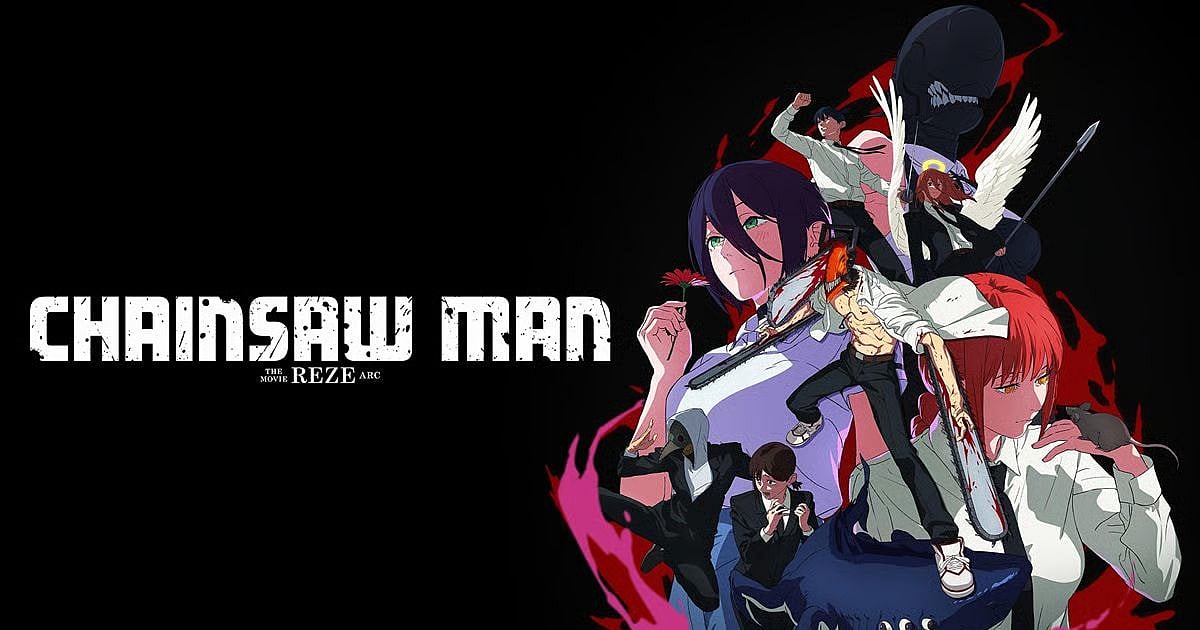
Highlights
- MAPPA President highlighted that Chainsaw Man is the type of anime project he and the studio has always loved creating.
- The Chainsaw Man financing strategy gave MAPPA complete authority over production, marketing, and global distribution.
- The move reflects evolving anime industry financing structure, where studios seek greater profit control and long-term value.
MAPPA took an unusual step of fully financing Chainsaw Man anime, with a 100% production budget in an industry dominated by committee-led funding structures. The move, first detailed in Anime Expo 2022 by studio executives, positioned the project as a defining test for MAPPA’s long-term business strategy and anime budgeting structure in the industry.
Recently, MAPPA President Manabu Otsuka wrote a column on Bunshun Online analyzing the studio's decision to take the bet on the Chainsaw Man IP. Otsuka has previously described the anime as a project that is not only loved by fans but also by creators themselves.
In his column, he stated Chainsaw Man “embodies the reason why I chose to work in animation.” He emphasized the “rawness” and “slightly distorted perspective” of Tatsuki Fujimoto’s original manga, which resonated with the creators at MAPPA.
He further added that Chainsaw Man is the type of anime project the studio has always loved creating and is still producing. Otsuka also said the decision was rooted in a desire to take full responsibility for both creative output and financial returns. He positioned the Chainsaw Man anime as a work of determination instead of a project driven only by confidence.
MAPPA, which is well-known for its modern anime productions such as Jujutsu Kaisen, Yuri!!! on ICE, and Attack on Titan season 4, decided to self-fund a project for the first time with the full investment in the Chainsaw Man adaptation. The bet reflects not only personal determination but also shifting market dynamics, where studios rethink long-standing financing models.
How MAPPA Risked Investment for Chainsaw Man
Anime production in Japan typically relies on a committee structure, compiling studios, TV networks, and distributors. MAPPA’s decision to fully fund Chainsaw Man differs sharply from this structure. Without a committee backing, the studio absorbed all upfront development costs and potential losses, which are otherwise shared across committee members backing a particular production.
According to Otsuka, the studio controlled aspects of production, including marketing, merchandising, and international distribution. “If we were going to work on this project, we didn't just want to be in charge of production; we wanted to pour all the power we had into it,” he further stated, positioning Chainsaw Man anime as a passion project for MAPPA creators.
Chainsaw Man’s Reach and Return for MAPPA
Despite the elevated risk and criticism, Chainsaw Man has generated a niche global fanbase. The Chainsaw Man - The Movie: Reze Arc generated over $160 million USD globally. The anime also drove renewed demand for the original manga by Tatsuki Fujimoto, which has now surpassed 35M copies in circulation.
However, Otsuka acknowledged the obstacles the production faced during Chainsaw Man season 1. “I think a part of it came into light due to a lack of experience and an immature team structure,” he wrote in the column.
As per his comments, the studio bore the consequences of self-funding the project without an external safety net. However, the studio never announced specific data for the loss associated with the franchise. For the gains, the studio distributed it to enhance the working conditions and strengthen their business.
MAPPA’s decision to control Chainsaw Man production also concentrates operational pressure within the studio, but also highlights how a large-scale studio such as MAPPA handles the global demand with multiple projects. This approach will face further scrutiny as MAPPA advances towards the next phase of the franchise, with the adaptation of the Assassins Arc.