




Highlights
- These anime offer theatrical-grade animation that still hold up today today.
- Bee Train's gun-action style, the Yuki Kajiura scores, and Madhouse's commitment to slow-burn violence are the connective tissue across half the list.
- Most of these shows are forgotten because of licensing collapse, not quality, a recurring problem for pre-streaming-era anime that never made it onto Crunchyroll, or Netflix.
Anime fans have a short memory. For every Demon Slayer or Jujutsu Kaisen that dominates seasonal discourse, there is a stack of action shows from the 2000s and 2010s that got buried under streaming algorithms, licensing limbo, or just bad timing. Some had the sakuga, the soundtracks, and the set-pieces to rival any theatrical release. They just never got the second life that Cowboy Bebop or Trigun did.
Action and battle anime still dominate global viewing — a recent Ouchi Cinema survey found 59% of Japanese anime viewers name it their preferred genre — but the algorithmic spotlight only shines on a handful of franchises. These ten action anime deserve a rewatch. A few are sci-fi, a few are samurai, a few are crime thrillers, but all of them swing for cinematic scale and mostly land it.
10. Speed Grapher
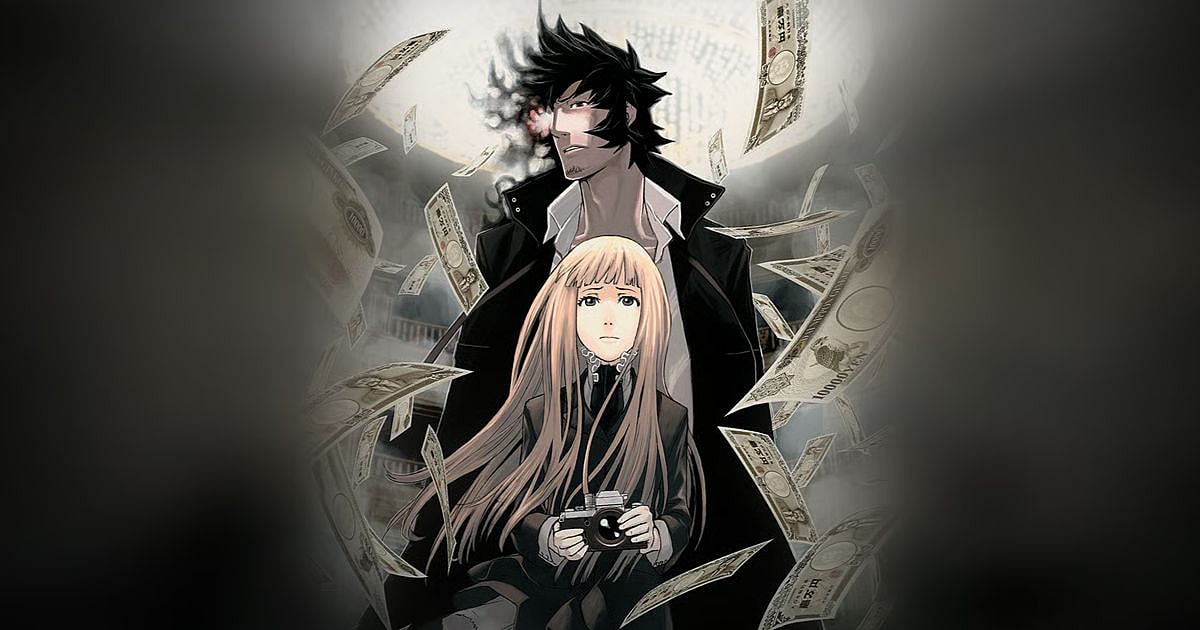
Gonzo made Speed Grapher in 2005, and it is one of the strangest action shows the studio ever produced. The protagonist, Tatsumi Saiga, is a former war photographer turned tabloid journalist sent to investigate the Roppongi Club, a secret fetish den catering to Tokyo's elite. After being caught and almost killed, Saiga ends up with a power that lets him destroy anything he photographs with his camera flash.
The premise sounds ridiculous and the show plays it completely straight. Speed Grapher is a body-horror action thriller wrapped around a noir investigation, and it commits to both halves. The action sequences are short, brutal, and shot like a Park Chan-wook film, with the camera lingering on the wrong things at the wrong time. The villain roster is a parade of grotesques: a stretchy ballet diva, a diamond-eating widow, a spidery dentist.
The show treats each kill as a set-piece. Speed Grapher never broke out beyond a brief Funimation push, and it is the kind of show you have to actively search for now.
9. Heat Guy J
Satelight made Heat Guy J in 2002 as their first original TV series, and it has aged into one of the more criminally overlooked sci-fi action shows of its era. The setup is buddy-cop. Daisuke Aurora is a young investigator for the Bureau of Urban Safety in the city-state of Judoh, and his partner J is an android in a world where androids are banned.
The mafia subplot drives most of the action. Daisuke and J spend the series tangling with Claire Leonelli, the unhinged young heir to the Vita crime syndicate. The fight choreography leans into J's strength: he tears through gunmen, throws cars, breaks doors off hinges. But the show keeps the violence weighted, because Daisuke is the one who has to clean up the legal mess afterward.
Created by Escaflowne director Kazuki Akane, Heat Guy J was famously the show Geneon spent Fullmetal-Alchemist money to license in the US, only for it to flop. It briefly aired on MTV2's late-night block, then disappeared, and has been almost impossible to legally stream for years.
8. El Cazador de la Bruja
Bee Train closed out their "Girls With Guns" trilogy in 2007 with El Cazador de la Bruja, and most anime fans only remember the first two entries (Noir and Madlax) if they remember any of them. Cazador is the lightest of the three and the least-discussed. Nadie is a bounty hunter in a Latin-American-coded setting. Ellis is a girl with no memory and a bounty on her head for a murder she may not have committed. And the two travel to Mexico together in search of the key to unlocking Ellis' past.
Yuki Kajiura scored it, which means every gunfight and standoff is underlined by the same kind of layered choral work she would later use in Madoka Magica and Demon Slayer. The action is sparser than the show's reputation suggests, but when it arrives it is staged with patience: long pauses, weighted reloads, single shots that resolve standoffs. Bee Train's style was already going out of fashion by 2007, and Cazador is the last great example of it.
7. Phantom: Requiem for the Phantom
Phantom is based on the 2000 visual novel Phantom of Inferno, written by Gen Urobuchi (Madoka Magica, Psycho-Pass) for Nitroplus. The bones show. A young man witnesses an assassination, gets captured by the crime syndicate Inferno, and is brainwashed into becoming their newest killer alongside Ein, the girl who is Inferno's top assassin. The setup is bleak. The execution is bleaker.
Phantom is essentially a 26-episode tragedy with gun fights, staged with the same patient choreography Bee Train used in Cazador, but with much higher stakes. The middle arc, when the cast relocates to America and the body count climbs, is some of the best long-form gunplay anime produced that decade. Funimation released it on DVD in the West, but it has fallen out of streaming rotation and rarely turns up in modern recommendation lists.
6. K
GoHands made K look more expensive than it had any right to be. The 2012 series is about seven Kings, each leading a clan with supernatural powers, fighting a turf war across a futuristic Tokyo. The plot is a mess on first watch. The animation is not. Camera moves swoop through skateboard chases, sword duels happen in mid-air on top of clan members' aura platforms, and the colour grading is pure neon.
The cast is huge and most of them get maybe two good scenes, but the Silver King Yashiro and the Red King Mikoto carry enough weight for a season. K spawned a film and a sequel that almost nobody watched. Missing Kings grossed under a million dollars worldwide, which is a shame because the Return of Kings arc has one of the better one-on-one sword fights of the decade. If animation quality is your benchmark for action anime, K still holds up better than its reputation suggests.
5. Samurai 7
Gonzo took Kurosawa's Seven Samurai in 2004, set it in a far-future Japan where some of the samurai are giant cyborgs, and somehow made it work. Bandit machines the size of buildings, swordsmen who can cleave them in half mid-air, a flying merchant capital powered by stolen rice. Kambei is voiced like a man who has lost every war he has fought. Quite literally; that's his backstory.
The climactic battle to bring down the floating capital is staged with the kind of multi-front chaos that most anime can't afford to animate. Kikuchiyo's chainsaw-sword and the Nobuseri bandit mechs give the show a steampunk-Gundam silhouette without losing the human core of Kurosawa's original. Samurai 7 was an early Funimation release, got a decent run on cable including Adult Swim's Toonami block, and then vanished. It is one of the few Kurosawa adaptations that earns its source material's runtime.
4. Gungrave
Madhouse adapted Gungrave from Yasuhiro Nightow's character designs in 2003, and the show is essentially The Godfather with one of the leads coming back from the dead halfway through.
Brandon Heat and Harry MacDowell are best friends and small-time thugs in the city of Billion. They lose their crew, join the Millennion crime syndicate, and split when Harry decides he wants to run everything. Brandon dies. He comes back as Beyond the Grave, a reanimated gunslinger built around a coffin full of weapons. The action is back-loaded.
The first 15 or so episodes are a slow-burn gangster epic told entirely in flashback. When Gungrave gets violent it is one of the meanest action shows of its decade. The body count climbs, the betrayals stack, and the final confrontation is staged with the weight of a two-hour film. Gungrave is the show people mean when they say a video game adaptation actually worked.
3. Canaan
P.A. Works made Canaan in 2009 based on a scenario by Type-Moon's Kinoko Nasu, written as a bonus chapter for the Wii visual novel 428: Shibuya Scramble. It is the closest thing anime has to a Jason Bourne movie.
Canaan is a synesthete mercenary in Shanghai who can perceive hostile intent as colour, which lets the show animate her fights as something close to choreographed dance. She is hunting Alphard, a former comrade who now leads the terrorist organisation Snake. Maria, a Japanese photojournalist who survived Snake's earlier bioterror attack in Shibuya, gets caught in the middle.
The Shanghai setting is unusual for anime and the show uses it: festival chases, rooftop duels, and a final confrontation that sprawls across the city. Canaan got one season, a planned compilation trilogy that never came out, and then nothing. It deserved more.
2. Texhnolyze
Madhouse made Texhnolyze in 2003 with much of the team behind Serial Experiments Lain: writer Chiaki J. Konaka, character designer Yoshitoshi ABe, producer Yasuyuki Ueda. The result is one of the bleakest action shows ever animated.
Ichise is a pit fighter in Lux, a dying underground city, who loses an arm and a leg in the first episode and gets prosthetic replacements that turn him into a one-man weapon. Ran, a young oracle girl who can see possible futures, anchors the show's quieter philosophical core while Ichise carries the violence.
The action is rare and apocalyptic. Most of the show is silent, slow, and shot like a European arthouse film, with whole episodes barely featuring dialogue. When Texhnolyze decides to be violent, it is closer to a Gaspar Noé film than to anything anime usually attempts. The final arc, where Lux finally collapses and Ichise walks through the wreckage, is the kind of sequence that should be a film school case study.
Almost nobody watched it on broadcast and almost nobody watches it now. It is the most quietly forgotten masterpiece of the early 2000s. For a tighter binge with similar weight, our list of short anime series you can finish in a day covers a few in the same register.
1. Karas
Tatsunoko produced Karas as a six-episode OVA between 2005 and 2007 to mark its 40th anniversary, and it is genuinely some of the best action animation of the decade.
Karas is set in a modern Tokyo where humans and yokai live alongside each other, and the city's spiritual guardian, the previous Karas Eko, has gone rogue and is leading a cybernetic yokai uprising against humanity. A new Karas, a former yakuza named Otoha, has to put him down. The premise is window dressing.
The reason to watch Karas is the fight choreography. Tatsunoko spent OVA budget on theatrical animation, and the results are skyscraper-shattering, building-collapsing, helicopter-slicing brawls that hold up against any anime film of the era.
The English dub had Jay Hernandez, Matthew Lillard, Piper Perabo, and Cree Summer, which tells you how hard Manga Entertainment was pushing it. None of it worked. Karas is the most forgotten great-looking action anime of its generation, and it remains the closest thing the medium has to a six-hour superhero movie.
Most of these shows got forgotten for boring reasons. Licensing lapsed, the studio that made them moved on to a bigger hit, the manga adaptation outran the source and the ending fell apart. A few got buried by being slightly too early. Karas and Texhnolyze would both have done better in the streaming era, when "weird, dense, beautifully animated action show" became its own category. They are worth a rewatch because action animation has actually regressed in some ways. The budgets are bigger now and the digital tools are better, but the willingness to stage a five-minute gunfight or a swordfight that resolves through choreography instead of power-ups is rarer. These ten shows still have it.
If you only have time for one, Karas has the best animation by a clear margin. If you want a full season instead of an OVA, Phantom or Gungrave are the picks. For something in the new 2026 anime slate worth queueing alongside these, Science Saru's Ghost in the Shell reboot fits the same cinematic-action register.