




GameMaker Expands Beyond IDE With CLI and Claude Code Integration
GameMaker Expands Beyond IDE With CLI and Claude Code Integration
GameMaker launches a CLI toolchain and Claude Code integration, enabling AI-assisted workflows and Git support.

Highlights
- GameMaker's GM-CLI enables terminal-based project management with plain-text files, Git integration, and automated pipeline support.
- Claude Code integration brings natural language task execution across codebases, running tests, and iterating on fixes.
- GMRT expands 3D capabilities and outlines a roadmap with JavaScript, TypeScript, and C# support planned for future release.
GameMaker has rolled out a new runtime and command line toolchain that shifts its development model beyond a traditional integrated development environment (IDE). It also introduces AI-assisted workflows through Anthropic’s Claude Code. The update, announced April 30, 2026, positions the engine to support automation pipelines, larger teams, and developers working across multiple programming environments.
At the core is the GameMaker Runtime (GMRT), built to handle more complex production needs and broader language adoption.
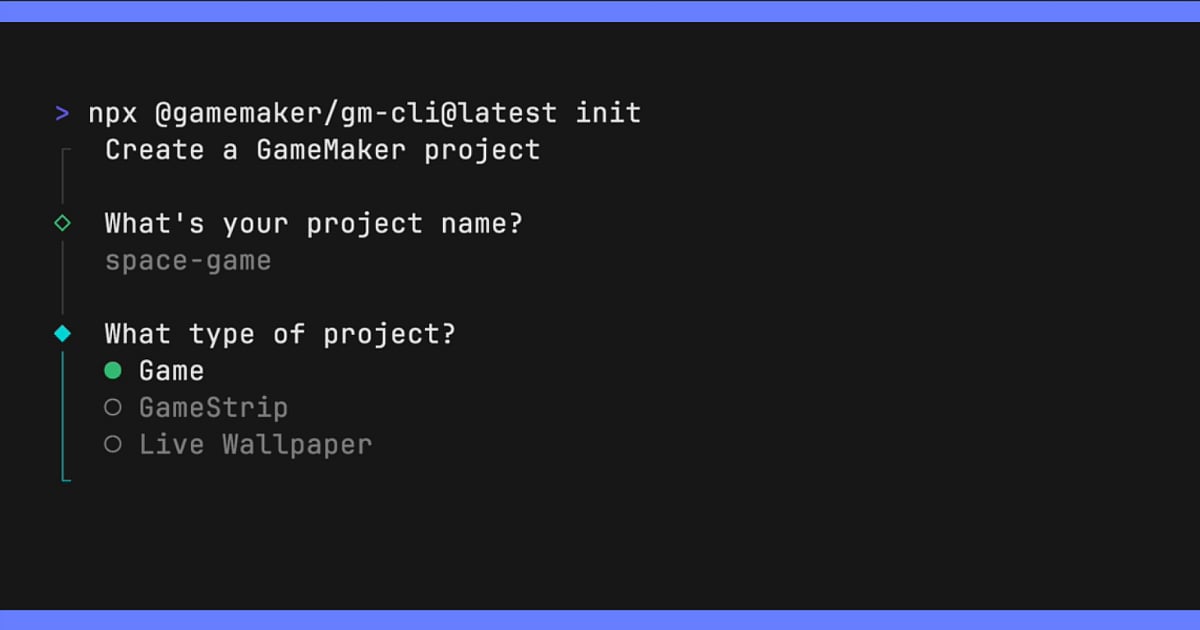
Alongside it, the GM-CLI toolchain enables developers to build and manage projects without opening the IDE. Project files are now stored as plain text, allowing easier version control and integration with systems like Git and automated build pipelines.
Claude Code is embedded within this CLI layer, allowing developers to describe tasks in natural language and execute them directly in the terminal. The system can navigate codebases, run tests, modify files, and iterate until issues are resolved, operating at a project-wide level rather than line-by-line suggestions.
GameMaker AI Workflows and GMRT Expand Development Flexibility
Opera stated that the tooling is designed to remain optional, with no embedded AI services required to run projects.
Developers can instead connect through APIs, scripting interfaces, or automation tools such as GitHub Actions. GameMaker's head, Russell Kay, noted that the goal is to reflect current workflows, noting the company wants to “give users who might benefit from AI the option to do so,” while leaving adoption decisions to developers.
Opera
The release also outlines a broader roadmap, with planned support for TypeScript, JavaScript, and C#. Source-available access across desktop, mobile, and web platforms is also expected in the coming months.
Meanwhile, GMRT further expands third-dimension (3D) capabilities with glTF model imports and a structured scene graph system.
The update signals a shift toward hybrid workflows, where command-line tools and AI systems complement traditional development, similar to Unity’s C# expansion and Unreal Engine’s C++/visual scripting and visual scripting support.

Author
Probaho Santra is a content writer at Outlook India with a master’s degree in journalism. Outside work, he enjoys photography, exploring new tech trends, and staying connected with the esports world.