






Video Game QA Testing
Game Testing in India Isn’t a Dream Job, but it Still Matters
Game QA testing is one of the most misunderstood entry points into the games industry, and it’s important to understand what the job actually involves.

Highlights
- Game quality assurance (QA) testing requires repetitive, documentation-heavy work and communication skills.
- Entry salaries for game testers sit at around INR 300K ($3,162) per annum.
- QA is a legitimate entry point into game development, but only for people who treat it as one and want to put in the effort to grow.
Every year, a predictable cohort of gaming enthusiasts joins the quality assurance (QA) teams at game studios in India, drawn by the idea that testing games for a living is the best job in the world. And every year, a significant portion of that cohort discovers within a few months that they have misunderstood what the job actually is. The gap between expectation and reality hits young professionals when they find out the difference between being a gamer and a technician. It requires concentration and tenacity to be a good game tester.
QA is one of the few genuine entry points into game development that does not require a portfolio, a degree in computer science, or a shipped title on your resume. Large studios with global QA operations in India hire regularly. Skills developed in QA transfer further than most people expect. The job, however, has to be understood for what it is, not for what it sounds like, before someone commits to it as a career move.
What Does Game QA Testing Actually Involve?
For many, the phrase "game tester" implies that someone sits in a chair and plays games. In reality, a QA tester's job is to systematically attempt to break software, document every failure precisely, and verify that developers have actually fixed what they said they have. In an interview with Kotaku, veteran tester Rob Hodgson compared game testing to solving puzzles. He said, "Figuring out how to reproduce that bizarre error you encountered, step by exacting step, is thrilling to the right kind of person."
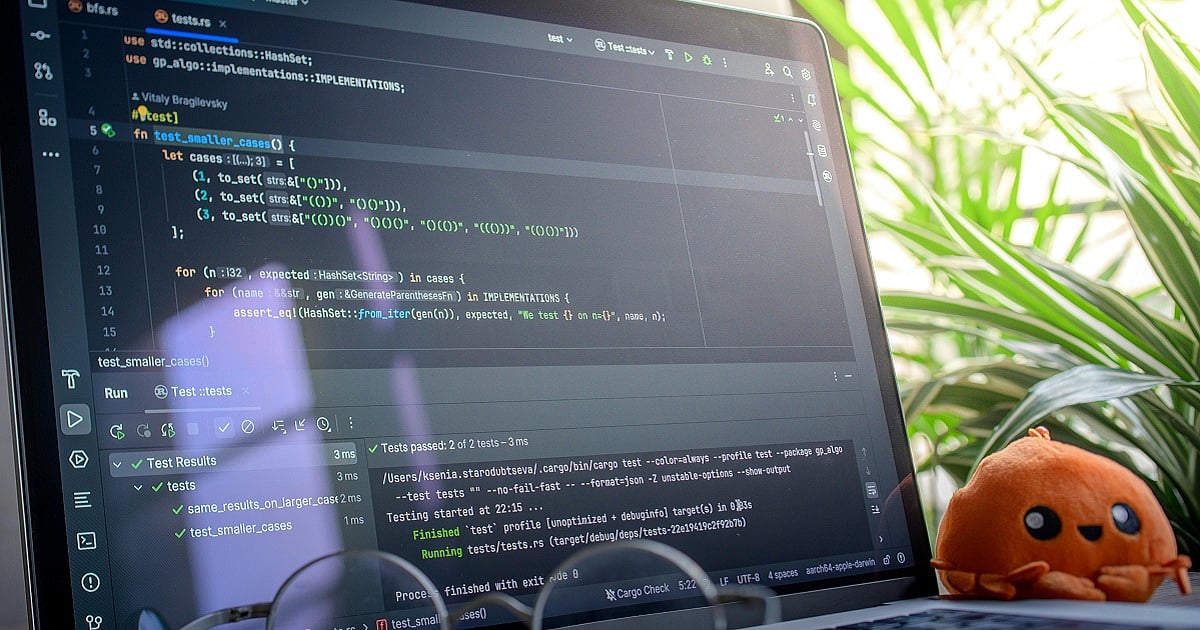
You need to be the right kind of person with the right approach. For gamers who simply want to get into the industry to try some of the latest games early, they end up being in for a rude awakening. A typical day on a large-scale project involves checking out the latest build notes each morning, running smoke tests to verify if the build is stable enough to test, and executing a queue of assigned test cases on specific game systems or areas. There is also a lot of documentation involved, like logging detailed bug reports for anything that breaks or behaves unexpectedly. Once a bug is fixed, testers have to make sure that the fixes are implemented properly.

Pexels
Being a game tester does not allow you to make any decisions in game design or a choice in how you want to play a game. You have to follow a specific set of instructions to the smallest of details to ensure a game ships with minimal bugs. You could spend hours of your day running into walls of one specific area just to ensure they are solid.
There are specific types of testing that go into QA as well. You may have to perform one or more of them as part of your job description:
- Regression testing confirms that bug fixes have not introduced new problems in adjacent systems.
- Compatibility testing checks that a game runs correctly across different hardware configurations, operating systems, and screen sizes, which is a significant workload on mobile platforms.
- Localization testing involves verifying that translated text fits properly in UI elements and that regional content is handled correctly. It is a distinct specialization.
- Exploratory testing gives testers latitude to attempt unexpected sequences and look for edge cases that scripted test cases might miss. This is where experienced testers tend to find the most engagement, and it is typically not where new hires begin.
Skills You Need to be a Game Tester
The misapprehension about game testing is that loving games is the main qualification. It is not irrelevant, because understanding how games are supposed to feel and behave helps testers identify issues that a non-player might miss. But loving video games is not what studios are primarily evaluating in interviews. The skills that matter in QA, in rough order of practical importance, are the following:
Attention to Detail
The ability to notice that a texture has loaded incorrectly in the background, that a collision boundary is slightly misaligned, or that a UI element has shifted two pixels out of position. This sounds easy but it can be a challenge when you have to do it for hours every day. It requires immense concentration to pull it off.
Clear Written Communication
Bug reports are the primary output of a QA tester's work. A bug report that cannot be reproduced by a developer is useless. A well-written bug report specifies the exact steps taken before the issue appeared, the platform and build version, the expected behavior, the observed behavior, and ideally, is backed up by screenshots or a video. Terse or vague reports create friction with developers and reflect poorly on the tester. Studios evaluate writing quality directly.
Pexels
Systematic Thinking
Good testers develop mental models of how game systems connect and use those models to predict where bugs are likely to appear when adjacent features change. This is what separates testers who find the same categories of obvious bugs repeatedly from those who find the edge cases that matter.
Familiarity With Bug-Tracking Tools
Jira, TestRail, Hansoft, and Mantis are the most common platforms in game studio QA pipelines. None of them require advanced technical knowledge to operate, but knowing how to write structured tickets, use filters, and track regression status before your first day on the job signals proper preparation.
Basic Scripting Knowledge
This is not required at the entry level, but it is the single most reliable differentiator between testers who stay in QA at an entry-level salary indefinitely and testers who move into QA automation, earn significantly more, and develop skills that transfer into engineering roles. Python, JavaScript, and familiarity with tools like Selenium and Appium are the most commonly cited starting points.
A degree is not required for entry-level game QA roles. Studios, including large multinational operations with QA teams in India, hire based on demonstrated skills and interview performance. That said, testers who want to move beyond QA into design, production, or engineering roles will find that a relevant degree accelerates the transition significantly. It is worth being honest about which outcome you are planning for before deciding how much to invest in formal education in gaming.
Game Tester Salaries in India
The salary data for game QA in India is more fragmented than for general software QA, because studio type, project type, and whether a role is permanent or contract-based all create significant variation.
Glassdoor's data for the QA game tester roles shows an annual average salary of INR 300K ($3,162). Senior roles can pay upwards of INR 800K ($8,429). Indeed's data puts the average game tester base salary for entry and mid-level roles across India at approximately INR 23,658 per month ($250), which translates to roughly INR 284K ($2,928).
The honest summary is that the first one to two years of game QA in India pay poorly, particularly in contract or third-party QA outsourcing roles. Permanent roles at established studios, including the multinational operations with India-based QA teams, pay better from the start and offer clearer progression. The difference between those two tracks matters more than almost any other variable for someone evaluating the role.
The Career Path for Game Testers
QA is worth taking seriously as a career entry point precisely because of the pipeline out of it into other game industry roles. The career trajectory from inside the discipline runs from QA Tester to Senior QA Tester to QA Lead to QA Manager. That internal path comes with meaningful salary progression and, at the managerial level, involves overseeing testing processes across multiple projects rather than hands-on testing.
The lateral moves out of QA and into other disciplines are where things get interesting. Testers who develop strong familiarity with game design systems frequently move into game design or level design. Someone who has spent two years systematically testing every mechanic in a game, identifying where player confusion occurs and where systems break under stress, understands game design from an unusually rigorous angle.

Pexels
Testers who develop scripting skills move into QA automation, which is both better-paid and more technically demanding, or into engineering roles. Testers who develop strong cross-team communication and project management skills move into production roles, most commonly as associate producers.
The career may be appealing, but it has its downsides. Burnout is the most consistent theme across long-form accounts of working in game QA, and it is underreported in the career content that reaches people before they join.
You could be spending several months checking only minor bug fixes, localization errors, button placement, and graphical glitches, which can be boring. Regression testing, which is the bread and butter of late-stage QA work, is the most draining part of the role.
Game testers are typically brought in during the later third of the game development cycle, which is precisely when pressure is highest and release deadlines are approaching. During that period, the workload increases substantially. Programmers are fixing bugs, and testers are simultaneously verifying fixes, checking for regressions, and continuing to search for new issues in a build that changes daily.
There is also a structural indignity in the role that experienced testers describe consistently. When a game ships with major bugs, public and industry attention often lands on QA. When a game ships cleanly, QA is invisible. The role is only noticed when something goes wrong, which creates a professional environment where the upside is anonymity, and the downside is blame. You need to be prepared for these challenges if you want to get into QA testing as a career.
How to Prepare Before You Apply
Build a testing portfolio before you apply. Platforms like Itch.io and Steam host indie games and open beta releases that can be tested by anyone. Run them systematically, document bugs in structured reports that include steps to reproduce, expected vs actual behavior, screenshots, and severity classification, and compile those reports into a document you can present at an interview. This demonstrates both that you understand what QA work actually involves and that you can write a coherent bug report before you have been trained to do so.
Learn Jira at a basic level. It is free to access through Atlassian's individual plan and takes a few hours to understand well enough to navigate confidently. Turning up to a QA interview already knowing how to create, filter, and categorize tickets removes a barrier that many candidates hit.
Decide early which exit path interests you. If the goal is game design, pay particular attention to the design decisions behind the systems you are testing and build a habit of articulating why something creates a poor player experience rather than simply noting that it is broken. You can transition into game design or project management if you upskill yourself and prepare to grow as a professional.
QA roles are genuinely accessible, and the skills they build are transferable to other roles. The studios hiring for it in India include some of the most significant names in global game development, like Ubisoft and Rockstar Studios. None of that changes the fact that the first year will be harder and less glamorous than most people expect. Going in with that clarity is the difference between building something from the role and leaving it six months in, having learned little.

Author
Abhimannu Das is a web journalist at Outlook India with a focus on Indian pop culture, gaming, and esports. He has over 10 years of journalistic experience and over 3,500 articles that include industry deep dives, interviews, and SEO content. He has worked on a myriad of games and their ecosystems, including Valorant, Overwatch, and Apex Legends.
Abhimannu Das is a web journalist at Outlook India with a focus on Indian pop culture, gaming, and esports. He has over 10 years of journalistic experience and over 3,500 articles that include industry deep dives, interviews, and SEO content. He has worked on a myriad of games and their ecosystems, including Valorant, Overwatch, and Apex Legends.



Related Articles