




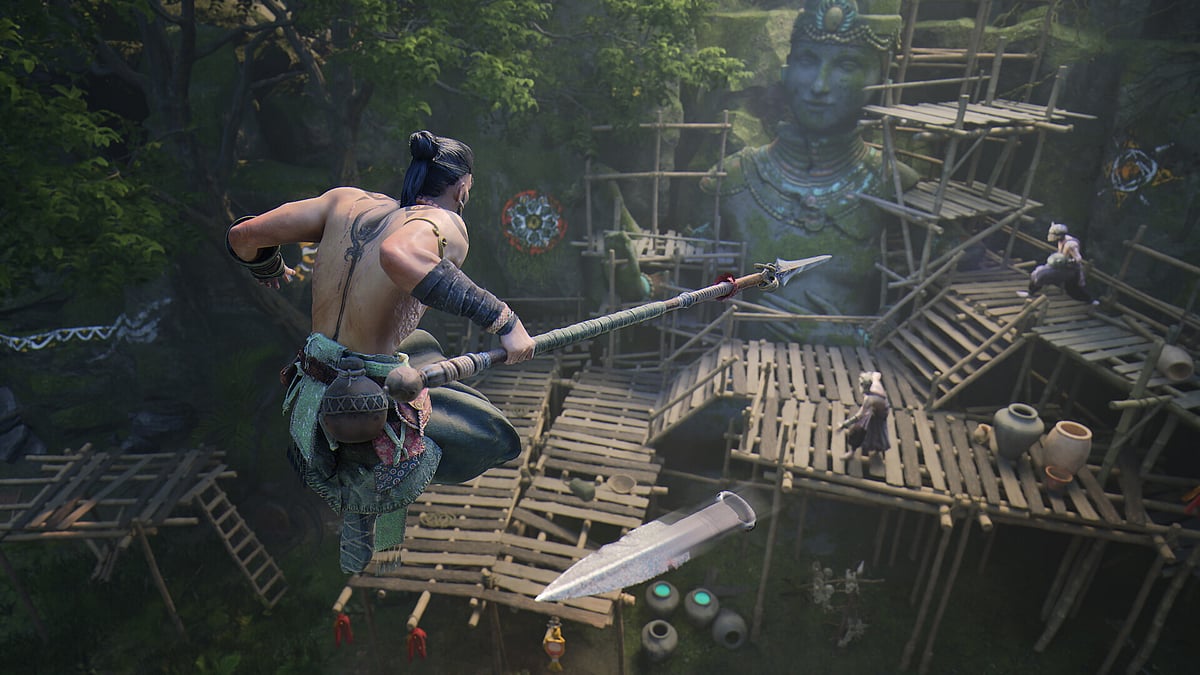
AAA focuses on specialized roles for global epics, while indies utilize versatile generalists for niche titles.
Indie vs AAA Game Studios: Which Work Culture Fits You Best?
Navigate the game industry: AAA offers high stability and specialization, while indie paths provide creative control and versatile growth.

Highlights
- AAA focuses on specialized roles for global epics, while indies utilize versatile generalists for niche titles.
- AAA provides stable, high salaries with benefits, whereas indies face financial volatility for higher creative ownership.
- AAA follows top-down corporate vision, while indie developers enjoy total creative control and flexible "vibe" workflows.
Choosing between an independent game studio and a AAA giant does more than just shape your daily grind—it defines your career trajectory, your financial reality, and your relationship with creative joy. The video game industry is currently split into two very different worlds. On one side, you have the AAA behemoths, massive corporations with budgets that rival Hollywood blockbusters. On the other hand, the indie scene thrives on scrappy, agile teams prioritizing innovation over raw polish.
As the indie market alone prepares to hit a valuation of nearly $11 billion by 2031, the choice for developers isn't merely about securing a job; it’s a lifestyle decision. Whether you are a fresh graduate in Pune or a seasoned developer in Delhi eyeing global hits, understanding these environments is crucial to picking the right fit. Here is a comprehensive look at the work culture across both ends of the spectrum.
Project Scope: Global Blockbusters vs. Niche Masterpieces
The scale of what you are building dictates your day-to-day reality. AAA studios, such as Ubisoft India and Rockstar Games, tackle massive, two- to five-year epics. These projects require armies of 100 to 500+ developers with highly specialized roles to achieve industry-leading graphical polish and complex systems. Contributing to a AAA title means your work reaches the entire player base of a global phenomenon, but it also means navigating thick layers of corporate bureaucracy.
Indie shops operate on an entirely different wavelength. Studios like Pune’s Nodding Heads Games—the team behind the BAFTA-nominated Raji: An Ancient Epic—wrap projects in six months to three years using a tight 1 to 10-person team. Instead of chasing mega-budgets, indies focus on niche markets and culturally rooted narratives. This scale allows indies to ship faster and gives developers hands-on experience, proving that massive scopes aren't required to yield global acclaim.
The Paycheck, Stability, and Revenue Risks
The most obvious contrast between the two cultures starts with your bank account. AAA studios have traditionally served as the industry’s safe harbor. Globally, AAA salaries average between $75,000 and $150,000 USD, with senior engineering and management roles easily clearing that upper benchmark. In the Indian market, a senior developer at a major studio might earn between ₹18 and ₹35 Lakhs annually, up to ₹60 to ₹120 Lakhs for top-tier global equivalents, as per CVowl. These roles come bundled with robust safety nets: comprehensive corporate benefits, bonuses, and around 20 days of paid time off—though a looming 28% industry turnover rate from post-launch layoffs remains a persistent threat.
Indie studios operate in a much more volatile financial market. While a runaway hit like Hades can lead to life-changing revenue shares (where creators keep 70-85% of the profits), the reality for many is "passion project" funding. An indie developer's salary can swing wildly from $0 during development to $200,000+ upon a successful launch. In the Indian indie scene, senior roles might pay closer to ₹10 to ₹20 Lakhs. Studios like Pune's SuperGaming are noted for offering above-average developer pay with good benefits, but the inherent risk of funding dips in the mid-tier market is ever-present. The trade-off is clear: AAA offers a reliable floor, while indie offers a risky, yet incredibly high, ceiling.
Shutterstock
The Learning Curve: "Specialized Niche" vs. "Jack of All Trades"
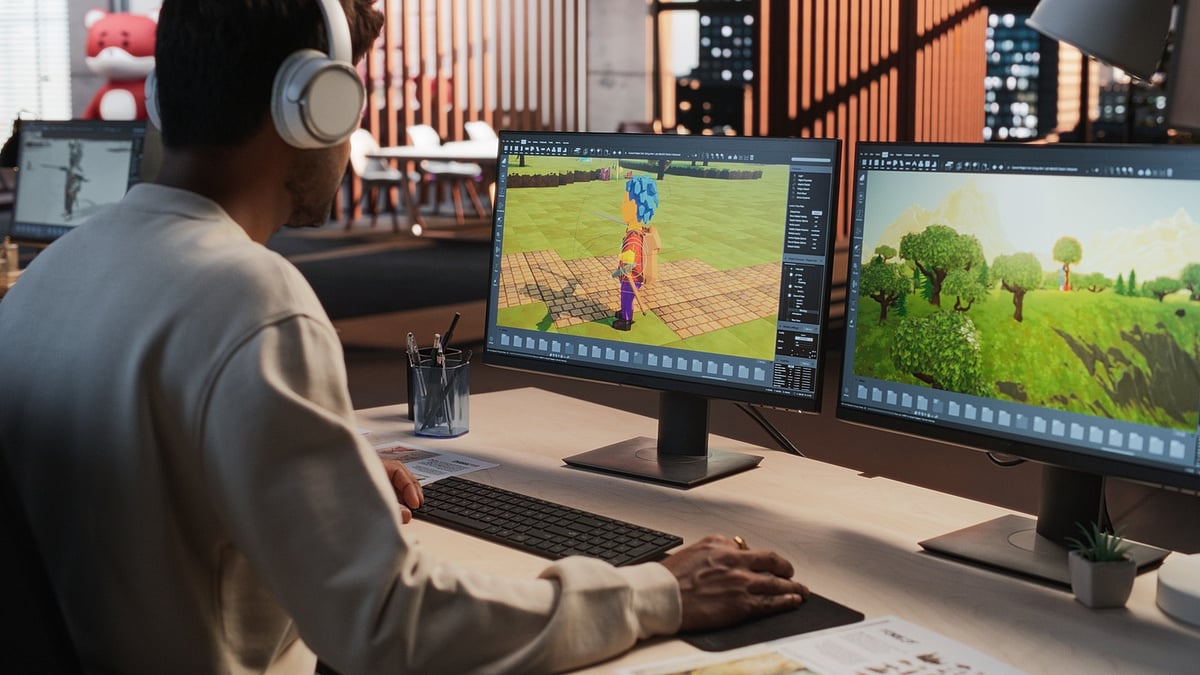
Your professional growth curve depends entirely on your team's size. In a AAA environment, you are cultivated to be a specialized craftsman. A designer might own a single level, or an animator might spend five years perfecting how a character’s hair reacts to wind. This allows you to become one of the world's leading experts in a tiny niche, benefiting from the mentorship of seasoned pros. However, it can also leave you feeling like a small cog in a giant machine with little say over the big picture.
Indie culture demands a steep, versatile learning curve. It is an all-hands-on-deck environment where you wear multiple hats. A developer might spend the morning coding a gameplay mechanic, the afternoon editing a promotional trailer, and the evening managing community feedback on Discord. Small teams often collaborate tightly on pipelines to hit quality goals. Moving between these worlds can be jarring; transitioning to solo indie work means having to "unlearn" the deeply ingrained habits of working on teams of hundreds.
Creative Control: The "Dark Ride" vs. The "Sandbox"
Creative freedom is the primary catalyst for developers going independent. In large AAA studios, the creative vision is top-down. You are helping construct what has been compared to a "Disneyland dark ride"—a perfectly polished, linear experience where every micro-detail must survive a dozen committee meetings before seeing the light of day. Your input is often limited to executing specific directions.
Indies, conversely, build sandboxes. Games thrive on innovative systems and gameplay loops rather than $100 million cinematics. If you want your specific idea in the final game, the indie route provides total creative control. Indian indies are increasingly blending regional folklore with global appeal, taking risks that large studios simply cannot afford.
The Reality of Hours and the Crunch Factor
The gaming industry is notorious for "crunch," but the realities differ drastically between the two cultures. According to a GDC report, 44% of game developers log 40+ hours weekly during peak times. In AAA, crunch is often systemic and tied to rigid, massive marketing deadlines. You might work 50 to 70 compensated hours a week, nearing launch.
In the indie world, crunch is largely self-imposed, driven by the existential threat of the studio running out of money if the game doesn't ship. While nearly 85% of indie developers enjoy the flexibility of fully remote work, solo or small teams frequently self-crunch for 70 to 90 unpaid hours a week. Mid-sized studios highlight this friction; SuperGaming, for instance, earned praise for a vibrant, fun culture but has also faced critiques for erratic timelines and heavy crunch, mirroring the demanding environments found in massive 1,000+ person hubs like Ubisoft Pune.
Pexels
Voices from the Trenches
Developers who have crossed the battle lines offer the most unfiltered insights into these work cultures:
- The Indie Hustle: Shruti Ghosh, co-founder of Nodding Heads Games, said to gameindustry.biz about the extreme sacrifices of the indie path, noting, "Sold my apartment to sustain... publisher gave freedom we craved." Gosh added, "We set a date, and if we didn't finalise [a deal] by that date... we [agreed to] let the team know to go and find jobs -- and look for jobs ourselves.”
- The AAA Reality Check: A solo developer painted a stark picture of the effort-to-reward ratio: "3 years, 80hrs/week, $2K revenue. AAA QA quits at 60hrs and gets sympathy,” as per CoinNoin.
- The Middle Ground: A SuperGaming artist highlighted the duality of growing studios, noting the "great flow, supportive colleagues... but too much crunch,” as AmbitionBox mentions.
- The Perspective Shift: Shalin Shodhan, a former Pixar and EA veteran who founded Masala Games, emphasized that indie life allows him to focus on the "three Fs of life: Food, Family, and Festivals," creating games that reflect modern India in ways corporate offices cannot. Meanwhile, a Reddit user, r/gamedev, transitioning from AAA to indie noted the upside of "more creative input and flexible hours," but admitted their ultimate goal was to take those leadership skills back to a larger team.
Self-Assessment: Which Environment Suits You?
At the end of the day, there is no universally "better" choice—only the one that aligns with your current professional and personal goals. Use this checklist to identify where you belong:
You are an AAA Personality if:
- You want to be a world-class, highly focused specialist in one specific technical or artistic area.
- You prioritize a stable, high salary, reliable PTO, and comprehensive corporate health benefits.
- You thrive in a structured environment with clear hierarchies, defined rules, and direct mentorship.
- You are driven by the desire to see your name in the credits of a blockbuster title played by millions.
You are an Indie Personality if:
- You are frustrated by bureaucracy and want your creative ideas to have an immediate impact on the final product.
- You are a generalist who enjoys tackling completely different types of work (coding, art, marketing) every single day.
- You have a high risk tolerance, are willing to trade financial security for the potential payout, and total ownership of a hit game.
- You highly value the flexibility to set your own schedule, work remotely, and define your own pipeline.
Whether you aim to perfect the lighting engine for the next global blockbuster or build a culturally rich narrative from a small desk in Bangalore, both paths offer a unique and valid way to leave your permanent mark on the global gaming industry.

Author
Krishna Goswami is a content writer at Outlook India, where she delves into the vibrant worlds of pop culture, gaming, and esports. A graduate of the Indian Institute of Mass Communication (IIMC) with a PG Diploma in English Journalism, she brings a strong journalistic foundation to her work. Her prior newsroom experience equips her to deliver sharp, insightful, and engaging content on the latest trends in the digital world.
Krishna Goswami is a content writer at Outlook India, where she delves into the vibrant worlds of pop culture, gaming, and esports. A graduate of the Indian Institute of Mass Communication (IIMC) with a PG Diploma in English Journalism, she brings a strong journalistic foundation to her work. Her prior newsroom experience equips her to deliver sharp, insightful, and engaging content on the latest trends in the digital world.




Related Articles