




Hasbro is making major moves in the gaming space.
Hasbro Invests $1B in AAA Games, Skips Live-Service Trends
The toy giant is spending $1 billion to build premium, narrative-driven AAA games in-house, actively rejecting the live-service model for PC and consoles.

Highlights
- Hasbro is investing $1 billion to become a first-party creator of premium, narrative-driven PC and console games.
- The company is intentionally avoiding the live-service and free-to-play mobile grind to deliver complete, single-price core games.
- Hasbro balances this internal AAA focus by licensing mobile hits to partners like Scopely and growing traditional tabletop properties.
The Rhode Island-based toy and entertainment conglomerate Hasbro has invested nearly $1 billion USD since 2018 into developing premium, narrative-driven PC and console games. In a refreshing departure from industry trends, the company is intentionally steering clear of creating in-house live-service titles and mobile games. Instead, Hasbro is bringing its heaviest hitters, including Dungeons & Dragons, Transformers, and G.I. Joe, under its own roof to craft high-quality, story-focused experiences.
Speaking with The Game Business, Hasbro CEO Chris Cocks detailed the company's "Playing to Win" strategy, emphasizing a shift from merely licensing its iconic brands to becoming a first-party creator. Cocks noted that players are fatigued by the aggressive monetization of the live-service model and are actively looking for complete games. By focusing this massive budget entirely on core games that offer a solid forty to fifty hours of content for a single, fair price, Hasbro aims to deliver exactly what the gaming community is asking for, while avoiding the intense, continuous marketing spend required to keep live-service games afloat.
Historically, Hasbro relied on taking a licensing cut from outside developers, but recent runaway successes have highlighted the value of keeping things in-house. For context, the critically acclaimed Baldur’s Gate 3 brought in a staggering $90M for Hasbro. By utilizing Wizards of the Coast as a robust publishing infrastructure and managing development and community engagement internally, Hasbro plans to capture the entire profit margin on its future smash hits.
To bring this bold vision to life, the company has built around six distinct studios packed with industry veterans. Montreal's Invoke Studios is currently developing Warlock: Dungeons & Dragons, an action-adventure spin-off officially unveiled at the 2025 Game Awards and slated for a 2027 release. Meanwhile, Archetype Entertainment, led by former Mass Effect developers, is working on Exodus, an ambitious sci-fi RPG.
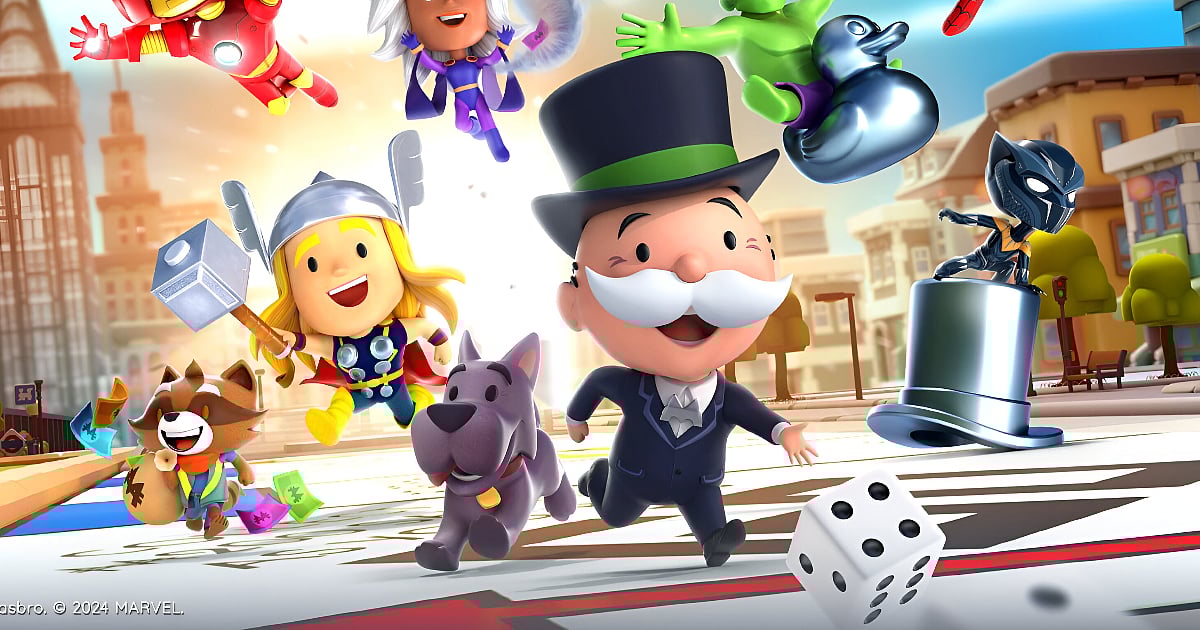
Monopoly Go
The Mobile Exception: Licensing Partners Like Scopely
The slate also includes an unannounced horror project by Austin-based Skeleton Key. Looking ahead, Cocks mentioned that the company may look into diversifing its studio presence for the next round of games, potentially expanding into Eastern Europe, where development costs are more manageable.
While Hasbro is strictly avoiding developing mobile games internally to dodge the volatile free-to-play grind, they haven't abandoned the platform entirely. Instead, they are licencing their brands to developers whom Cocks describes as "the best in the business." A prime example is Scopely, which has developed mobile versions of classics like Yahtzee, Scrabble, and Monopoly. Monopoly Go has been a monumental success, generating more than $5B in revenue by April 2025 and continuing to pay dividends with $41M earned in the first quarter of 2026 alone.
Beyond the digital screen, Hasbro's traditional gaming divisions are also seeing record-breaking milestones. Magic: The Gathering enjoyed one of its most successful years ever in 2025, driven by a Final Fantasy crossover set that Wizards of the Coast confirmed as the game's biggest launch in history.
Ultimately, whether through a beloved board game, a massive trading card crossover, or a highly anticipated AAA video game, Hasbro is proving that treating its deep catalog of properties with care and prioritizing quality over rushed seasonal updates is a winning strategy for both the company and the fans.

Author
Krishna Goswami is a content writer at Outlook India, where she delves into the vibrant worlds of pop culture, gaming, and esports. A graduate of the Indian Institute of Mass Communication (IIMC) with a PG Diploma in English Journalism, she brings a strong journalistic foundation to her work. Her prior newsroom experience equips her to deliver sharp, insightful, and engaging content on the latest trends in the digital world.
Krishna Goswami is a content writer at Outlook India, where she delves into the vibrant worlds of pop culture, gaming, and esports. A graduate of the Indian Institute of Mass Communication (IIMC) with a PG Diploma in English Journalism, she brings a strong journalistic foundation to her work. Her prior newsroom experience equips her to deliver sharp, insightful, and engaging content on the latest trends in the digital world.