





Magazines in Japan
How One of Gaming's Oldest Magazines is Still Standing
Japanese gaming magazine Famitsu turned 40 in June 2026, in an era where most Western counterparts of its era are defunct or unrecognizable.

Highlights
- Famitsu published its 40th anniversary issue on June 4, 2026, a 400-plus-page edition covering four decades of Japanese game history.
- The publication has outlasted every major Western gaming magazine of its era, including GameFan and the Official PlayStation Magazine.
- Famitsu's cross-review format, introduced in its tenth issue, became the most influential review system in games journalism history.
On June 4, 2026, Famitsu published a 400-plus-page anniversary issue celebrating 40 years of existence. It included a feature on four decades of game history, contributions from manga artists, and a catalog of every game that had ever received a perfect score from its reviewers. It was, by any reasonable measure, an important moment in gaming history.
In an era where print journalism is phasing out in favor of digital media, Famitsu continues to thrive. How is it that a 40-year-old magazine is able to capture the attention of millions in Japan and beyond? Let’s find out how the Japanese outlet was able to maintain a loyal audience and its dominant position in the industry for so long.
The Origins of Famitsu
Famitsu was born in 1986 as Famicom Tsūshin. The name came directly from the console it was created to cover: the Famicom, Nintendo's home gaming system that had launched in Japan in 1983. In North America, 1983 was when the video game industry collapsed almost entirely. The market had been flooded with low-quality games, most notoriously the rushed Atari port of E.T. the Extra-Terrestrial, and consumers had stopped trusting the medium. The entire North American games industry shrank by an estimated 97% in revenue between 1983 and 1985.
The Famicom launched in Japan in 1983 and became a cultural phenomenon before the crash fully registered in the West. When Nintendo brought it to North America in 1985 as the Nintendo Entertainment System, it became an instant success. Famitsu was created to cover that machine. It was the right publication at the right moment that helped promote video games in a volatile market, and it has been around for 40 years.
In the same 40 years, Western gaming media has been almost entirely dismantled. Magazines like Nintendo Power and Official PlayStation Magazine that defined how a generation learned about games are either dead or exist as pale digital shadows of what they were. Meanwhile, Famitsu is still printing 300-plus-page issues every week. The forces that killed Western gaming magazines also affected Japan. Famitsu simply navigated them in ways that its peers in the U.K. and U.S. were unable or unwilling to do.
Things were not easy for Famitsu right from the start. The first issue, printed in June 1986, sold less than 200K copies despite 700K being printed. What it built over the following decade was authority, through a combination of exclusive developer access, dense strategy coverage, and the review format that would become its most internationally recognized feature.
The cross-review system, introduced in issue 10, became an instant success. It was a practical format that turned out to be sticky in ways nobody quite anticipated. Four reviewers scored the games individually out of 10, and the publication totaled the score out of 40. The format stripped away the pretence of a single authoritative voice and replaced it with something that felt more like a conversation among opinionated peers. It was immediately copied by Electronic Gaming Magazine (EGM), eventually making it one of the defining aesthetic choices of American games journalism in the 1990s.
The perfect score of 40 became the format's most powerful artifact. Famitsu gave its first 40 in 1998 to The Legend of Zelda: Ocarina of Time. In the years since, fewer than 40 games have received perfect scores, a list that reads like a highly contested canon of Japanese game development. Every perfect score generates its own cycle of debate online. People wonder if Famitsu's relationship with developers is too close for the score to mean anything. By the PlayStation era in the mid-1990s, circulation had reached a peak of over 500K copies per issue. Famitsu became part of gaming’s cultural infrastructure.
The Fall of Old School Gaming Journalism
The late 1990s and early 2000s brought the internet, which instantly became the fastest and most convenient source of gaming information. The specific thing gaming magazines had always sold was access to news, reviews, and previews before you could find them elsewhere. Once the internet removed that scarcity, the core value proposition most of the magazines offered was gone.
Some publications downplayed print exclusives and premium production values. Some pivoted aggressively to web, allowing their print editions to shrink and eventually disappear. Some were acquired by retailers, which solved distribution problems while introducing editorial ones. Game Informer, the longest-running Western gaming magazine, survived by being owned by GameStop, which gave it direct retail distribution that independent publications could never match. When GameStop's business model began collapsing, Game Informer shut down in August 2024 before restarting independent operations in March 2025.

A young girl with long brown hair lies on her stomach on a bed featuring light, floral-patterned sheets. Wearing a grey short-sleeved top and white socks, she looks intently at a dark laptop open in front of her, with her hands resting near the keyboard area.
Famitsu's response to the internet was more gradual and more Japan-specific. Japanese print media culture has historically shown more resilience than its Western counterparts, for reasons that are partly cultural and partly structural. Japanese publishers maintained a reading culture around specialist print publications for longer. Famitsu benefited from existing in a market where print did not immediately feel obsolete, which gave it time to adapt without the crisis pace that forced Western publications into decisions that often proved fatal.
Like most of its counterparts, Famitsu did launch its website for online content, which became Japan’s go-to destination for news and reviews. It maintained the print magazine as a complement, which offered exclusive long-form features, and the anniversary issues are highly sought after. The 400-page anniversary edition is not trying to compete with a website for breaking news. In fact, it is competing with nothing. The special editions are successful because no one else makes something like that in the gaming industry.
Famitsu’s Editorial Policies
Famitsu's survival has not been without cost. The magazine's relationship with the Japanese game industry has long been described as “collaborative.” Game developers grant exclusive access to media outlets in exchange for favorable coverage windows. Major reviews run alongside advertising from the same publishers. The perfect scores have periodically attracted accusations in online forums of being commercially motivated rather than neutral.
Famitsu operates in an industry ecosystem where access journalism has always been the dominant mode. Maintaining relationships with developers and publishers is necessary for the kind of exclusive content that sustains a specialist media outlet. The same dynamic exists at every major Western outlet. What makes Famitsu's version of it more visible is the authority it has built over 40 years. The stakes of any given review or score are higher than they would be at a less influential publication.
Steam
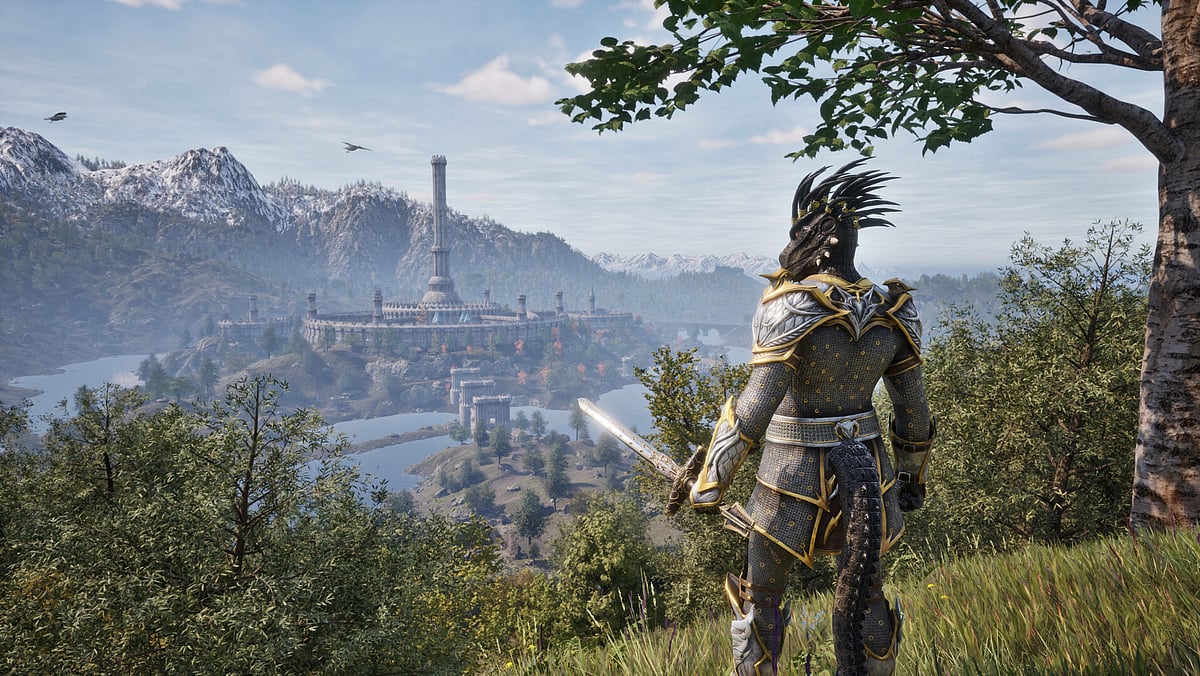
The rare and highly coveted 40/40 score from Famitsu can shape how successful a game is. Many online discussions bring up how a majority of the games that receive perfect scores are Japanese. There are only three Western games in history that have earned a perfect score from the outlet: GTA V, The Elder Scrolls V: Skyrim, and Ghost of Tsushima.
Famitsu needs developer access to produce the exclusive content that justifies a weekly print magazine in 2026. Developers need Famitsu's reach and authority to connect with Japanese audiences. The relationship is mutually beneficial, which makes it difficult to assess from the outside whether any given review reflects independent critical judgment or the weight of that relationship. The honest answer is that nobody outside the editorial room knows for certain. Famitsu has never been particularly transparent about where those lines are drawn.
Even after 40 years, readers have continued to engage with the scores as a meaningful reference point. It indicates that gamers trust the outlet despite the discourse surrounding its scores and relationships with developers.
What Does Famitsu Teach The Industry?
Many point to Famitsu's survival and think print is not dead if you are good enough at it. That is only partly true. The real lesson is that specialist media survives when it builds authority that cannot be replicated by the platforms that disrupted it. Perhaps the same lesson can be applied to artificial intelligence, which now looms over digital gaming journalism the same way the internet threatened print media.
Famitsu's scores are cited because so many years of consistent reviewing have made them the reference point for gamers in Japan. It is not because four people rating a game out of ten is inherently more credible than any other format.
The second lesson is that the format needs to evolve while the authority stays the same. Famitsu is not the same publication it was in 1996 or 2006. The digital edition and its website exist. The strategy guides that were a core revenue driver in print have largely moved online. The brand, the cross-review format, and the relationship with the Japanese games industry have remained consistent enough to keep it successful.
Every gaming magazine that died in the last 20 years died because it lost the argument about why it still needed to exist. Famitsu has kept winning that argument in one way or another. The 400-page anniversary edition is its most recent entry in that ongoing case for itself. Given the evidence, it is difficult to argue the verdict has been wrong.

Author
Abhimannu Das is a web journalist at Outlook India with a focus on Indian pop culture, gaming, and esports. He has over 10 years of journalistic experience and over 3,500 articles that include industry deep dives, interviews, and SEO content. He has worked on a myriad of games and their ecosystems, including Valorant, Overwatch, and Apex Legends.
Abhimannu Das is a web journalist at Outlook India with a focus on Indian pop culture, gaming, and esports. He has over 10 years of journalistic experience and over 3,500 articles that include industry deep dives, interviews, and SEO content. He has worked on a myriad of games and their ecosystems, including Valorant, Overwatch, and Apex Legends.