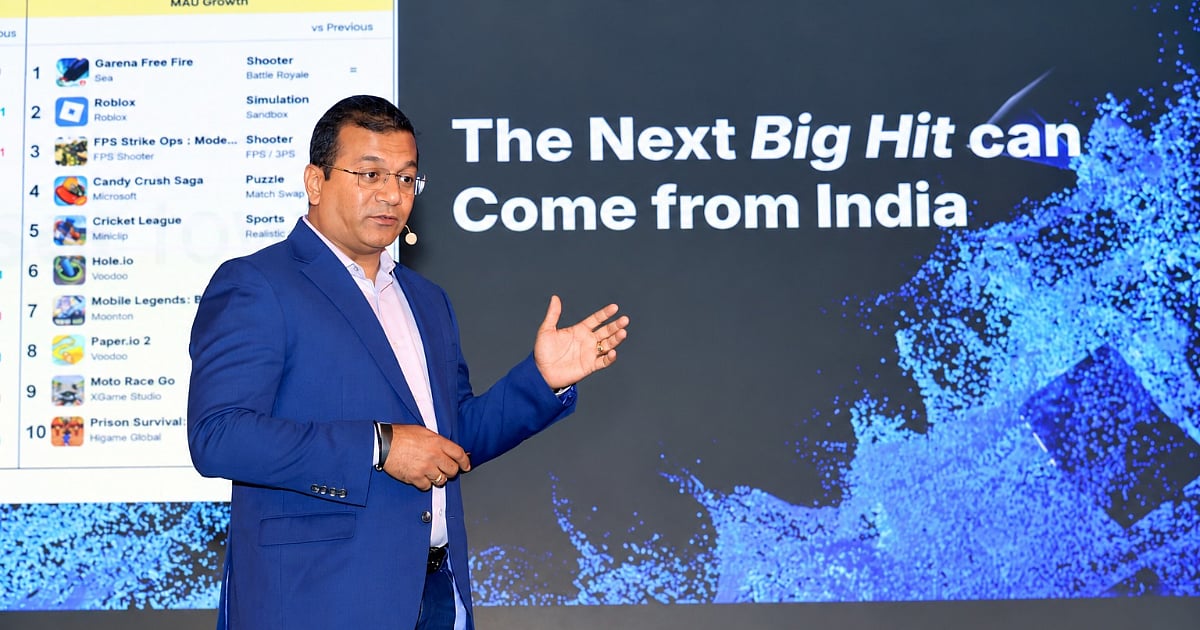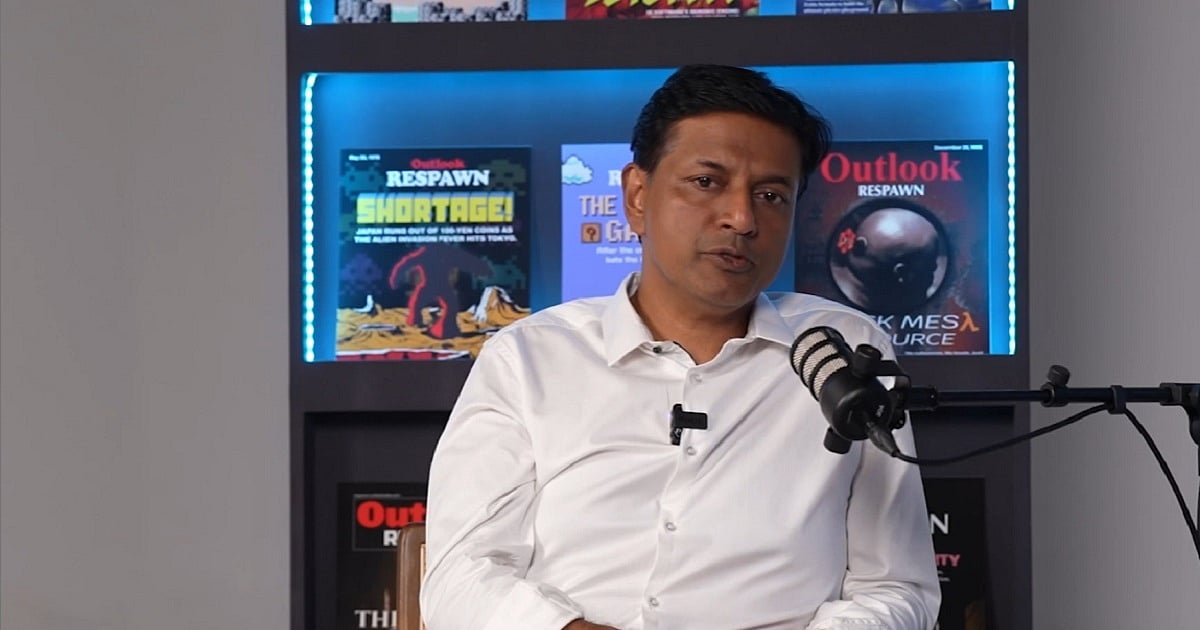
Roopak Krishnan, Logitech
Logitech's Roopak Krishnan on India's Changing Gaming Households
Logitech India's head of marketing, Roopak Krishnan, has watched Indian parents go from banning kids from entering gaming cafes to funding their kids' setups.

Highlights
- Roopak Krishnan, head of marketing at Logitech India and a 21-year company veteran, traces the shift in Indian parental attitudes toward gaming.
- A 2024 survey found that 66% parents believe their children are addicted to gaming.
- Krishnan's own reading of the Indian consumer is that the broadband revolution has kept gaming aspirations alive.
Roopak Krishnan has been at Logitech for 21 years. In that time, he has watched the Indian gaming market go from being associated with imported hardware and cybercafe corners to one of the fastest-growing segments in the company's global business. He started his career selling Wipro computers and Samsung hard drives. He now runs Logitech’s marketing and product categories for a company whose G series peripherals have become a reference point for competitive gaming globally.
In a conversation with Outlook Respawn on Respawn Point, Krishnan spoke in detail about the regional language strategies the brand uses to reach gamers outside of cities like Bangalore and Mumbai. But the thread that ran through almost everything he said was the involvement of Indian parents in gaming. What the older generations used to think about gaming, what they think now, and why the shift matters more for the industry's long-term health than any hardware launch or government policy.
The Gaming Cafe That Nobody Wanted Next Door
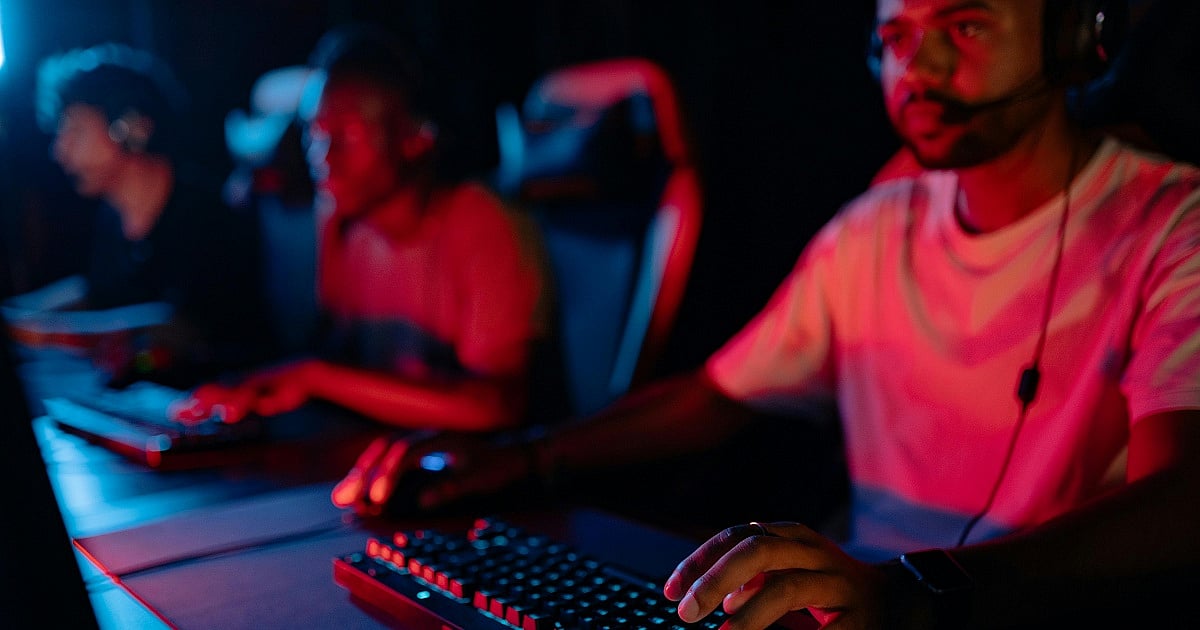
Krishnan talked about gaming cafes in Indira Nagar, Bangalore, roughly 15 years ago. He said, "When I used to visit the gaming cafes in Bangalore, those days in Indira Nagar, they used to be in some street corner on the top floor. And I used to ask the cafe owners, "Why are you guys here?” The owners would say the majority of the resident associations don't like them."
Pexels
Krishnan’s experience is not a one-off incident. Gaming, as a category, had to physically hide itself from the parts of Indian society that would have shut it down if given the chance. Resident welfare associations in urban India are not a minor force. They shape what businesses open, what signage gets approved, and what activities are considered appropriate for a neighbourhood. In many parts of India, gaming cafes had to be visible enough to be findable, invisible enough to avoid conflict.
Things are no longer the same, as Krishnan notes, "Come forward after 15 years, today parents take their kids to the gaming cafes. And I have seen them dropping them. In front of Belur Institute of Technology (Bengaluru), there was a gaming cafe that I visited. A parent had come and swiped a card for a month for their son.”
A monthly prepaid card at a gaming cafe is an active investment by a parent to let their kid enjoy a hobby. According to Krishnan, modern-day parents are funding and structuring gaming for younger generations. That is a fundamentally different relationship with gaming than the one that characterized Indian middle-class households even ten years ago.
COVID as the Accelerant
Krishnan identifies COVID as the single biggest driver of this shift. His argument is not simply that children gamed more during lockdowns and parents got used to it. It is that the pandemic created a simultaneous pressure test and proof of concept. He said, "COVID would have accelerated and created an acceptance when kids are indoors, and they are playing as well as they are doing well in studies. And they have accepted it as part of life."
The key phrase here is "as well as they are doing well in studies." Parents who had spent years treating gaming as a threat to academic performance watched their children spend a year and a half at home, playing significantly more than before, and then saw their results. For many families, the catastrophic trade-off they had feared did not materialize. Young gamers continued to deliver on their academic expectations, which did much more than any amount of advocacy could ever do.
Krishnan also talked about how esports has changed the visible model of the serious gamer. According to him, "Many of them telecast their bootcamp on what they are doing. You would have seen how they eat well, how they have psychologists to help them, how they have to exercise regularly."
The professional esports player, as seen through a phone screen during a lockdown, does not look like the stereotype of the lethargic screen-addicted teenager. They look like athletes with structured routines. That image, Krishnan suggests, has migrated into how parents understand the relationship between gaming and self-discipline.
He said that Logitech does not need to market to parents anymore, as they do not resist gaming as much as they used to.
Have Indian Parents Really Changed Their Stance on Gaming?
Krishnan's reading on parental acceptance is grounded in real observation, and it reflects a genuine shift. It is also worth sitting alongside what the survey data from the same period shows, because the picture it paints is more complicated.
A LocalCircles survey conducted between August and October 2024, drawing over 70K responses from urban Indian parents across 368 districts, found that 66% of parents believe their children are addicted to social media, OTT platforms, and online games. When asked about the emotional and mental impact of these activities, 58% of the 13,743 parents who answered that specific question reported observing aggressive behavior in their children. A separate survey by Baatu Tech in early 2024 found that 80% of the 3K parents surveyed expressed worry about gaming addiction specifically.

Pexels
These numbers do not necessarily contradict Krishnan's observation. A parent can simultaneously swipe a card at a gaming cafe and carry a background anxiety about screen time. Acceptance of gaming as a legitimate activity, even as a potential career path, does not require the absence of concern about how much is too much. Indian parenting conversation around gaming has moved from a binary— either you game or you study— to something more negotiated and contextual.
His own household example from the interview illustrates this well. Krishnan said, "My son is 17 years old, and he games. You can say that we had our apprehensions, maybe when he was 10 or 11 years old. But what I've seen with my son is that he has divided his time without (being told) how to divide it. So yes, he even games closer to exams. But I've seen that it has not impacted his marks or whatever."
The Broadband Variable in India
One element of Krishnan's analysis that the survey data does not capture but that shapes the market reality is what he calls the flattening of the city-tier divide. The conventional assumption about the Indian gaming consumers is from cities such as Bangalore, Mumbai, Delhi, and Hyderabad, with expensive hardware.

Pexels
Krishnan pushes back on this, stating, "One of the first influencers I worked with was from Lucknow. Now, to say that someone from Lucknow is actually having followers across India, that shows that the broadband penetration has really taken off, and the gaming has picked up in cities like Lucknow."
Broadband penetration makes gaming accessible for everyone. A gamer in Patna who watches the same YouTube content as a gamer in Pune has the same influencer-shaped understanding of what a proper gaming setup looks like. The aspiration is not city-specific. The purchasing decision is more value-conscious depending on income levels, which vary greatly across India. However, gamers are always looking for the most capable hardware they can afford, thanks to being exposed to influencer and marketing content on the internet.
Krishnan acknowledged that, "India is still 90-plus or 85-plus per cent mobile gaming. But the good part is that people got into gaming in such a big way because of the mobile revolution. And as broadband penetration is going up, as income levels are going up, people are investing in immersive experiences. And that immersive experience could be console, or it could be PC."
For a peripheral hardware company like Logitech, that trajectory is the commercial thesis. The mobile-first gamer is simply an entry point to PC and console gaming. As income levels and aspirations rise, gamers become incentivized to purchase consoles or gaming PCs.
What has Changed, and What Hasn’t
The shift in Indian parental attitudes toward gaming is real, and Krishnan is a credible witness to it. He has spent two decades watching the category from close range. His observation about parents moving from resisting gaming to actively participating in it is reflected in the market data. What has not changed is the underlying tension that parenting in any era involves. The anxiety about screen time, about balance, about what a child's time allocation means for their future, is still present.
What has changed is what Indian parents believe gaming is, and therefore what they think they are weighing it against. Krishnan said, "Gamers are also actually very good in academics. It's not that they lost their part because when I meet gamers, I've seen that they're good at coding. I've seen that they're quite evolved people."
Krishnan is 50, has a defence background, sells hard drives for a living, and his son still games close to exam season without consequence. That lived experience is what moved him. But he represents a generation that had to be convinced. The generation currently grinding ranked queues in games and building audiences on YouTube Shorts will not need convincing when their turn comes. They already know what gaming is and what it can become. When the 20-year-olds of 2026 become the parents of 2046, the conversations around gaming will be easier, and there will be a lot less resistance.

Author
Abhimannu Das is a web journalist at Outlook India with a focus on Indian pop culture, gaming, and esports. He has over 10 years of journalistic experience and over 3,500 articles that include industry deep dives, interviews, and SEO content. He has worked on a myriad of games and their ecosystems, including Valorant, Overwatch, and Apex Legends.
Abhimannu Das is a web journalist at Outlook India with a focus on Indian pop culture, gaming, and esports. He has over 10 years of journalistic experience and over 3,500 articles that include industry deep dives, interviews, and SEO content. He has worked on a myriad of games and their ecosystems, including Valorant, Overwatch, and Apex Legends.