Clair Obscur: Expedition 33
The Sandfall Model: Fewer Programmers, Bigger Games
Sandfall Interactive built the Game of the Year with just four programmers and under $10M. The way they did this could have implications for how games get made.

At GDC 2026, Sandfall Interactive's co-founder and CTO Tom Guillermin and senior gameplay programmer Florian Torres presented a talk titled "Delivering a Wide Scope of Features & Content When You Only Have Four Programmers." They revealed that Sandfall used Unreal Engine 5's Blueprints, a visual scripting system, for all gameplay systems, avoiding traditional C++ programming. While not unheard of, it is rare at this scale.
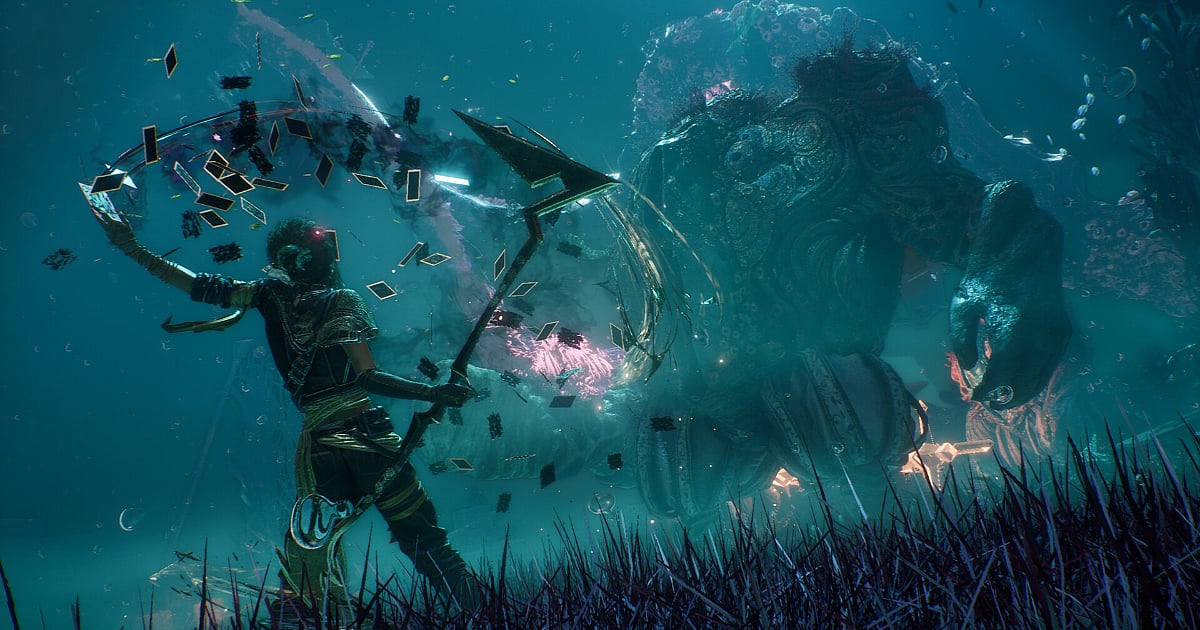
The game they are talking about is Clair Obscur: Expedition 33, which swept the major 2025 Game of the Year awards with millions of copies sold. While games of this calibre do use out-of-the-box tools from game engines, they don't use them to this extent; they don't build all of the game's logic on it. Separately during GDC, Sandfall's Lead Character Artist Alan Reynaud and Environment Artist Mathieu Costat presented on how a small, predominantly junior art team textured the entire game efficiently, through reusing assets. The GDC talks doubled as a case study in how modern engine tools are changing what small teams can build.
What Sandfall Interactive achieved
Budget - <$10 million
Core Team - ~30 people
Total Credits - ~400 people* (including external contractors, voice actors, outsourced teams)
Programmers – 4
Price Point - $50 (vs industry standard $60-70)
Sales - 500K in 24 hours; 1M in 3 days; 3.3M in 33 days; 5M+ by October 2025
Awards - 9 wins at The Game Awards 2025 (most in show history, out of record 13 nominations); GOTY at Golden Joysticks, D.I.C.E., and GDCAs
*External contributors included a team handling battle/gameplay animations, QA teams, additional musicians, and voice actors. The total credits of over 400 people might seem large, but large AAA games of similar size and scope have 300-500 in the core team itself compared to Sandfall's 30. The full credits of those games are rarely under 1000, and can regularly go past 2000.
How they did it: a vanilla-first philosophy
Guillermin's own words from the PlayStation Blog explain the philosophy. "We're not much for coding. Our development philosophy at Sandfall is based on the reality that we have limited programming bandwidth, so we focus on what's most important to delivering a good player experience and helping the creative team achieve their aims." Blueprints is UE5's node-based visual scripting system. Instead of writing code, designers connect visual "nodes" to create gameplay logic. This allows non-programmers on the team to build mechanics directly. The role of programmers shifts: instead of building the systems themselves, programmers create "building blocks" (Blueprint nodes) and let designers combine them creatively. "Usually, that means using them in a way different from how the programmers imagined, which is exactly what we wanted. As programmers, our job is to make designers' lives simpler."
Sandfall adopted a deliberate strategy of using UE5's native features as much as possible rather than building custom tools. They used external plugins for features not native to Unreal and to prototype gameplay features, but kept the engine "as-is" to minimize integration overhead. Sandfall also relied on ready-made assets for background objects like rocks, freeing them to focus on creating more important assets, the large-scale set pieces that make the visual impression.
The world map, the game's largest area, was built by repurposing elements from other levels.

"We used elements from other levels to create this one, even if it doesn't appear that way. Technically, everything related to enemies and battles is the same: interaction, looting, NPCs, dialogues, and so on. We also repurposed art elements from the other levels."- Tom Guillermin, Co-founder and CTO of Sandfall Interactive
This was echoed by Alex Hutchinson, former director of Assassin's Creed III and Far Cry 4. He argued in a PC Gamer interview that studios "don't reuse enough" and that asset reuse is essential for sustainability. He specified: "Black Flag reused like 80% of Assassin's Creed 3. So there's always some reuse, at least in the big studios."
Why this matters now
AAA game budgets have ballooned unsustainably for years. Development teams of over 300-500 people, budgets of $100M-$300M, and 5-7 year development cycles are increasingly common. This has driven widespread layoffs. The GDC 2026 State of the Game Industry survey found 28% of respondents were laid off in the past two years, and half said their employer conducted layoffs in the last 12 months.
Sandfall offers an alternative. Guillaume Broche, Founder, CEO and Creative Director at Sandfall: "We have the tech now to make those games with a relatively small team. Games like this are coming. We are lucky to be early." Sandfall's own mission statement positions this as deliberate: "We believe the latest game-making technologies now make it possible for indie teams to deliver outstanding production value in a realistic 3D graphic style."
Alexandre Amancio, the creative director of Assassin's Creed Unity and Revelations reflects similarly from the AAA side: "I think the future lies in smaller teams." He called the current AAA model "untenable."
Hideo Kojima, creator of Metal Gear and Death Stranding, publicly praised Sandfall's team size: "They only have like 33 team members and a dog. That's my ideal when I create something with a team."
What this means for developers and players
Broche has said himself, his hiring prioritized raw talent and shared creative vision over industry experience. The studio's VFX artist and character designer were fresh college graduates. Composer Lorien Testard had never worked on a video game. He was a guitar teacher who uploaded tracks to SoundCloud weekly. The resulting soundtrack won several awards. Lead writer Jennifer Svedberg-Yen was initially discovered through a Reddit post where Broche was looking for someone to record free demo voice lines. She had never done voice acting. Broche later noticed her writing talent and brought her on as lead writer.
While Blueprints has its limitations, both in performance and in scaling, if a small studio can ship a GOTY-calibre game using Blueprints instead of C++, it changes what a junior developer's resume needs to look like. Sandfall's model did still require skilled programmers to build the foundational nodes. The point is that the ratio shifted: fewer programmers enabling more designers. Programming wasn't unnecessary, but designers who understand game logic but aren't engineers can contribute directly to systems.
This could put a premium on design sense and an understanding of what makes a game fun. A team with a strong and cohesive design vision can get further with fewer programming resources. On one side this could change hiring practices, especially in smaller studios, where a creative director would rather have a team that matches in vision and philosophy rather than a veteran team with conflicting ideas. This can shift priorities: design fluency and creative alignment alongside, rather than behind, traditional engineering credentials. On the other side it also allows for more people to decide to make their own game. As the barriers to making games fall, it gets easier to get together a team competent enough to make your own version of a perfect game.
For aspiring developers in markets like India, where smaller studios are the norm and large engineering teams are a luxury, this model is particularly relevant. A team that can ship a competitive product by mastering built-in game engine tools rather than building proprietary technology from scratch needs fewer senior engineers and less upfront capital, which happen to be two of the biggest bottlenecks for studios.
On the consumer side: The game launched at $50, not the industry-standard $60-70. No microtransactions. Over 30 hours of content. A free post-launch content update. Players got more value at a lower price because the studio was efficient.
This model could mean shorter waits between releases and lower prices. It could also mean more studios making more interesting and niche games as the moat of knowledge and resources to creating them starts shrinking.
The caveat
Sandfall did have specific advantages: a clear creative vision from day one. A turn-based RPG genre that's less technically demanding than open-world or multiplayer titles. Leaders with prior industry experience (Broche and Guillermin are both ex-Ubisoft).
The "30 people" narrative, while true in a way, obscures the hundreds of external contributors. This extensive outsourcing infrastructure does still cost money and require coordination.
The game chose a $50 price point vs. $70. This meant the cost-to-value equation was extremely favorable for consumers, but it also means the margin math only works if the budget stays low.
But when the former director of an Assassin's Creed game, Hideo Kojima, and the Game of the Year winner are all pointing the same way (smaller teams, smarter tools, creative efficiency), it's worth paying attention. The rest of the industry likely will.

Author
Outlook Respawn is Outlook's newest vertical covering the business of gaming and digital pop culture in India. We bring trusted journalism to an economy that traditional media overlooks, one where gaming studios command billion-dollar valuations and and pop culture drives massive economic ecosystems. Our veteran team tracks investments, valuations, and market movements across gaming, esports, anime, live events and all things pop culture. While others treat these sectors as entertainment, we deliver serious economic analysis on everything from IPOs to licensing deals, understanding that today's pop culture phenomena are tomorrow's blue-chip companies.
Outlook Respawn
Author
Outlook Respawn is Outlook's newest vertical covering the business of gaming and digital pop culture in India. We bring trusted journalism to an economy that traditional media overlooks, one where gaming studios command billion-dollar valuations and and pop culture drives massive economic ecosystems. Our veteran team tracks investments, valuations, and market movements across gaming, esports, anime, live events and all things pop culture. While others treat these sectors as entertainment, we deliver serious economic analysis on everything from IPOs to licensing deals, understanding that today's pop culture phenomena are tomorrow's blue-chip companies.