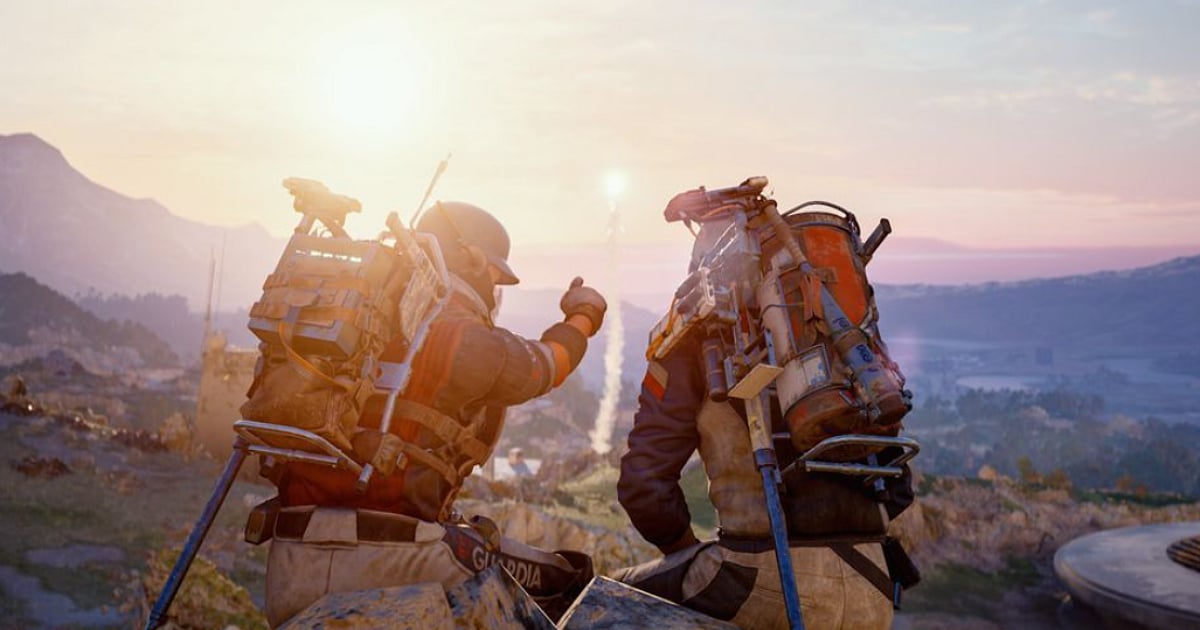





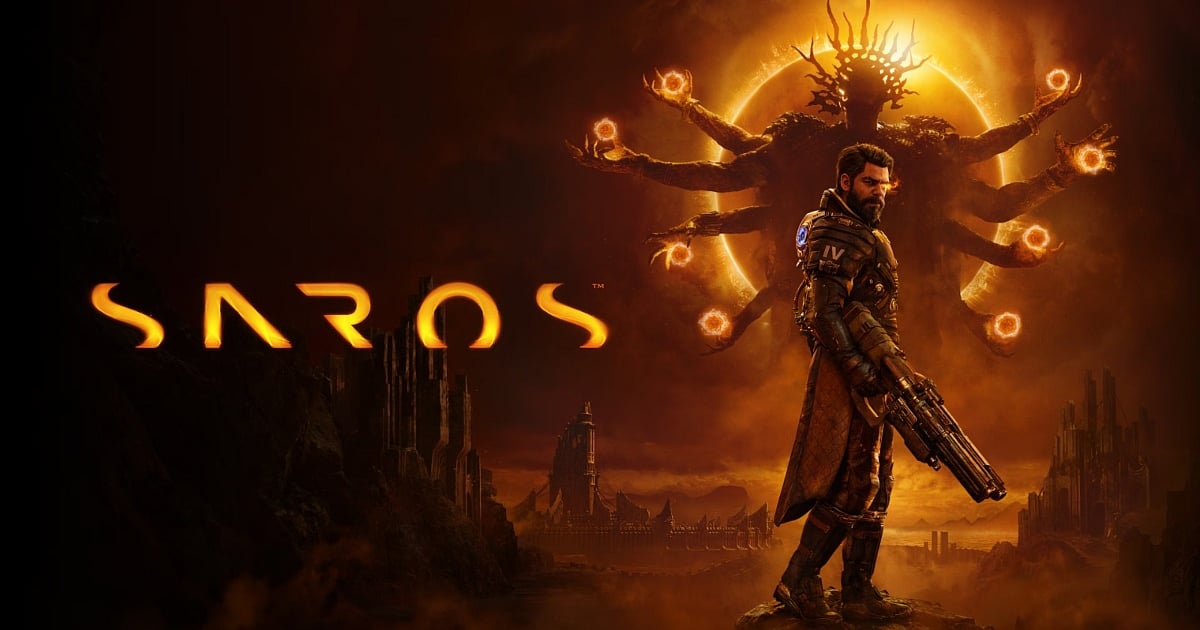
Promotional key art for Saros.
The 4% Problem: What Saros Learned From Returnal's Difficulty Wall
Saros boosts completion rates with systems that turn "bullet-hell" into "bullet-ballet," making tough gameplay more approachable.

Highlights
- Housemarque’s Saros being easier to play was determined by only 4.4% of players finishing Returnal's third act.
- Systems like Armor Matrix and Carcosan Modifiers help players experience the game the way they want.
- Approximately 30% of players are completing Saros' third act.
Only 4.4% of the players who started Returnal on PlayStation ever finished its third and final act, as of this article. The first act stopped most of them cold— only 15.3% cleared it on PlayStation. On Steam, they climbed a little higher; 38.2% got through act one, but only 6.5% reached the end. Housemarque’s follow-up, Saros, has already pushed third act completion rate past 30%. Same studio, same punishing gameplay. So what changed?
Some games are meant to be hard. FromSoftware’s Dark Souls and Elden Ring are difficult to teach persistence and pattern recognition. Returnal and Saros are difficult because accepting your flaws and mistakes, and then moving past or correcting them, should be difficult. Difficulty can serve a purpose, but it can also be designed differently.
Returnal: Live. Die. Repeat.
In 2021, Housemarque released Returnal, a challenging third person shooter. A bullet hell. You jump and hide, and duck and weave through bullets fired by strange aliens. Then you die. You don’t get much help to carry over while shooting your way through the next run. You have to follow the tagline of Edge of Tomorrow, “Live. Die. Repeat.” You just have to trial and error your way through decently long runs.
Housemarque Wanted More Players to Complete the Game
In an interview with Polygon, creative director Gregory Louden and associate design director Matti Häkli explained that this is why Housemarque made Saros more approachable than Returnal. The decision came down to a simple fact: a lot of players just could not beat Returnal.
Players kept telling the team the same thing, Louden said. They wanted to love Returnal but couldn’t move forward. So Saros was built to let them face the challenge their own way, through permanent progress and a set of optional modifiers. Those modifiers, he was keen to point out, don’t only soften the game. “It makes it way more brutal, which I think is super cool,” he said. Housemarque had also noticed that players who pushed past Returnal’s second biome tended to fall for it; the trick with Saros was getting more people over the early hump.
Häkli described it as giving more people a way in, without lowering the bar. The goal, he said, was something “more approachable, but not necessarily making it easier.” This means more room and time for players to reach the flow state where these games finally click.
That is exactly what they did.
Saros: Harder to Play, Easier to Finish
On April 30, 2026, Housemarque released Saros. Another really challenging third person shooter, but not the same kind of challenge. Where Returnal was a bullet-hell, Saros is a “bullet-ballet.” You still jump and hide, duck and weave through bullets fired by strange aliens, but this time you also have a shield.
Blue bullets can be absorbed, red ones need to be avoided or parried, and yellow ones reduce your max hit points. This combat redesign is what makes Saros a bullet-ballet rather than a bullet-hell. It also makes the moment-to-moment gameplay more mechanically complex. You don’t just dodge all the projectiles; you have to decide which tool to use against which of the projectiles multiple aliens are spewing at you at any given time. This raises the skill ceiling of the game compared to its predecessor.
Systems That Make You Return
Saros is not an easy game. I threw the protagonist, Arjun, against the first few biomes and bosses more times than I would care to admit. But I did throw Arjun at them again and again rather than give up. There were a few reasons for this.
Armor Matrix
Really early on in the game you get the Armor Matrix, a skill tree where you unlock permanent upgrades using resources you earn during your runs. These unlocks include increasing your max HP and damage, starting with higher tier weapons, retaining more resources on death, and more healing from pick-ups. An useful early unlock gives you Second Chance, a second life to keep going the first time you die.
The Armor Matrix is great at making you feel like you’re making progress even when you die repeatedly to the first boss, or even before it. It makes you want to try one more run, because maybe you just got the upgrade that will allow you to beat the boss, or get the resources for the next upgrade that will. Even more than the lower difficulty, what the Armor Matrix really gives you is a sense of momentum.
World Dial
After beating the first boss you get access to the World Dial, a teleportation system. You don’t need to fight through the first biome and boss to get to the others every time, you can skip directly to the one you want. You can start from an earlier biome to collect more resources or power up more during the run, but you don’t have to.
The World Dial is about your schedule. You don’t always have an entire hour free to commit to a run, so being able to jump straight to the biome you want and finish it in 20-30 minutes is accessibility for busier players.
Carcosan Modifiers
This is the big one. Unlocked after beating the second boss, this lets you customize your difficulty. It has Protections to make the game easier and Trials to make it tougher. By default, it is limited by certain mechanics but that can be removed in the settings. Protections include increasing damage dealt, reducing incoming damage, faster in-run level ups, and restoring full health and Second Chance on beating a boss.
The Trials are mostly the inverse of the Protections, but also include options like disabling Second Chance, switching off all your Armor Matrix upgrades and other ways to make the game more challenging. The modifiers can trivialize the game, but it’s about control. You set the terms and play the way you want, whether you want a cakewalk or something straight-up nightmarish.
The Payoff: 30% are Finishing
These features have made the game much more approachable, and convinced those who picked it up to give it a real chance. Saros is a Playstation exclusive, so Steam data is not available, but the trophy data on Playstation Network backs this up with 44.2% players finishing the first act and a massive 30.6% of players completing the third act.
It is of course worth noting that Saros was released mere weeks ago and trophy data is based on the players that launch the game. Launch window data may skew to more committed players, and the percentage gap may narrow over time, but the early signal does clearly point in one direction.
This shows that players are not only getting further, but once they get deep enough to get into the flow state of the game, they are much more likely to see it all the way through. An Easy Mode would have been simpler, but that’s not the game Housemarque wanted to make. Instead, they designed mechanics that handed players the controls to decide what Saros is, and how it should feel to play.
What Other Studios Could Learn From This
The result is exactly what Häkli hoped for: more of the people playing Saros are finishing it, and loving it. And Louden’s other dream, “once they love Saros, they go back through 30 years of Housemarque history,” isn’t far-fetched either. I have done it myself. I’m not about to go play Returnal tomorrow, but I did work through Supergiant’s entire backlog after falling in love with Hades.
One game that truly clicks is often all it takes to send a player back through everything else a studio has made. If Saros is the proof, the takeaway for other studios is hard to miss: difficulty doesn’t have to be a wall you bounce off of. It can be something the player gets to set.

Author
Outlook Respawn is Outlook's newest vertical covering the business of gaming and digital pop culture in India. We bring trusted journalism to an economy that traditional media overlooks, one where gaming studios command billion-dollar valuations and and pop culture drives massive economic ecosystems. Our veteran team tracks investments, valuations, and market movements across gaming, esports, anime, live events and all things pop culture. While others treat these sectors as entertainment, we deliver serious economic analysis on everything from IPOs to licensing deals, understanding that today's pop culture phenomena are tomorrow's blue-chip companies.
Outlook Respawn
Author
Outlook Respawn is Outlook's newest vertical covering the business of gaming and digital pop culture in India. We bring trusted journalism to an economy that traditional media overlooks, one where gaming studios command billion-dollar valuations and and pop culture drives massive economic ecosystems. Our veteran team tracks investments, valuations, and market movements across gaming, esports, anime, live events and all things pop culture. While others treat these sectors as entertainment, we deliver serious economic analysis on everything from IPOs to licensing deals, understanding that today's pop culture phenomena are tomorrow's blue-chip companies.