





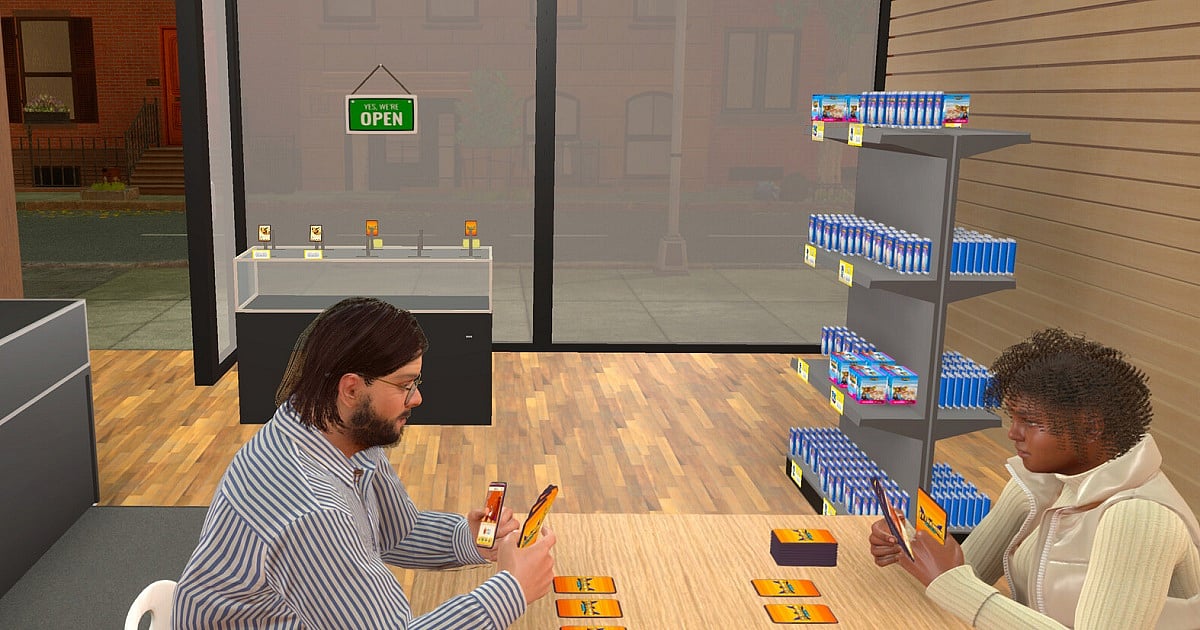
TCG Card Shop Simulator
The Solo Dev Who Built a Card Shop Game and Watched it Explode
Ding Shen Sia built TCG Card Shop Simulator alone, set a personal target of 100K copies in a year, and hit it in three days. Here is how that happened.

Highlights
- TCG Card Shop Simulator sold 100K copies in three days and has since reached over 4M players with a 94.61% positive rating on Steam.
- Solo developer Ding Shen Sia built the game to scratch a personal card-collecting itch.
- The 1.0 release adds a fully playable original card game, Tetramon Duel Master, with 50-card decks and a total collection of 4,436 cards.
In 2023, Ding Shen Sia was burnt out. Years of solo mobile game development had left him feeling aimless, and he needed a reason to keep building. So he challenged himself to make a PC game. He wanted to scratch a card-collecting itch without spending real money on physical packs, and to finally get his own Steam trading cards.
Before launch, he set his sales target at 100K copies in a full year. He told Outlook Respawn that he would have been really happy with that. TCG Card Shop Simulator hit 100K copies in just three days.
The Game That Was Not Supposed to be a Hit
There was no market research behind TCG Card Shop Simulator. No competitor analysis, no audience validation, no spreadsheet of Steam tags optimized for discovery. Sia built the game because he wanted to play it, and because building it gave him something to work toward when everything else felt stagnant.
The premise of the game is explained by the title itself. You run a trading card game shop. You order booster packs, stock shelves, set prices, manage consignment goods, and deal with customers. You also crack packs yourself, hunt for rare cards, grade your best pulls, and slowly build out a shop that runs more and more on automation as your profits grow.
Steam
Sia was clear about where he drew the line in terms of realism. He said, "My goal was never to create a hyper-strict or realistic simulator, but rather a cozy card shop owner's fantasy. Where I drew the line was eliminating real-world friction and stress. In real life, you wouldn't sit in a dark corner of your shop ripping open cases of packs hoping to make bank, or aggressively spray real customers with deodorant." The result is a game that captures the feeling of the hobby without the financial anxiety of actually being in it.
For players who have always wanted to rip a case of sealed product without spending hundreds of dollars, the fantasy is done right. After the initial three-day sprint to 100K copies, the game eventually reached over 4M players and settled at a 94.61% positive rating on Steam.
Building a Fictional Universe to Avoid a Legal One
The most obvious challenge in making a game about card shops is that trading card games are among the most aggressively trademark-protected products in the entertainment industry. Pokémon, Magic: The Gathering, Yu-Gi-Oh! are not properties that allow unauthorized use, and a game where players crack packs of recognizable IP would have been impossible to ship.
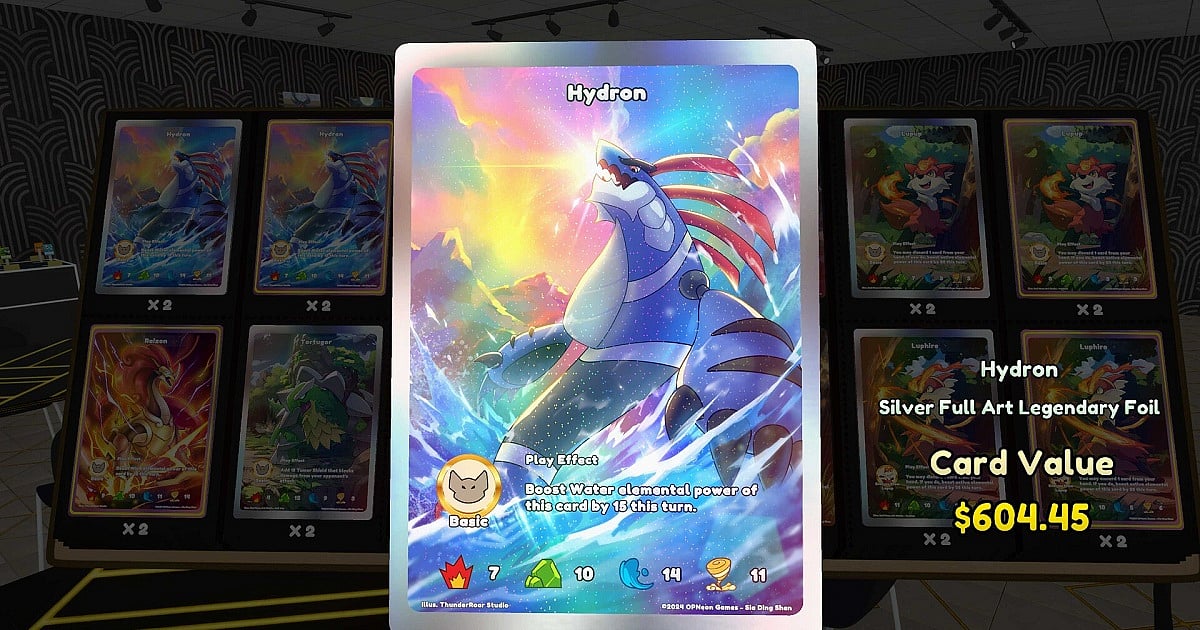
Sia's solution was to build his own universe from scratch. The fictional card game at the center of TCG Card Shop Simulator is called Tetramon Duel Master, and its monsters were designed over the course of a year in collaboration with freelance artists. The brief for each creature combined a specific animal, object, and one of four elemental types, Fire, Earth, Water, and Wind, to produce something visually distinct but unmistakably familiar in tone.
Siad explained the design choices, stating, "The visual style and card artwork were inspired by my childhood favorites like Pokémon, Digimon, and Yu-Gi-Oh!, aiming to evoke that same nostalgic joy of collecting colorful characters.”
The core progression in TCG Card Shop Simulator is built around two complementary activities that pull in opposite directions, and yet reinforce each other. Early in the game, you are a hands-on shop owner managing everything manually with limited resources. As profits grow, you unlock automation tools, pack-opening machines, and staff that handle the routine work, freeing you up to focus. It allows you to do what every TCG fan wants to do, which is chasing rare cards.
Sia explained, "Revenue from a growing shop allows you to buy more booster cases to hunt rare cards, while selling rare singles or graded cards funds shop expansions, decorations, and tournament tables.” The loop compounds as both halves grow together. A better shop funds better pack-opening runs, and better pulls fund a better shop.
Card grading, which arrived in update 0.60 as one of the game's most significant additions, was not in Sia's original design. It came directly from players. He said, "I initially knew nothing about it until many players suggested it.” He researched real-world grading services, built a system that added an optional value multiplier to the secondary market, and kept it non-mandatory so it would not introduce stress into what was designed to be a cozy experience.
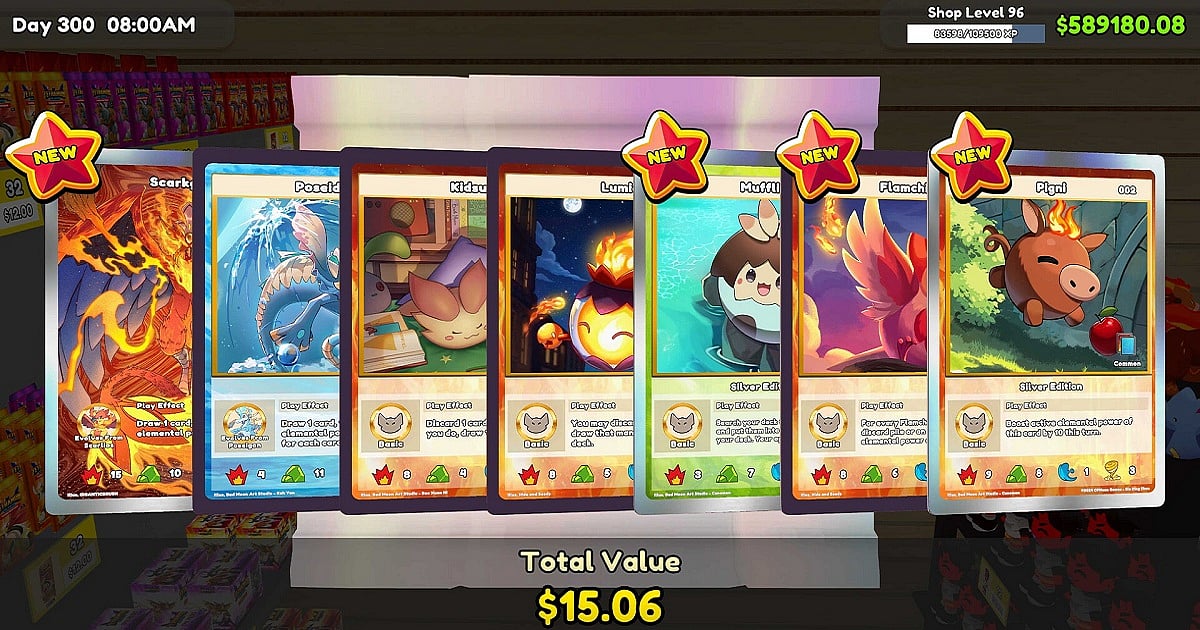
The single largest community request, however, was something more foundational. Players wanted to actually play the card game they were building their shop around. That request became the centerpiece of the 1.0 release. It now has a fully playable Tetramon Duel Master card game with 50-card decks, four Elemental Areas, and Guardian Area comeback mechanics. The total card collection at 1.0 stands at 4,436 cards.
4 Million Players and 90-Hour Weeks
Building a game alone that reaches 4M players is not a straightforwardly triumphant story. Sia is honest about what the explosion in popularity cost him. He shared his personal experience, stating, "As a solo developer, the emotional challenge was managing extreme work hours, up to 90 hours a week, and the immense pressure when the game suddenly exploded in popularity, which forced me to take a mental health break to recover from burnout."
Steam
The pattern is familiar to anyone who has followed independent game development closely. A game succeeds beyond any reasonable expectation, and the developer is suddenly responsible for a community of millions. The gap between what one person can sustainably produce and what the audience now expects closes around them like a vice.
TCG Shop Simulator grew from its Early Access state through a series of significant updates, each shaped by community feedback. Other simulation games began taking visible inspiration from the systems he had built alone in 2023 out of personal frustration and a desire to own some Steam trading cards.
TCG Card Shop Simulator launched in Early Access and has since reached 1.0 on September 15, 2026, with Sia hinting at additional content beyond the full release. The roadmap past 1.0 remains unannounced, but Sia is working towards new content.

Author
Abhimannu Das is a web journalist at Outlook India with a focus on Indian pop culture, gaming, and esports. He has over 10 years of journalistic experience and over 3,500 articles that include industry deep dives, interviews, and SEO content. He has worked on a myriad of games and their ecosystems, including Valorant, Overwatch, and Apex Legends.
Abhimannu Das is a web journalist at Outlook India with a focus on Indian pop culture, gaming, and esports. He has over 10 years of journalistic experience and over 3,500 articles that include industry deep dives, interviews, and SEO content. He has worked on a myriad of games and their ecosystems, including Valorant, Overwatch, and Apex Legends.


Related Articles