





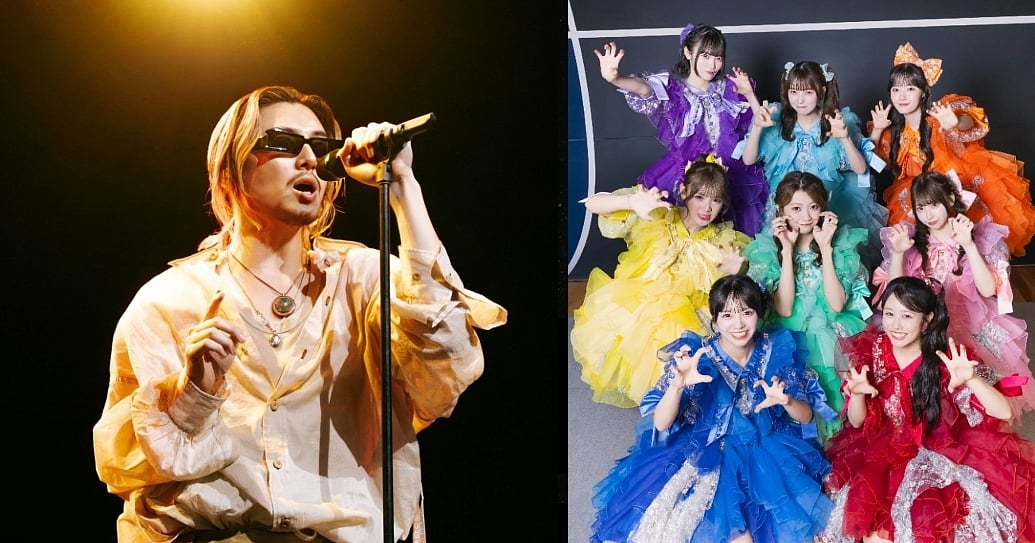
Japanese music marks a massive 30% streaming growth in South Korea, increases demand for J-pop concerts in the country.
J-pop Streams Jump 30% in South Korea—Here's Why
A rare industry shift for J-pop in South Korea is opening new opportunities for Japan that could reshape its global music ambitions.

Highlights
- J-pop's rapid rise in South Korea is redefining East Asia's music landscape, as several artists scale tours in the birthplace of K-pop.
- The genre's unexpected momentum is fueled by cross-media synergy like high-profile anime soundtracks, which is only the surface of the broader market realignment.
- Japanese artists and executives are increasingly treating South Korea as a strategic gateway to global audiences.
J-pop consumption in South Korea increased by 30% in the first half of the year, as recorded by Genie Music, a notable music streaming service in South Korea. The increased percentage indicates a unique shift in the East Asian music landscape, where Japanese artists are utilizing the Korean market as a domestic stronghold, as well as a launchpad for global expansion.
Anime Drives South Korea's J-pop Growth?
As per data released on June 21, 2026, by Korean music platform Genie Music, the streaming spike showcases an evolving cross-border engagement driven mostly by multimedia tie-ins. Kenshi Yonezu’s Iris Out, the theme song for the anime film Chainsaw Man: Reze Arc, anchored the platform's J-pop charts, followed by Official Hige Dandism’s Pretender and Yuuri’s Betelgeuse. A Genie Music official speaking to The Korea Herald attributed the trend to a growing ecosystem of anime, television broadcasts, and live concerts that have diversified how Korean audiences discover Japanese music.
However, industry analysts additionally suggest that the shift may also point towards a structural fatigue within South Korea's domestic market itself. Lim Hee-yun, a pop music critic, observed that J-pop is utilizing the creative deficit in modern K-pop, which has mostly prioritized algorithmic virality over narrative depth.
"As K-pop hits increasingly focus on short-form challenges and online virality, some listeners may feel they lack emotional resonance or the catharsis that comes from a strong lyrical narrative," Lim told Yonhap News Agency. "J-pop can fill that space. Many J-pop songs are closely tied to story-driven content, especially anime, which makes it easier for audiences to form a deeper emotional connection."
Japanese Artists Expand South Korea Tours
This shifting consumer preference has set off an unprecedented demand for live performances across South Korea. Several Japanese acts, which include King Gnu, Fujii Kaze, Go!Go!Vanillas, back number, Vaundy, Sukima Switch, and Omoinotake, are scheduled to tour the country in the coming months.
For industry stakeholders in Tokyo’s music scene, this live-performance boom in South Korea represents a broader geopolitical opportunity. South Korea is no longer a neighboring market for Japan, but is regarded as an influential global validator capable of bolstering Japanese talent into the global mainstream like K-pop.
South Korea Becomes J-pop's Global Launchpad
The strategy is reportedly already yielding results. Yusuke Nakagawa, representative director of entertainment agency Aobisystem, identified that Japanese acts’ direct exposure in South Korea can trigger immediate global spillover. While exemplifying the effect, recalling Cutie Street’s growing fandom, he added, "Ever since Cutie Street appeared on Korean music shows, we've seen new interest coming from India." This reflects that the typical cultural boundaries dividing East Asian music markets are dissolving with time.

Author
Diya Mukherjee is a Content Writer at Outlook Respawn with a postgraduate background in media. She has a passion for writing content and is enthusiastic about exploring cultures, literature, global affairs, and pop culture.




Related Articles