Witch Hat Atelier Director on Anime Production Risks
Witch Hat Atelier Director on How Adapting Anime Was a Risky Bet
Ayumu Watanabe says adapting the fantasy manga required years of experimentation to preserve its intricate artwork.

Highlights
- Director Ayumu Watanabe positioned Witch Hat Atelier as an ambitious project.
- BUG FILMS spent over 3.5 years blending CGI and hand-drawn animation to faithfully recreate Kamome Shirahama’s fantasy world.
- The anime’s detailed production and creative direction helped make Witch Hat Atelier one of Spring 2026’s highest-rated anime series.
From the first time he read Witch Hat Atelier, Ayumu Watanabe thought that it would be nearly impossible to animate. Reflecting on the offer during an interview with Comic Natalie, Watanabe said his immediate response was that adapting Witch Hat Atelier would be an overwhelmingly ambitious project.
The team behind the Witch Hat Atelier anime spent more than three years producing one of manga’s most visually detailed fantasy worlds, preserving what made it special in print format.
Witch Hat Atelier anime adapts Kamome Shirahama’s award-winning manga of the same name, known for its highly intricate linework. The anime, produced by BUG FILMS and currently streaming on Crunchyroll, premiered on April 6, 2026, after years of anticipation.
Anime producer Hiroaki Kojima revealed earlier this year that BUG and Kojima joined the production in 2023, and the Witch Hat Atelier anime took around three and half years to make. Before 2022, Avex Pictures and Kodansha were working on the project, with it getting launched internally back in 2019.
Why Adapting Witch Hat Atelier Manga Was a Challenge
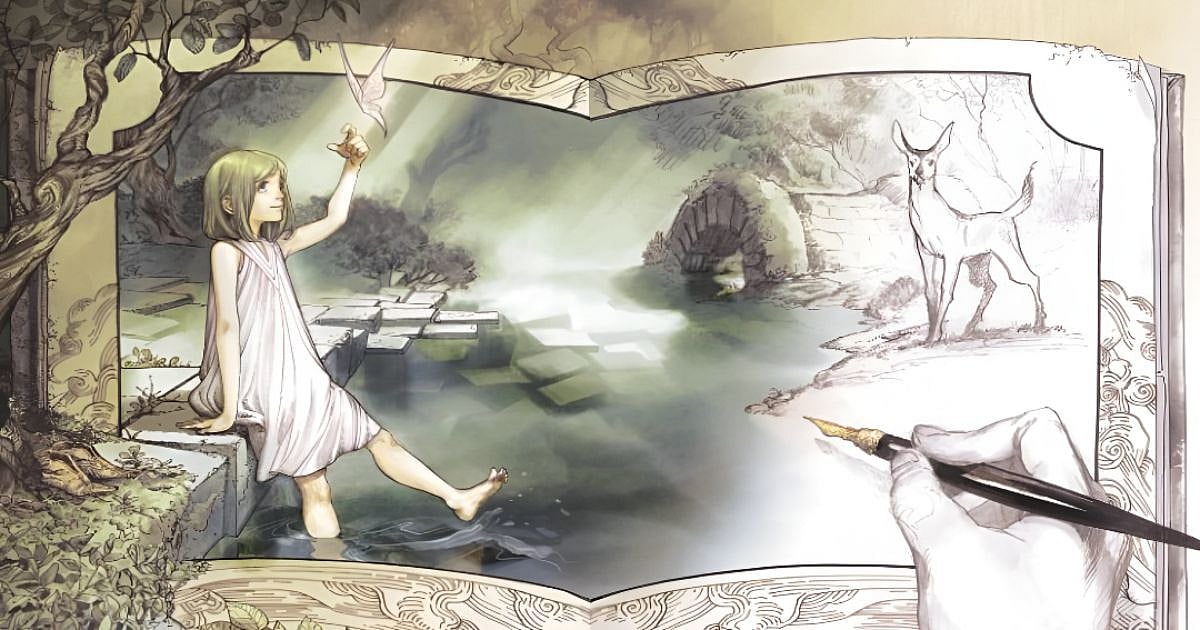
Watanabe told Comic Natalie that the central obstacle was Shirahama's intricate linework and the density of visual information on every page. The production team ensured faithfulness of this work with a blend of 3D CGI and hand-drawn 2D animation.
Watanabe explained that anime productions often compromise on visual complexity once a ‘good enough’ level of detail is reached. However, the Witch Hat Atelier team deliberately pushed past those limits, requiring significantly more artwork and placing greater creative and technical demands on the staff.
Watanabe described how the team studied the movement logic of every creature in the manga’s fantasy world in granular detail. As an example, Watanabe shared that the staff analyzed how the creatures pulling the Pegasus carriages should move, carefully considering the timing of their wing flaps during takeoff.
The Blend of Original Manga and Creative Direction in Witch Hat Atelier Production
During his conversation with Comic Natalie, Watanabe highlighted how the team tried to incorporate every detail in the source material. To emphasize the visual complexity, he pointed to the anime’s opening sequences, which recreate the sensation of opening a storybook, and some later scenes including the recreation of staircase transitions from the manga.
Watanabe created storyboards aiming to recreate the movements and directions of manga panels. When the team recreated protagonist Coco descending from a staircase in episode 1, they rendered multiple possibilities that would depict similar visual movement and finally decided to make the camera follow her as she descends.
The team balanced source originality with creative integration. Watanabe said that the magical butterfly that the audience saw in the scene when Coco met the brimmed cap was not in the manga. However, he introduced it as a connector of the narrative.
According to the director, the production team’s motto was to recreate Witch Hat Atelier’s ecosystem as thoroughly as possible. The anime music was also selected to capture the essence of Coco’s journey, especially the opening theme, Kaze no Anthem.
Watanabe said the ending theme artist, Nakamura Hak, submitted three demos for the series, and he refused to discard any of them. The Witch Hat Atelier anime even has extra Brushbuddy scenes because the staff took a liking to the creature, which ultimately boosted the anime’s natural appeal. Brushbuddy acts as a background filler when he is not the focus of the scene, which is natural for pet-like characters.
The result of BUG, Watanabe, and the production staff’s dedication became a visually striking anime. As of late May 2026, the anime holds an 8.8 IMDb score, a 100% critics’ approval on Rotten Tomatoes, and an 8.73 on MyAnimeList. Witch Hat Atelier reached a 4.9 on Crunchyroll after five episodes, outpacing every other new title in the Spring 2026 season.
Author
Kamalikaa Biswas is a content writer at Outlook Respawn specializing in pop culture. She holds a Master's in English Literature from University of Delhi and leverages her media industry experience to deliver insightful content on the latest youth culture trends.
Related Articles