




Highlights
- Powers natural language "vibe coding" and automated debugging via the new GM-CLI.
- Overhauls performance with source-available code and new support for C#, JS, and TypeScript.
- Leverages opt-in AI and free access to capture the growing youth and pro-studio segments.
GameMaker, the beloved 2D game engine owned by Opera, is officially bringing artificial intelligence to its multimillion-user base. Announced on April 30, 2026, a major platform update integrates Anthropic’s Claude Code to power AI-assisted workflows. This leap allows creators to build games and handle routine tasks using simple, natural language prompts, leaning into the growing industry trend of "vibe coding." By introducing plain-text generation, GameMaker is empowering developers to speed up iteration without relying strictly on a traditional integrated development environment (IDE).
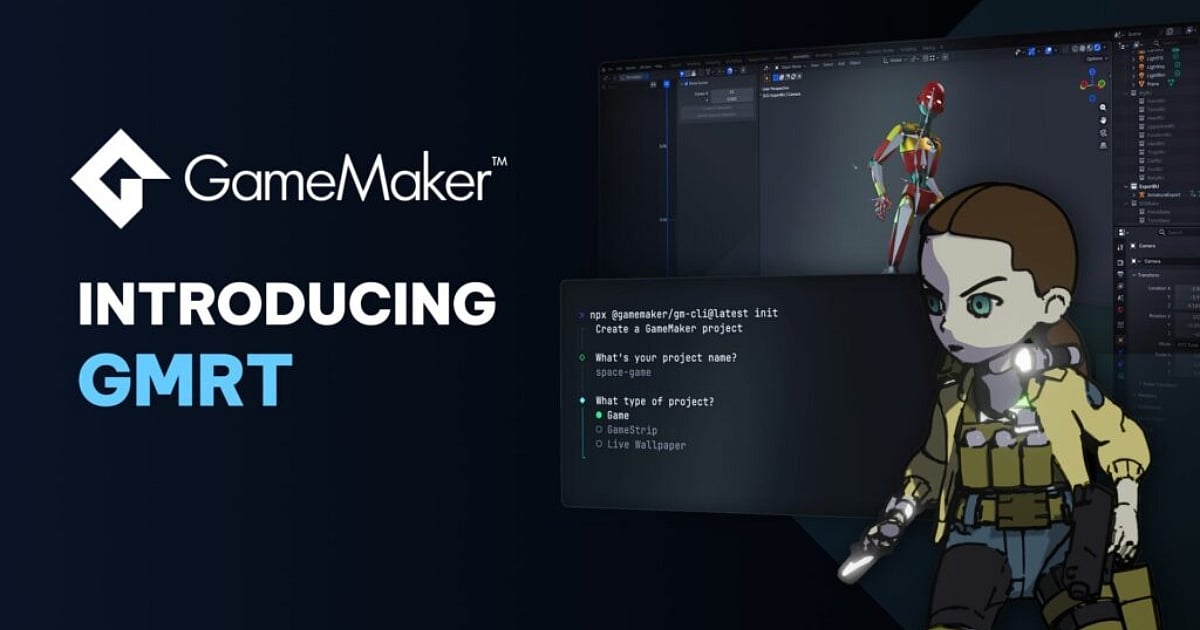
This AI functionality arrives alongside a massive step forward for the platform's core capabilities: the new GameMaker Runtime, or GMRT. Designed to meet the demands of larger teams, broader language backgrounds, and studios that need more than what a closed IDE can offer, the new runtime is a significant technical overhaul. To facilitate this, GameMaker has launched a new command-line toolchain called GM-CLI. By housing Claude Code directly inside this terminal environment, developers can work exactly how they prefer—without even touching the visual workspace if they choose.
The integration is designed to take the heavy lifting out of daily development. According to Anthropic’s website, developers can simply describe what they want to build, test, iterate, or ship, and Claude Code handles the rest. A blog post from Opera further notes that users will be able to leverage the AI to instantly query project structures, hunt down stubborn bugs, and manage their overall build configurations just by typing out what they need.
Opera
Opt-In AI Built for Shifting Developer Habits
The decision to embrace generative AI stems from shifting habits within the game development community. Speaking to Game Developer, GameMaker head Russell Kay explained that AI-assisted coding has become an essential part of many creators' daily workflows. Because GameMaker supports everyone from first-time hobbyists to professional studios, the company wanted to reflect this new reality and give users who might benefit from AI the option to use it.
Acknowledging the skepticism toward generative AI highlighted in recent State of the Industry surveys, GameMaker has ensured these tools are completely complementary and can be opted out of. Kay noted that the integration relies on standard API access, standard scripting interfaces, automation through GitHub Actions, and an MCP Server, as reported by Gamedeveloper.
Because GameMaker isn't running any embedded AI servers, user privacy is maintained, and purists can continue developing games exactly as they always have. Ultimately, Kay added, it is entirely up to the users how they choose to engage with the tools.
Opera
Expanding the Ecosystem with Broader Language Support
Beyond the AI additions, the GMRT update also addresses the specific needs of larger teams by offering better 3D handling and direct source-available access to desktop code, allowing developers to see exactly how their games are running under the hood.
GameMaker is also significantly expanding its ecosystem to welcome more programmers, with upcoming support planned for JavaScript, TypeScript, and C#. These tools are designed to work seamlessly across both existing and new runtimes. Developers can start experimenting with GMRT on desktop today, with mobile and web expansions planned for the near future.
This technological leap comes during a period of explosive growth for the platform. After making its software free for non-commercial use in 2023, GameMaker saw a 20% rise in games created. This highly popular move also sparked a massive 63% surge in young users between the ages of 13 and 17.
Operating within a global game engine sector projected to reach $8.57 billion by 2031, GameMaker continues to hold a notable position in a market currently led by Unity at 40%. By embracing Claude Code, GameMaker positions itself to compete heavily in the new era of AI-driven development alongside similar integrations in Unity and Unreal Engine.