




Highlights
- Gamebee Studio was founded in Mumbai in August 2019 by four co-founders with no outside capital.
- The studio says its TV games have passed 40M downloads and more than $10M in lifetime gross revenue.
- Its games work with four arrow keys and an OK button, run on any TV hardware, and are playable by anyone.
Most game studios build for the phone in your pocket or the console in your living room. Gamebee Studio builds games for the remote on your sofa. The Mumbai-based company, founded in August 2019 by four people working on the side with no capital, makes games meant to be played with nothing but a remote's four arrows and an OK button. According to the studio, it now has more than 70 games, more than 40M downloads, and over $10M in lifetime gross revenue. It describes itself as self-funded and profitable, with no investors and no client work.
Outlook Respawn interviewed Amit Dubey, the studio's founder and CEO, about starting out as a game tester, designing for a TV remote, and why he thinks Netflix and Amazon entering the space helps independent studios.
A Game Tester's Bet on the Living Room TV
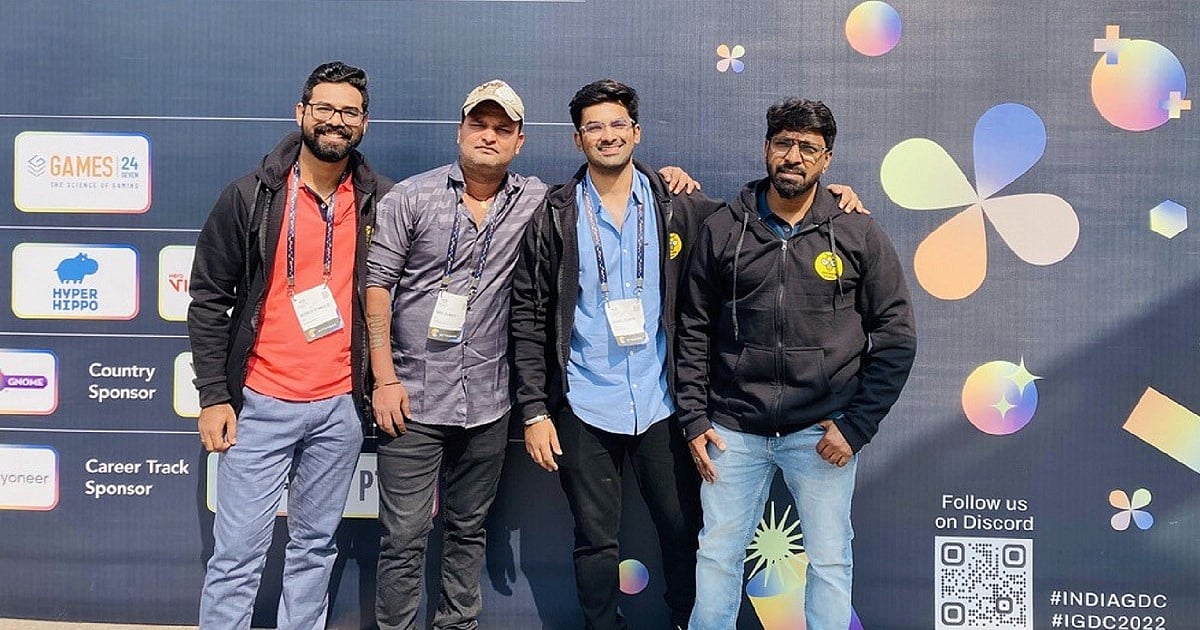
Dubey's route into games was not direct. He moved to Mumbai from a village in Uttar Pradesh and started as a game tester. After some hard years outside the industry, he returned to games in 2018, again as a tester. In August 2019, Amit Dubey, Amit S Chalke, Bosco D'Mello, and Daniel Yunus started Gamebee alongside their jobs.
He said, "We knew how games are made, tested, and released, but we could not afford to fight on the crowded mobile charts. So we looked at the screen nobody was building for: the TV in the living room. Millions of homes had a smart TV, and very few games were made to be played with just the remote."
With no investors, Dubey could only make small bets, so his studio released simple games. The team measured what each one earned and put their effort behind the ones players came back to. The TV stores helped Gamebee’s cause. Televisions were global from day one and far less crowded than mobile, so "a well-made game stayed visible” according to Dubey.
The studio makes and publishes its own games, which are free to download. The titles earn from subscriptions, ads, and in-app purchases. Being self-funded helped Gamebee grow in the industry. Dubey revealed, "Nobody funded us, so every salary came from games that were already live.” He admits the process was slow, but it allowed the team to stay grounded and keep grinding for success.
The studio says it has grown from four co-founders to more than 50 people across Mumbai and Hyderabad, where a team joined in 2024. It reports about $4M of its lifetime gross revenue in the last 12 months. It also won Best Indie Studio of the Year at the AnimationXpress GEM Awards in 2025.
Throwing Half of Mobile Away
Designing for a TV remote takes away most of the tools a mobile game designer relies on. Dubey shared, "Take what you know from mobile and throw half of it away. No touch, no swipe, no tilt. You get four arrows and an OK button." The studio's most downloaded game is a bike game steered only with left and right.
Two physical limits add to this. People sit far from the screen, so text has to be large. TV hardware is also weaker compared to smartphones, consoles, and PCs. His test for a game is simple: "If a 60-year-old can't play it without asking for help, it is not ready."
That approach contrasts with the big platforms. When Netflix began letting subscribers play games on smart TVs in October 2025, it used the phone as the controller. Gamebee works with the remote that is already on the couch.
Most of Gamebee's players are in the U.S. and Europe, and play together at home. The studio first thought of them as mobile players on a bigger screen. Dubey admits the approach was wrong. He explained, "The living room is a different player: shorter sessions, more people in the room, and the remote passes from hand to hand. A good TV game is one a child, a parent, or a grandparent can pick up in ten seconds.”
Netflix, Amazon, and What Comes Next
Gamebee believes Netflix and Amazon validate its niche instead of competing with it. Dubey said, "For years this was a corner nobody looked at. Now the biggest companies are putting games on the TV screen. That is good for us, because the hardest part was always telling people they can play on a TV at all. They will also bring better games, so lazy ports will not survive. I am fine with that."
Other players have moved in as well. Samsung's Gaming Hub offers thousands of games, and Amazon has pushed Luna toward casual, social play. Next, the studio plans more TV platforms and more games for the living room, plus its first premium PC game, which is in the works.
Dubey sees the biggest opportunity abroad in family games. Back home in India, TV gaming is still in its early stages. He explained, "In India, TV gaming is still early, but we have the people to build it. Very few studios here make games for TV first. I would like more of them to try."
As Netflix, Amazon, and other major players bring more attention to TV gaming, Gamebee will have to prove that its remote-first approach can hold its own in a much more competitive market.