




Highlights
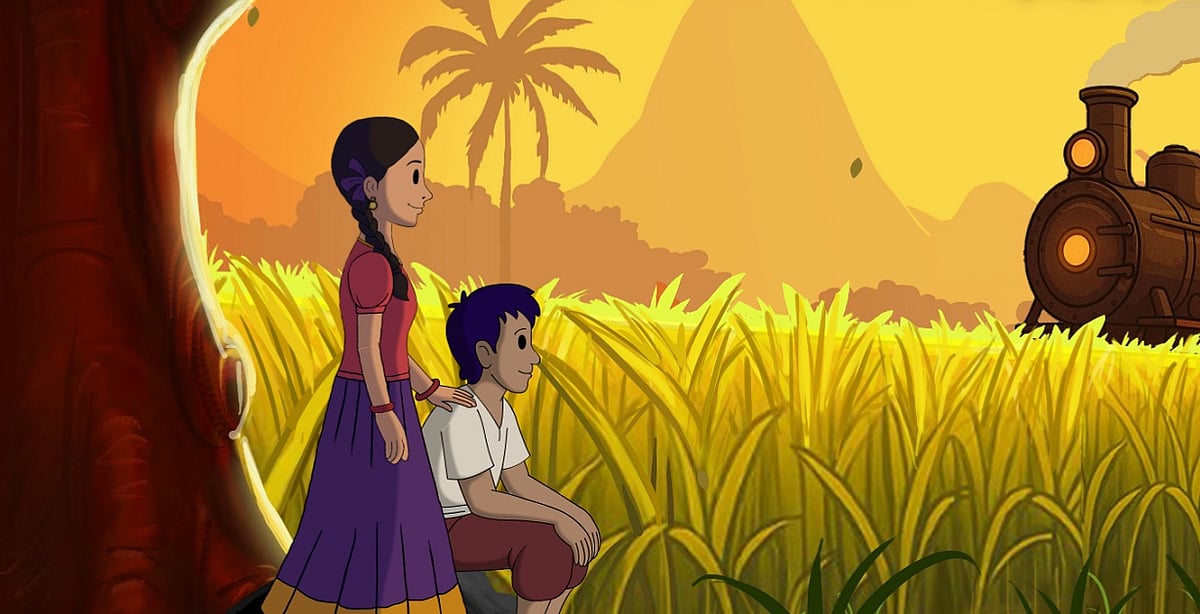
- Palm Sugar: A Village Story, described by its creator as a "Zelda set in rural South India," is targeting an August 2026 release.
- The game seeks to combine quick-witted humor, a world people care about, and an action adventure in one package.
- The studio considers selling 15K copies across all platforms in the first three months a definitive success, enough to fund upcoming projects.
Most Indian games announced in 2026 reach for mythology, ancient epics, gods, and wars. Palm Sugar: A Village Story takes a different path entirely. Set in the fictional South Indian village of Bellampakam, it is a story about a young man trying to save his home from a drug cartel, built by a five-person, self-funded studio in Visakhapatnam betting everything on a premise the rest of the Indian games industry would likely not have greenlit. The development team at Mono Tusk Studios describes it simply as a "Zelda set in rural South India," and after seeing it in motion, the comparison immediately makes sense.
What makes Palm Sugar notable is not just the premise but the confidence behind it. Every weapon, conversation, joke, and location is rooted in contemporary South Indian life rather than trying to imitate familiar fantasy settings. It is an unusually specific game, and it argues, quietly but clearly, that local stories do not need to shed their identity to reach a global audience.
The game is being built by a team of five developers led by Kartheek Raj, founder and game director of Mono Tusk Studios. He worked as a Cheat Operation Analyst at Rockstar Games before starting his own studio in Visakhapatnam. Outlook Respawn spoke to Raj after Palm Sugar was featured at the India Games Showcase during Summer Game Fest 2026. Raj talked about how the studio wrote South Indian humor without it becoming caricature, how a stick becomes a satisfying weapon, and what four years of bootstrapping actually look like from the inside.
Rural India as a Video Game Setting
India's game development scene has increasingly moved toward mythology and historical settings with games like Unleash the Avatar and Raji. Raj went the other direction entirely, building a game set in a contemporary rural village with everyday stakes.
The choice was deliberate. He told us, "I've always felt more drawn to the charm of everyday contemporary life than to grand mythological epics. A slice-of-life rural setting offers an immediate sense of grounded familiarity that players can intuitively connect with."
Rendering mythological figures or sprawling historical architecture in a top-down pixel art style introduces an enormous amount of art overhead. A fictitious modern-day village allowed the team to create something authentic.
Raj believes the hyperlocal setting actually translates better globally than people assume. He said, "Nuances of daily community life, neighbourly dynamics, and small-town relationships cut across cultures and make the narrative incredibly palatable globally." It is the same logic that makes films like Bajrangi Bhaijaan and Dangal find audiences in China. For those fascinated by Indian culture, the specificity can end up being the draw instead of a barrier for foreign audiences.
Writing a Quick-Witted and Humorous Protagonist
The protagonist of Palm Sugar, Seenu, is sharp-tongued and quick-witted. South Indian humor has a specific comedic cadence rooted in regional cinema, in the Telugu film tradition particularly, and Raj was candid about the difficulty of capturing it accurately in the early stages.
A turning point came when Mono Tusk signed a publishing deal with 1312 Interactive, which brought in a dedicated narrative designer to help refine the dialogue. "The core of the humor draws heavily from regional South Indian cinema… blended with our own everyday observations of village eccentricities," Raj revealed.
Monk Tusk Studios
The goal was to anchor Seenu's wit in authentic behavioral traits rather than forced eccentricity. Whether it works is something players will assess, but the approach is the right one; humor rooted in observation rather than caricature is the only humor that travels. A game this rooted in a specific regional culture faces constant decisions about what to explain and what to assume. Universal themes, family, rivalry, and community need no translation, and are often turned into stories in every part of the world.
Things that are difficult to get across to an international audience are regional idioms and figures of speech. It is a problem commonly seen in hyperlocal media where things lose their meaning when translated literally. Raj wants to keep the essence of South Indian culture while also catering to the global audience. He plans to localize the intent and emotions rather than words, stating, "We address this through rigorous playtesting and constant back-and-forth iteration, focusing on localizing the intent and emotion of the phrase rather than just the literal words."
Implementing Everyday Objects Into a Combat System
Palm Sugar's combat is built around objects from rural life. These include sticks, axes, and slingshots. The creative decision is appealing on paper, but it has its own challenges. A stick needs to feel satisfying to swing if the player is going to use it for the length of an entire game.
Monk Tusk Studios
Raj is trying to build a combat system that feels good to use despite the unconventional weapon choices. He talked about how the team managed to balance various gameplay elements, stating, "We focused heavily on gameplay pacing, sound design, hit-stop frames, and visual feedback to make swinging a simple wooden stick or snapping a slingshot feel just as impactful and rewarding as wielding a traditional fantasy sword."
A hit-stop is the brief moment a game pauses on a successful strike to communicate impact. It is one of the oldest tools in action game design and is used in all types of games, including indies like Hollow Knight and AAA action games like Devil May Cry. Done well, it makes even the most mundane object feel weighty.
Despite the focus on action, Palm Sugar is a narrative experience first. The studio is trying to implement an engaging narrative where the players feel connected to the village and its residents. Raj explained, "The dialogue is directly connected to their immediate goals or deeply enriches a character they care about."
The soundtrack is composed by Raj’s nephew Tarun Rao, who previously worked at Pocket FM and Black March Studios. Rao drew inspiration from ambient village soundscapes, traditional rhythms, and local folk sounds. The goal was to create a score that reacts to what is happening rather than sitting as a static backdrop.
Palm Sugar’s Marketing Strategy
Palm Sugar: A Village Story is targeting an August 2026 launch on PC (Steam, GOG, and Epic Games Store) alongside Nintendo Switch, whose handheld format Raj believes suits the game's tone. Mobile is planned for further down the road, and console releases beyond Switch are not currently confirmed.
Mono Tusk Studios is working with 1312 Interactive for its marketing push. The India Games Showcase at Summer Game Fest has provided a significant wave of visibility so far, and the dev team is trying to connect with the broader gaming market leading up to Palm Sugar’s launch. The communities the team is now building toward include indie game enthusiasts, South Asian diaspora audiences who will recognize the cultural textures immediately, and the broader narrative adventure fanbase that responds to games with strong character and regional specificity.
Raj has a clear benchmark for the game’s success. According to him, "A definitive win would look like moving 15K copies across all platforms within the first three months of launch." He frames it explicitly as the number that would validate four years of work and bootstrapping while providing the runway to fund the next projects.
Raj described his development journey, stating, "Spending four years as an independent developer to bring a hyper-local story to life means exhausting almost all personal financial resources before hitting the finish line." This is the actual financial reality of building an original IP with no publisher behind you, in a city that is not Bengaluru or Pune, with a team of five people, on a premise that most publishers would not have greenlit.
Whether Palm Sugar finds its target audience will depend on execution, timing, and some amount of luck that no amount of craft can fully substitute for. But the thing that it is trying to do is to place South Indian culture on a global stage. It wants to argue that its stories are worth playing, which is exactly the kind of bet the Indian games industry needs to make.