




Highlights
- Several major anime, including Death Note and Tokyo Ghoul, faced bans or restrictions over concerns related to violence and graphic content.
- Other titles, including Pokémon and Record of Ragnarok, became controversial due to religious, cultural, historical, or political objections.
- These cases highlight how anime censorship varies widely by region, with government and ideological concerns often determining a series’ distribution.
Anime has become one of the most lucrative entertainment exports in contemporary times, and it has faced reservations like every creative property. China’s Ministry of Culture issued a blacklist, naming more than 38 anime and manga titles as harmful to public morality back in 2015. Some of these anime still remain unavailable on mainstream Chinese platforms, according to a 2025 review.
The reasons range from graphic violence to religious objections and political ideologies. In a few cases, the ban has also drawn as much criticism as the show. Countries like Russia have also restricted the distribution of multiple anime series through court rulings, while some countries have heavily censored the original.
The following eight anime have faced documented bans, restrictions, or major censorship edits across various locations. Whether they were critically distinguished or not, they remained unavailable for the audiences in the countries that banned them.
1. Death Note
Genre: Psychological thriller | MAL: 8.6 | IMDb: 8.9
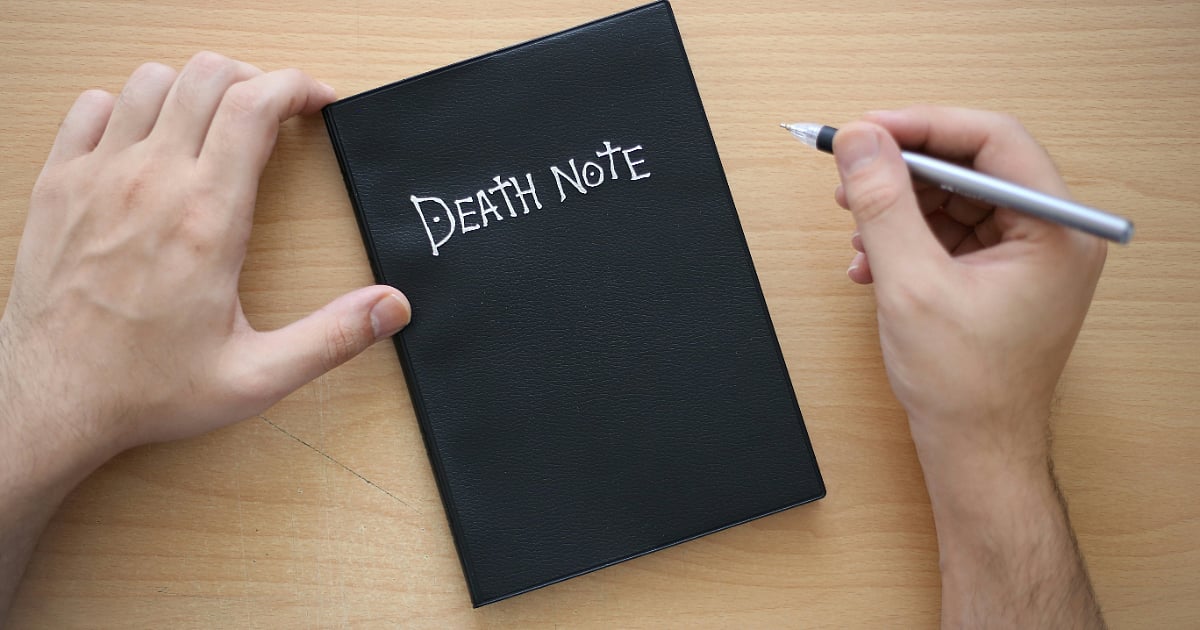
Few anime have generated as much cultural impact as Death Note. The series follows Light Yagami, an exceptional high school student who gains a shinigami notebook, Death Note, capable of killing anyone whose name is written in it.
Russian courts banned the series in 2021 due to the depiction of the protagonist, which allegedly could glorify crime. Previously, in 2015, China ordered restrictions on the online distribution of Death Note as part of a crackdown on several anime and manga series.
Authorities focused on the show’s themes of violence and self-harm, concerned that younger viewers could imitate its ideas. Given its restraint compared to other entries here, the ban was considered excessive for a show built around moral consequence rather than crude violence.
2. Attack on Titan
Genre: Dark fantasy, action | MAL: 8.53 | IMDb: 9.1
Known for its morally complex narrative and political storytelling, Attack on Titan became one of the most hailed names among anime. The series appeared on China’s 2015 blacklist and later in 2021, faced restrictions in Russia through court actions targeting anime distribution.
Chinese viewers reportedly compared the Marleyan empire’s treatment of Eldians to historical incidents, despite the creators denying intentional allegory. Russia also banned Attack on Titan in 2021. In the same year, the distribution of Eldians’ armbands merchandise was temporarily halted due to evoking imagery of Nazi-issued armbands used by Jewish.
3. Elfen Lied
Genre: Psychological Horror, Drama | MAL: 7.45 | IMDb: 7.8
Few anime have a reputation for violence, gore, and graphic imagery like Elfen Lied. The series faced restrictions and censorship issues in countries including Germany and Australia due to graphic violence, nudity, and disturbing scenes involving children.
The anime follows the journey of mutant Diclonius Lucy as she struggles to find her place and purpose. China banned it in 2015 for graphic dismemberment and nudity. Russia banned it in 2021, along with Death Note and the like.
Germany had a limited ban on Elfen Lied, while Australia heavily censored anime scenes. The series largely remained a debate about whether adult-focused anime should be treated differently from live-action ‘R’-rated films.
4. Tokyo Ghoul
Genre: Dark Fantasy, Horror | MAL: 6.37 | IMDb: 7.7
Tokyo Ghoul narrates the story of Ken Kaneki, a college student who hates ghouls, but becomes half-ghoul and is forced to switch between both worlds. The anime was among the titles blacklisted during China’s 2015 crackdown and later became one of the series affected by Russian restrictions in 2021.
Beyond formal restrictions, the U.K. and Australia age-restricted Tokyo Ghoul season 2 for scenes involving torture, graphic injuries, and gore. However, in this series, brutality and torture serve as a vehicle for its themes of discrimination, identity, and survival rather than existing purely for shock value.
5. Pokémon
Genre: Adventure, Fantasy | MAL: 7.39 | IMDb: 7.5/10
While Pokémon seems like an unlikely candidate for censorship, the well-known anime franchise is fully banned in Saudi Arabia. The franchise became the subject of significant controversy in the company.
Saudi Arabia's religious authorities ruled that its evolution mechanics and symbolism violated Islamic teachings and raised concerns about alleged gambling elements. Turkey also issued a limited restriction on Pokémon broadcasting after two children died after falling from a balcony, believing they had powers like Pokémon.
Unlike most anime on this list, the controversy was not driven by violence or sexual content. Instead, it reflected broader cultural and religious concerns surrounding a rapidly growing global phenomenon.
6. Hetalia: Axis Powers
Genre: Comedy, Historical | MAL: 7.0 | IMDb: 7.2
Hetalia: Axis Powers is a satirical anime series where World War II nations are reimagined as bickering anime characters. South Korea banned the series and removed Korea-related characters due to discriminatory Korean representation.
Back in 2009, a petition drew more than 12K signatures objecting to Hetalia's release in the country. The South Korean legislative body called the anime “a crime against Koreans.’’
7. Blood-C
Genre: Horror, Supernatural | MAL: 6.53 | IMDb: 6.2
Created by CLAMP and Production I.G, Blood-C has remained one of the television anime known for extreme violence. The series was included in China’s blacklist and was edited before distribution in Germany and the UK.
The anime follows Saya Kisaragi, a shrine maiden, who is managing a dual life as a high school girl and a fighter of human-eating monsters, Elder Bairns. The most controversial scenes involved graphic dismemberment, human mutilation, large-scale massacre sequences, and excessive on-screen bloodshed.
8. Record of Ragnarok
Genre: Action, Fantasy | MAL: 6.84 | IMDb: 6.6
Unlike most censorship and ban controversies that focus on violence or nudity, Record of Ragnarok became controversial because of its portrayal of religious figures. The series centers around a fight between humans and gods from various mythologies in a tournament that determines humanity’s fate, with Hindu god Shiva being one of the central figures.
India banned the series after Rajan Zed, President of the Universal Society of Hinduism, objected to its depiction of the deity Shiva, calling it trivializing, prior to its release in 2021. As of writing, Record of Ragnarok remains unavailable in India on any distribution platform, including Netflix, which streams the series internationally.
What makes the case notable is that the controversy was driven almost entirely by religious representation rather than any sensitive content. Record of Ragnarok is a case that argues whether a targeted religious objection like this was a proportionate response instead of a content advisory board.
If not outright banned, anime censorship has been a regular occurrence due to brutality, nudity, or other controversial themes. Concerns about youth influence have been a matter of debate as well.
Apart from the anime listed here, many other prominent titles are either banned or simply unavailable in certain regions. Extreme anime, including Shōjo Tsubaki, remains unavailable or heavily restricted because of its graphic and disturbing content. Reportedly, the Masaaki Yuasa classic Devilman Crybaby has also faced restrictions across Islamic states.
Nonetheless, all eight titles listed here are available through licensed platforms like Crunchyroll and Netflix, except for the banned/restricted countries. And, with titles like Pokémon getting banned without significant on-screen cruelty, it reflects how anime censorship today is largely a regional and ideological patchwork rather than a global standard.