




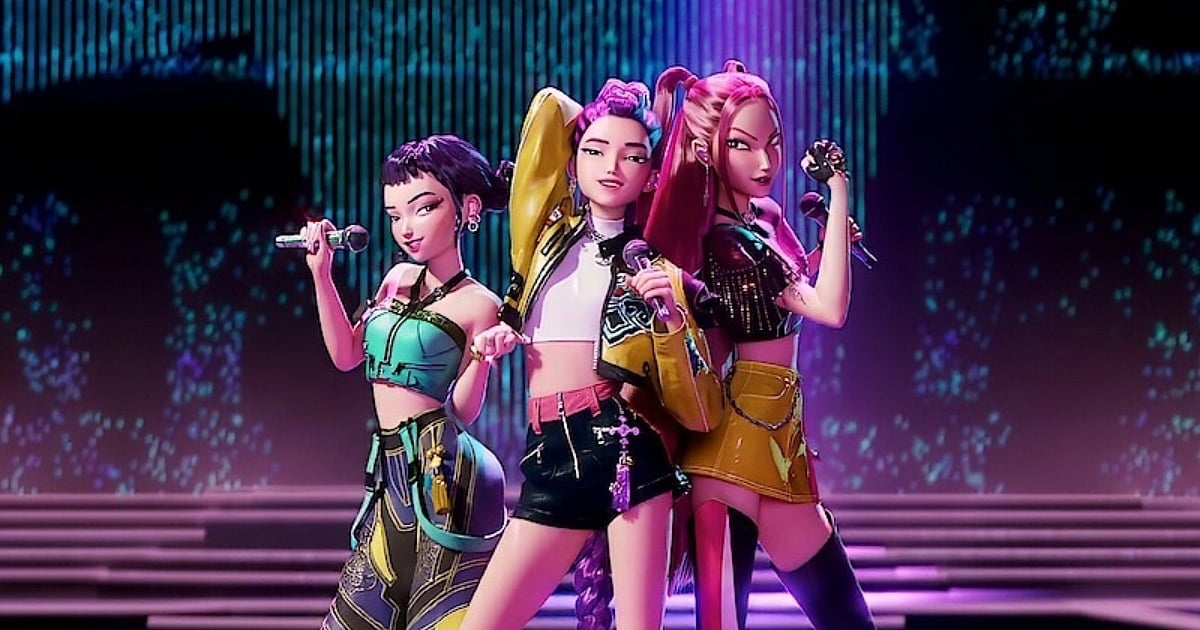
- KPop Demon Hunters used Unreal Engine 5 to reduce animation timelines by up to 25%, enabling real-time processes at scale.
- Its automated asset generation reduces complex crowd builds from weeks to minutes.
- Sony Pictures Imageworks, the animator of the film, has begun to use real-time engines for speeding up production while aiming for cost control.
KPop Demon Hunters' awards sweep, which included Best Animated Feature at the Oscars and highest accolades at the Annies, Golden Globes, and Critics Choice Awards, cemented the film's status as a cultural milestone. However, Sony Pictures Imageworks, who animated the project, believes that the legacy of the film triggered a radical rearrangement of production logic.
By incorporating Epic Games' Unreal Engine 5 into its existing pipeline, the company has proven that real-time rendering is no longer a niche experimental tool, but rather a main driver of efficiency in premium movie animation. Notably, the project's exceptional animation won top honors in various categories at the VES and Concept Art Awards.
KPop Demon Hunters Powers a Real-Time Animation Breakthrough
Directed by Maggie Kang and Chris Appelhans, KPop Demon Hunters achieved 500 million views, making it Netflix's most-viewed animated title. The film’s commercial success extends to the Billboard charts, where its Oscar-winning song, Golden, remains a global hit. However, behind this milestone, is a technical shift that incorporates a blended workflow. This combined working integrates Autodesk Maya and Unreal Engine 5 with the help of OpenUSD framework, which enabled the production to avoid customary bottlenecks. By using these tools, the directors were able to see near-final images months before conventional timetables generally allow.
According to Creative Bloq, Adam Holmes, head of visualization at Sony Pictures Imageworks, said that using UE5's real-time rigging and modular systems was vital for the film's intricate, crowd-heavy stadium scenes. Rather than creating thousands of individual assets by hand, artists used a single base character model and procedural mechanisms like UE5's Foliage system to alter clothing and hairstyles at scale. This technology significantly reduced the time necessary to populate large settings from weeks to minutes.
The technical experimentation continued throughout the film's atmospheric moments, particularly the bathhouse combat. In a departure from traditional deferred rendering, the team used real-time volumetrics to iterate on reflecting, fog-heavy settings in real time. Lighting for the film's iconic concert scenes adopted a similar pattern: hundreds of lights were animated in the engine before being transferred to Katana for ultimate rendering. This workflow meant that preliminary layout artists were blocking scenes that closely matched the final visual output, which currently takes about a week for each sequence.
KPop Demon Hunters Standardizes Speed and Scale in Animation with Real-Time Engines
The efficiency advantages reported by Sony are striking. Direct source-code optimization lowered sequence export times from six to eight hours to a few minutes. Creative Bloq further stated that on an overall basis, the studio anticipates a 20% to 25% speed increase in layout and previsualization activities. These gains are already being used for future projects, including the upcoming feature Goat, as Sony looks to formalize the speed-to-market benefits gained during the KPop Demon Hunters production.
KPop Demon Hunters
This modification reflects an increased capital flight toward real-time 3D technologies in the entertainment industry. With the worldwide real-time rendering business expected to reach multibillion-dollar values this decade, the success of KPop Demon Hunters is consistent with the visual milestones. This is further established by Unreal Engine 5-backed high-fidelity, which is also used in popular gaming titles such as Clair Obscur Expedition 33, Black Myth: Wukong, and Senua's Saga: Hellblade II. All in all, in the end, it seems like Sony has made KPop Demon Hunters, a conclusive proof of concept for real-time engines that have progressed beyond gaming. By using such mechanisms, Sony is also offering a scalable solution to the current animation industry, which is suffering from growing costs and longer deadlines.