



Highlights
- K-hair care is rapidly gaining ground in the Japanese beauty market, indicating the next phase of the K-beauty boom beyond skincare.
- From trends seen on ecommerce platforms to Korean scalp care clinics, demand is surging across both retail and beauty tourism.
- Record K-beauty exports and the surge in Korean hair care suggest a fast-growing category with global commercial momentum.
South Korea’s cultural export engine has found a new major growth vector: hair care. Driven by the global expansion of the Korean Wave, "K-hair care" is emerging as a dominant consumer trend in Japan at a rapid pace. Reportedly, the sector is also the primary driver of inbound beauty tourism.
According to data released by the Japan unit of popular e-commerce platform eBay, trends highlight K-hair care’s accelerating demand. As reported by Seoul Economic Daily, in May, total sales of Korean hair care products on its Qoo10 Japan (an e-commerce marketplace) increased 115% as compared to the same period last year.
The surge was led by styling tools and products like brushes, wax, and curling irons. Notably, the tools and products sector jumped 267%, followed closely by hair color products at 219%. Also, functional treatments, serums, and special scalp care products all recorded growth that surpassed 110%.
Korean Hair Care Powers the Next Wave of K-beauty
Industry executives attribute the change to shifting consumer habits in Japan, where intensive chemical treatments like bleaching and perming are common. Kim Su-a, head of eBay Japan's Korea sales division, said to Maeil Business that Korean products have set themselves up as a highly functional, yet new alternative for Japanese consumers seeking to manage hair health. “We plan to actively support competitive domestic brands to grow in the Japanese market in the future,” Kim further noted.
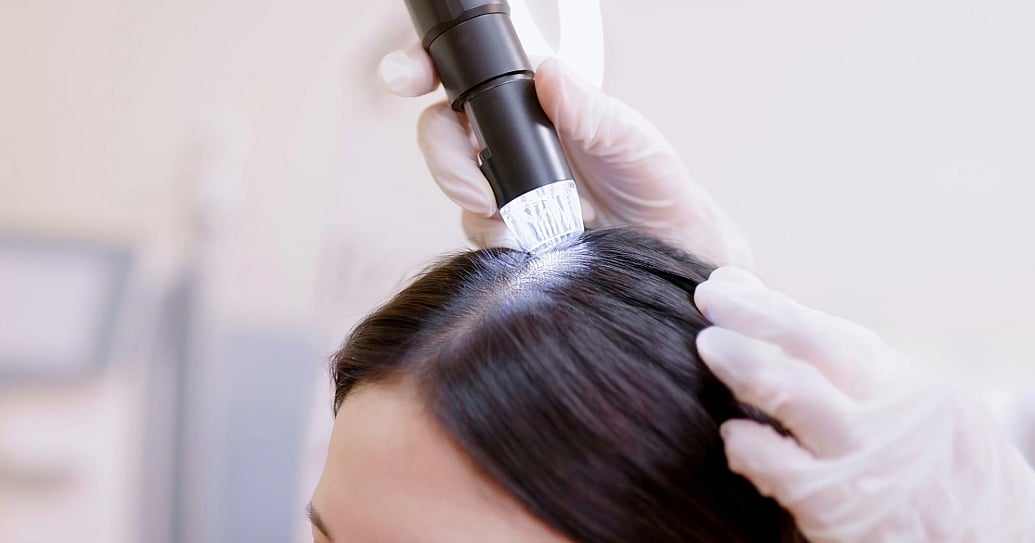
The retail boom online coincides with a rise in experiential tourism within South Korea. As per inbound tourism platform Creatrip, transaction values for local K-scalp care services increased 219% year-over-year. The appeal relies on systematic, multi-stage programs, spanning from customized scalp diagnoses to nutrient delivery.
Such programs are often hosted in premium environments like conventional hanok spaces. In a separate statement, also cited by the Seoul Economic Daily, Creatrip CEO Lim Hye-min observed that special scalp care has effectively transitioned into a specific wellness category capable of matching the shifting tastes of foreign travelers.
This micro-trend showcases the broader macroeconomic drive for South Korea’s beauty sector. Figures from South Korea’s Ministry of Food and Drug Safety reveal that the nation’s first-half cosmetics exports hit a record $7 billion USD, marking a 27.3% year-over-year surge. Although the United States remains the key export destination at $1.45B, China is the second-largest market with $1.01B, with Japan being the third at $580M.
As basic skincare continues to dominate the bulk of export revenue, the accelerated growth of special hair and scalp care indicates that the K-beauty ecosystem is effectively expanding into new high-margin markets around the world, including East Asia.