KOCCA report puts K-pop at the vanguard of Hallyu's multi-million-dollar growth and economic spillover.
K-pop's $100M Export Boom Fuels $202M Economy Boost
What was initially seen as a pop culture effect is now influencing a much broader business landscape.

Highlights
- A new KOCCA report shows the Korean Wave is no longer just a cultural force but an important growth catalyst boosting South Korea's economy.
- Beyond K-pop, fast-growing webtoons and K-content exports are driving demand worldwide.
- The economic impact of South Korean cultural exports now expands well beyond entertainment, creating jobs and boosting industries.
According to a new study of the Korea Creative Content Agency (KOCCA), for every $100 million USD increase in South Korean cultural exports, an additional economic activity of $202M is created in related sectors like cosmetics, food, and tourism.
The report, released on July 9, 2026, is titled KOCCA Focus No. 214, “Economic Effects of Hallyu Industry Exports,” and analyzes trends across South Korea's Hallyu industry and related sectors. The research details things like export performance and studies regions like China, Japan, Southeast Asia, North America, and Europe between 2006 and 2024.
The report helps to emphasize how the "Korean Wave" has evolved from a domestic pop culture trend into a foundational pillar of the nation’s macroeconomic growth. Notably, the evolution came into effect post the enforcement of the Framework Act on the Promotion of Hallyu Industry, owing to which the K-wave has become a global phenomenon today. As per provisional KOCCA figures, South Korean content exports hit $14.9 billion USD in 2025, successfully making K-culture the 12th-largest export sector of the country.
K-pop and Webtoons Accelerate Global Expansion
For industry stakeholders, the data highlights a shifting internal scene. Although gaming continues to dominate the total cultural exports with 64.3%, K-pop and webtoons are also experiencing sharp growth trajectories. As per the KOCCA report, the music industry, which is centered on K-pop, posted an average annual growth rate of 29.7% during the stated time period. Additionally, the comics sector, boosted by the global webtoon market, recorded a 26.3% yearly expansion rate.

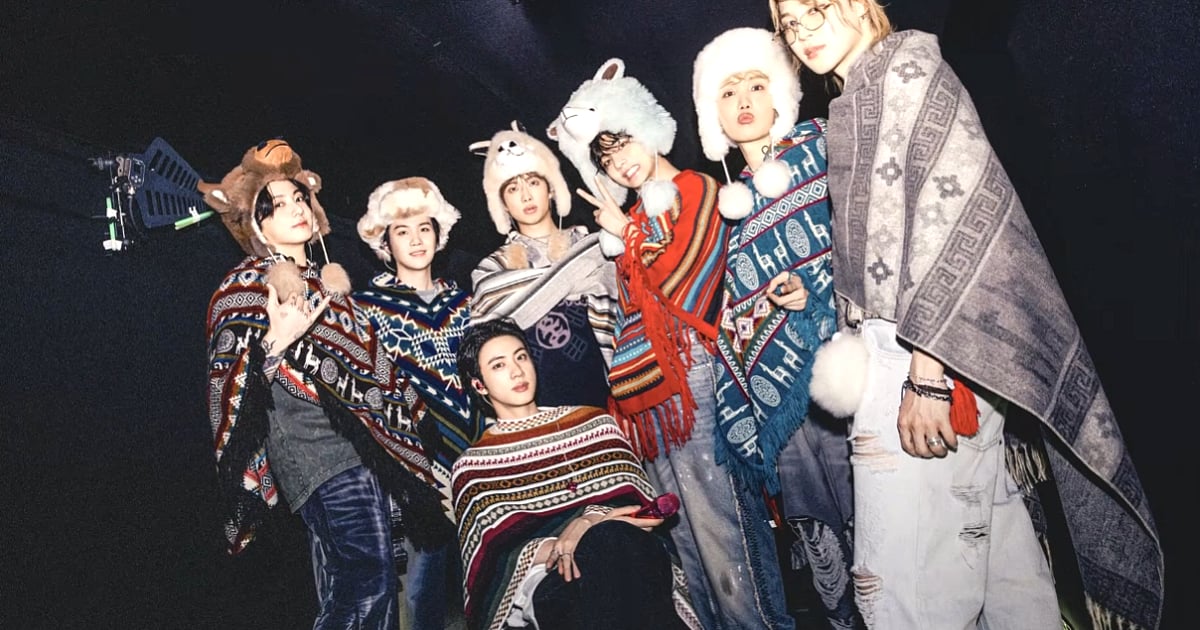
K-pop's most popular export: BTS (Image Credit: Erik Pendzich via Alamy)
This widening cultural footprint directly stirs up physical consumer markets. For instance, cosmetics exports grew by 21.3% annually, effectively diversifying away from a historical dependence on Greater China. The sector has now grown into North American and European markets as international consumers look to replicate the aesthetics seen in Korean media.
Domestic Production and Employment Boosts
The Korean Wave's economic value extends far beyond content creation. As reported by Seoul Economic Daily, for every $100M in Hallyu exports, South Korea is projected to create ₩782.4B (~ $522M) in domestic production effects. Direct content production accounts for ₩234.1B (~ $156M), while Hallyu-linked industries such as, tourism, retail, beauty, and consumer goods, contribute a much larger ₩548.3B (~ $366M), emphasizing the sector's wider economic spillover.
This $100M spike in Hallyu exports is projected to generate 3,389 jobs across South Korea. Although the content industry itself accounts for 1,251 of those positions, a greater 2,138 jobs are created in the above stated Hallyu-related sectors and other consumer industries, highlighting the phenomenon's extensive effect on employment.
According to Seoul Economic Daily, KOCCA President Kim Yoon-ji said that the findings confirm K-content’s systemic impact across the real economy. The agency highlighted that sustaining this momentum will require steady policy support to tightly bind cultural intellectual property to tourism and consumer manufacturing.

Author
Diya Mukherjee is a Content Writer at Outlook Respawn with a postgraduate background in media. She has a passion for writing content and is enthusiastic about exploring cultures, literature, global affairs, and pop culture.



Related Articles