



Highlights
- Japan has transformed into the K-pop industry’s most reliable market for massive profits and fan spending.
- The country’s broader arena and dome infrastructure makes the country key to K-pop’s touring and revenue strategy.
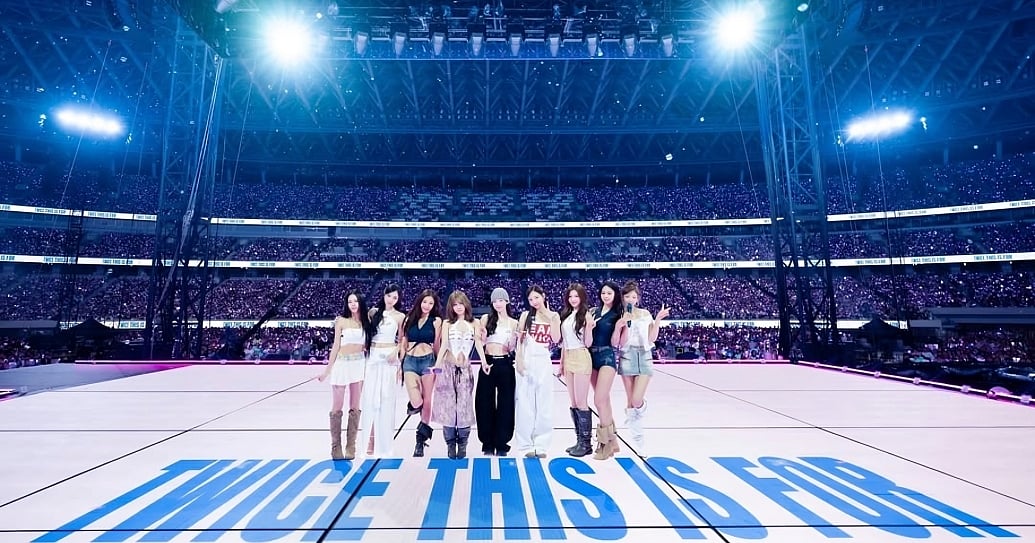
- Concerts by TVXQ, aespa, and TWICE emphasize the large-scale booming stadium economy of Japan.
Although the Hallyu business model has been successful in the US, with Billboard rankings as the ultimate barometer of success, the actual power of K-pop lies somewhere in the east, indicating a unique association. Data reveals that Japan is actually an indispensable center of “profit harvesting,” despite the US being the stage for symbolic brand building.
This industry behavior is driven by a unique coordination between the physical album sales and a world-class concert infrastructure, which South Korea reportedly lacks at the moment. As the fandom economy shifts more towards live performance, Japan’s status as the world’s second largest music market offers a stable position that remains unmatched by the streaming-heavy Western markets. Interestingly, as per IFPI’s report last year, Japan’s music market is growing at a pace of 8.9%.
Japan’s Stadium Economy Powers K-pop
The Asian Business Daily reports on the booming concert economy in Japan, which was mostly headlined by legacy, as well as new K-pop acts, thereby serving as proof of the claim. In late April 2026, a generational sweep of talent performed in the Tokyo area. For instance, second-generation icons, TVXQ, performed for 130,000 fans at Yokohama’s Nissan Stadium, expanding their 20-year Japanese legacy, which recorded 6.31 million total attendees.
Simultaneously, fourth-generation girl group aespa drew 170,000 to the Tokyo and Kyocera Domes. Twice also made history as the first K-pop act to headline a performance at the Tokyo National Stadium and drew 240,000 fans over three days. Even mid-tier venues like Keio Arena saw Day6 perform recently, highlighting the Japanese market's depth.
Beyond Music: The Rise of K-culture Commerce
The framework expands beyond the stage, which is emphasized by CJ ENM’s KCON JAPAN 2026 at Makuhari Messe. The event reportedly framed itself as a massive “K-lifestyle” platform where over 100,000 visitors came to experience K-beauty and K-food. Unlike the streaming dominated US market, Japanese fans dedicatedly procure physical CDs and fan-club memberships, producing what Circle Chart’s Kim Jin-woo terms a “long-tail” revenue model.
Japan’s Venue Advantage Over South Korea
Japan’s logistical advantage emerges from its “tiered” venue structure. The country has more than 30 arena-sized venues and various other domes and stadiums, where strong acts can tour scalably. With Seoul’s World Cup Stadium undergoing renovation, South Korea is grappling with an infrastructural gap, with tours and event planners admitting to often looking for venues in Japan to accommodate large-scale demand.
How is Japan Driving K-pop Revenue Growth?
The finance giants seem to have already taken notice of this activity and Japan’s preferability. The Asia Business Daily reports Goldman Sachs to be predicting that artists from the Big Four of K-pop: HYBE, SM, and JYP could double their current 7% share of the Japanese live music market in 2026 itself. Additionally, Hana Securities analyst Lee Ki-hun noted that although US tours are an investment in global standing, Japanese tours are the real revenue generators of the K-pop industry. This showcases that in contemporary K-pop’s valuation, the ability to bring in thousands in a Japanese venue is no longer just a benchmark, but a definitive rhetoric of corporate health of this market.