




Game Science rejects generative AI for Black Myth: Zhong Kui
Black Myth Developer Rejects AI for Sequel, Following Nolan's Lead
Game Science confirms zero generative AI for Black Myth: Zhong Kui, possibly drawing inspiration from Christopher Nolan to prioritize human artistry over digital shortcuts.

Highlights
- Game Science confirmed it will completely avoid GenAI in the design and asset-production phases for its upcoming sequel.
- Co-founder Yang Qi cited filmmaker Christopher Nolan and his practical filmmaking approach as key inspirations for prioritizing human artistry.
- Following Black Myth: Wukong selling over 30M copies worldwide, the studio has the financial freedom to build this new action RPG entirely from scratch.
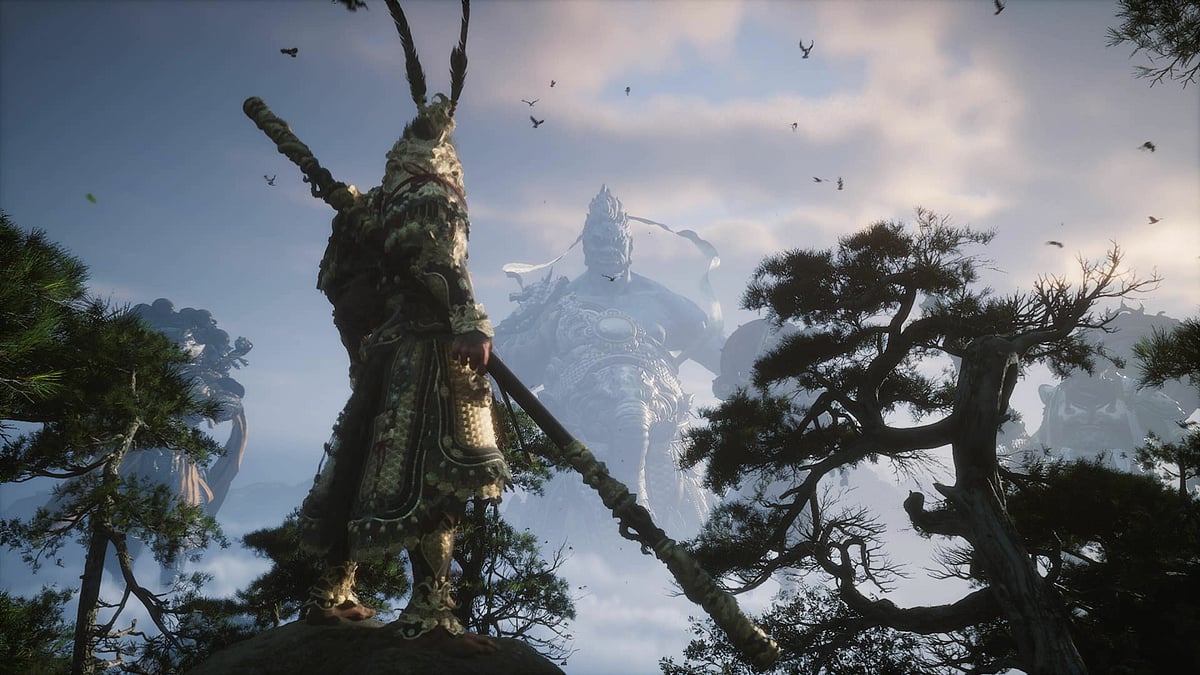
The use of generative AI in game development has become an increasingly contentious topic, with more studios looking for ways to cut corners and speed up production. However, Game Science, the developer behind the massive 2024 hit Black Myth: Wukong, is officially pushing back. The studio has confirmed that it will completely avoid using generative AI to build its upcoming sequel, Black Myth: Zhong Kui. Their inspiration for this human-first approach has been cited as the traditional filmmaking methods of director Christopher Nolan.
Addressing the gaming community on the Chinese social media platform Weibo, Game Science co-founder and art director Yang Qi answered a fan who asked if AI could help accelerate the new game's development. According to a translation shared on ResetEra, Qi made the studio's stance crystal clear. He stated that the team will deliberately steer clear of AI-generated content during the design and asset-production phases. Qi explained that this decision is not born out of a stubborn resistance to new technology, but simply a desire to stand their ground until the very end.
Comparing the rush of new tech to catching a train, Qi noted that the studio doesn't need to hop on board just because everyone else is. Instead, he said the team is happy to just stay at a small inn for a while, emphasizing that they are in no rush. To better explain why Game Science isn't chasing the latest technological shortcuts, Qi cited filmmaker Christopher Nolan. Qi noted that at a time when digital filmmaking and 3D post-production seem to have reached a dead end, Nolan is thriving by using even older techniques to shake things up.
Deeply impacted by Nolan’s cinematic epic The Odyssey, Qi recognizes that audiences can simply tell when a piece of art is meticulously crafted by human hands rather than generated by a machine. In an era where much of blockbuster entertainment relies on what some consider CGI-slop, leaning into traditional, practical methods pays off.
How Black Myth: Wukong's Massive Success Buys Time
This commitment to human artistry is a core value for the studio. Back in 2024, lead performance director Beth Park voiced a similar sentiment, arguing that relying on AI technology causes a project to lose the vital "human, chaotic emotion" of artistic creation, as per Polygon.
The studio certainly has the financial freedom to take its time, thanks to the extraordinary commercial performance of its previous title. Black Myth: Wukong launched in August 2024 after a painstaking six-year development cycle and immediately shattered industry expectations. The game sold more than 10M copies across all platforms within three days of its release, and reached 20M copies during its first month. This massive launch earned the studio a Guinness World Record for the fastest-selling video game based on a classic novel. With over 2.2M concurrent players logging onto Steam on its first day, the game ultimately sold over 30M copies worldwide.
Now, the studio is pouring that success into a brand-new adventure. First announced during Gamescom Opening Night Live, Black Myth: Zhong Kui serves as the second major entry in the developer's mythological anthology series. Rather than releasing a conventional expansion centered on Sun Wukong, Game Science is building a completely new single-player action RPG from the ground up for PC and major consoles. The sequel shifts the spotlight to Zhong Kui, a legendary ghost-catcher from Chinese mythology and Taoist folklore, complete with fresh gameplay, stories, and technology.
By keeping their design pipeline completely independent of generative AI tools, the developers are putting authenticity and precision first. Game Science has not yet announced a release window, and with the project still in early development, industry observers estimate the demon-subduing adventure may not arrive until around 2028. But for a studio that values deliberate quality and creative control over a rapid release schedule, taking the long road is exactly the point.

Author
Krishna Goswami is a content writer at Outlook India, where she delves into the vibrant worlds of pop culture, gaming, and esports. A graduate of the Indian Institute of Mass Communication (IIMC) with a PG Diploma in English Journalism, she brings a strong journalistic foundation to her work. Her prior newsroom experience equips her to deliver sharp, insightful, and engaging content on the latest trends in the digital world.
Krishna Goswami is a content writer at Outlook India, where she delves into the vibrant worlds of pop culture, gaming, and esports. A graduate of the Indian Institute of Mass Communication (IIMC) with a PG Diploma in English Journalism, she brings a strong journalistic foundation to her work. Her prior newsroom experience equips her to deliver sharp, insightful, and engaging content on the latest trends in the digital world.




Related Articles