Pokémon Go Data Reportedly Used Beyond Gaming
Pokémon Go Data Reportedly Used Beyond Gaming
How Pokémon Go scan data is shaping robotics, AI navigation, and defense systems.

Highlights
- Pokémon Go scans reportedly helped train Niantic Spatial’s AI navigation systems.
- The 30B scan dataset is now tied to robotics and drone navigation technology.
- Niantic Spatial’s partnerships with Vantor and Coco Robotics expanded the use of the data beyond gaming.
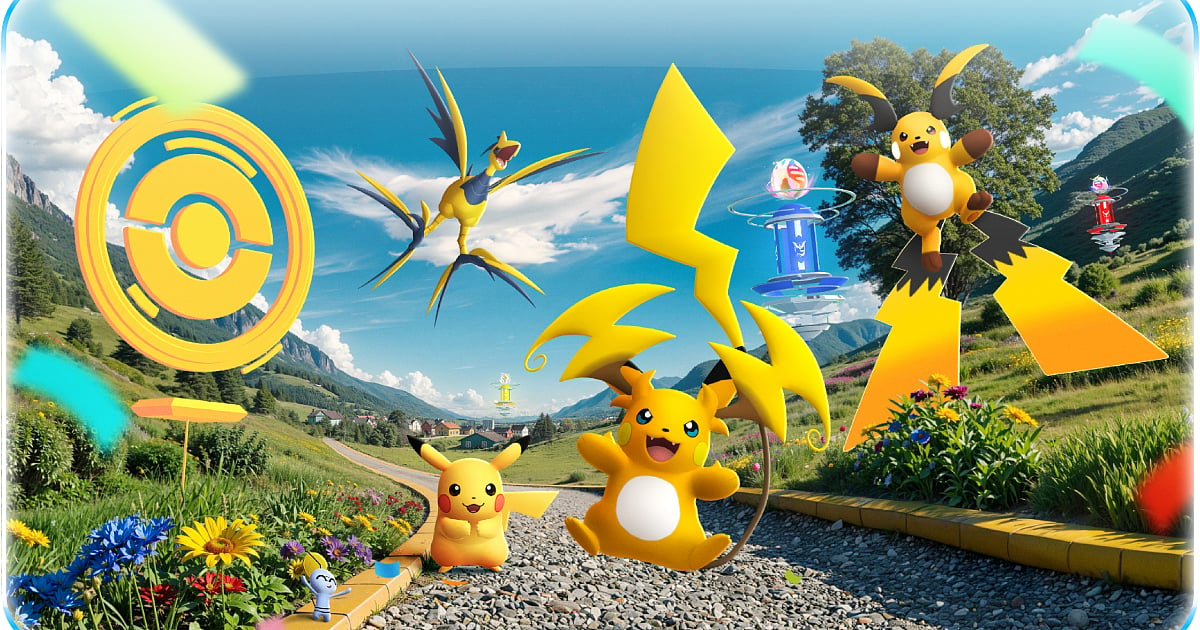
Millions of Pokémon Go players may have unintentionally helped build navigation technology now being adapted for drones and military robotics, according to a June 5, 2026, investigation by Trouw. The report says nearly 30B scans collected through the game’s augmented reality features became part of a geospatial artificial intelligence (AI) model now controlled by Niantic Spatial.
The investigation traces those scans to Pokémon Go’s optional Pokéstop scanning system, introduced in 2021.
Players could record real-world locations in exchange for rewards, creating a vast database of streets, buildings, and landmarks. According to the report, those scans were used to train an early version of Niantic Spatial’s visual positioning system, a technology designed to locate devices without relying on the global positioning system (GPS).
That capability has become commercially valuable as GPS disruption grows more common in both civilian and defense operations. In December 2025, Niantic Spatial announced a partnership with Vantor to build an integrated positioning system for drones, augmented reality (AR) hardware, vehicles, and field systems operating in signal-denied environments.
How Pokémon Go Data Became Defense-Relevant AI Infrastructure
Vantor told Trouw it would not directly use Pokémon Go data, but did not clarify whether Niantic’s larger model, already trained on that material, would underpin its defense tools. Niantic Spatial also declined to explain the exact role the player scans play in Vantor’s deployment.
The company had already confirmed in late 2024 that opt-in player scans were helping build its large geospatial model. It also said personal information from those scans had not been sold to anyone.
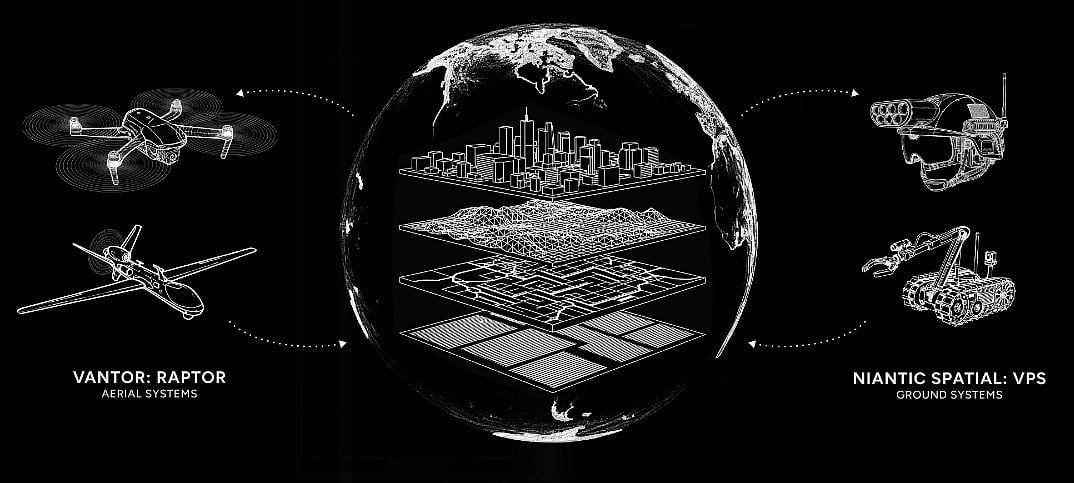
Niantic Spatial
Earlier in 2026, MIT Technology Review reported that the same 30B image dataset was being used in commercial robotics through Niantic Spatial’s partnership with Coco Robotics. The system helps delivery robots navigate with centimeter-level precision, using visual positioning instead of standard GPS.
“This is tragic,” Floris De Hingh, a 34-year-old Dutch Pokémon Go enthusiast who started playing when the game first came out in 2016, told Trouw.
Jeroen van den Hoven, Professor of Ethics and Technology at Delft University of Technology, claimed that the scale of player-generated scans accelerated the system’s development. He called it a warning sign for how entertainment platforms can feed AI systems far beyond their original purpose.
Disclaimer: Sources used have been machine-translated from Dutch.

Author
Probaho Santra is a content writer at Outlook India with a master’s degree in journalism. Outside work, he enjoys photography, exploring new tech trends, and staying connected with the esports world.