UK Gaming Adoption Hits 70% as Social Gaming Grows
UK Gaming Adoption Hits 70% as Social Play Surges
Dentsu report highlights gaming’s role as a social platform, that reshapes media attention and brand engagement strategies.

Highlights
- UK gaming adoption reaches 70% as gaming becomes a mainstream digital social hub.
- Around 49% of players think gaming builds community connections.
- The report highlights gaming’s marketing potential, showing players are open to in-game branding when it fits the experience.
Gaming is increasingly functioning as a digital social hub in the United Kingdom, with around 70% of adults now engaging in some form of gaming. A new consumer study from Dentsu suggests that gaming is evolving and slowly replacing traditional media, with over 20% of UK players aiming to prioritize gaming over watching movies and series.
More than half of UK gamers play daily, signaling the medium’s integration into everyday digital behaviour. Nearly 49% of players claimed that they feel a part of a community around a favourite game or franchise, while over half of Gen Z respondents reported forming real-life friendships through gaming.
The Ready Player Brand report indicates gaming as a space where identity and social interaction intersect. Approximately 52% of UK players say gaming forms a meaningful part of who they are, with the figure rising to 70% among Millennials and 69% among Gen Z.
Gaming Emerges as a Mainstream Social Platform in the UK
The report also highlights how gaming is beginning to compete directly with other entertainment channels for time and attention. Around one in four players expect to reduce time spent on social media over the next five years to make room for gaming.
Dentsu
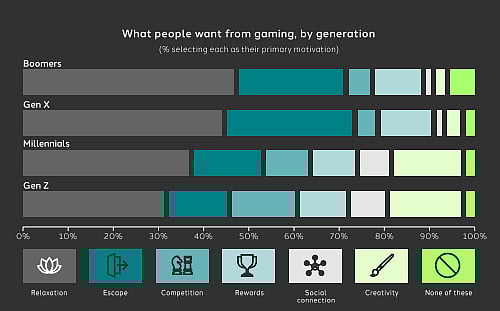
The reports highlighted a niche change within the perception of gaming as well. According to surveyed players, “gaming isn’t driven by competition. It’s driven by how it makes them feel.” 21% of gamers stated they play as an escape mechanism, while an increased 42% feel relaxed while gaming.
As a result, gaming moved beyond entertainment into a medium for community-building and social interaction. “Gaming is no longer an occasional activity; it’s a habitual, repeatable part of people’s media routines,” the report emphasized.
Strategic Implications for Brands and Media
Dentsu managing director Flora Kong stated that the increased penetration of gaming in citizen’s lives “marks a cultural shift, and we expect this attention divide to grow in the next few years.” For advertisers and media companies, this evolution shows where people’s attention is shifting.
The report highlighted that brand presence is more accepted within gaming spaces, with only 12% of gamers pointing to it as a killjoy. Roughly 43% of them said branding and advertising “doesn’t bother them.” 24% of players argue that if the branding fits, it becomes natural.
This signifies that adding to the gaming experience could welcome branding more naturally within in-game spaces. The report featured Pringles, a company that is working alongside Xbox and Dovetail Games, for “building a presence that fit the emotional and cultural logic of play.” Their campaign helped in increasing the brand awareness by 38%, along with a 2.8M minutes watch-time record on Twitch.
The findings in the U.K. reinforce a broader shift in the digital entertainment landscape. However, with gaming platforms becoming shared cultural spaces, it requires brands to approach in-game engagement carefully. The report has recorded that gaming "communities respond to brands that understand the rhythm, tone, and context of the environment they are entering,” while quickly shifting from brands that don't.

Author
Kamalikaa Biswas is a content writer at Outlook Respawn specializing in pop culture. She holds a Master's in English Literature from University of Delhi and leverages her media industry experience to deliver insightful content on the latest youth culture trends.