




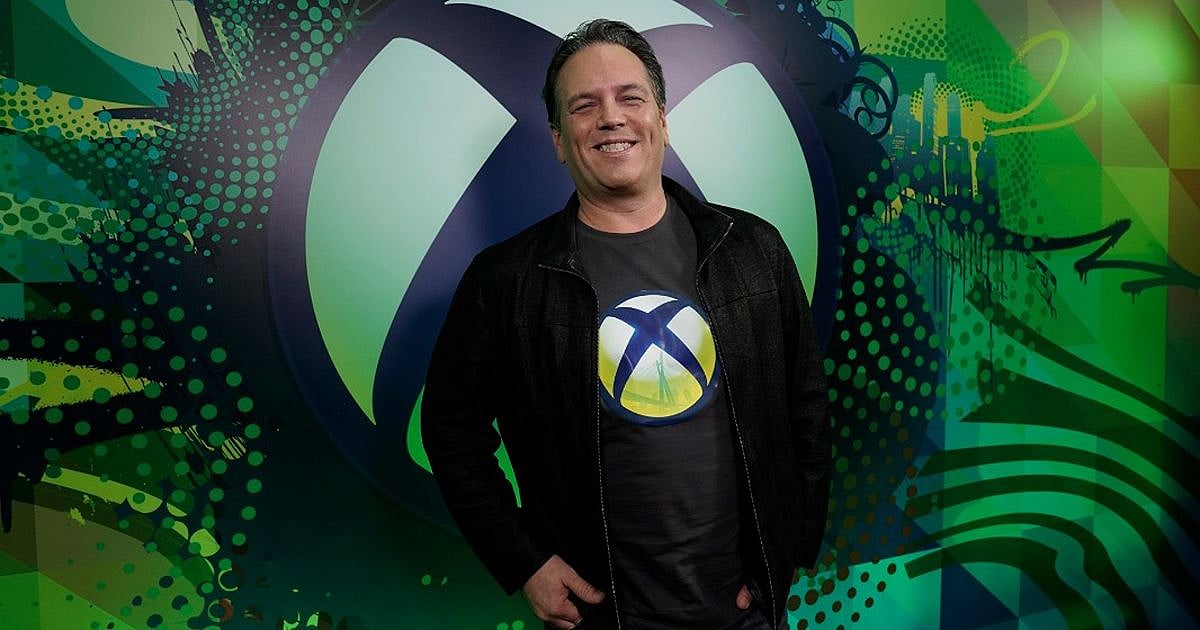
Phil Spencer at an Xbox event. (Image credit: Microsoft/Xbox)
Xbox boss Phil Spencer is Retiring From Microsoft After 38 years
Spencer's departure triggers a top-down restructuring of the gaming division, with Asha Sharma named as his successor and Sarah Bond resigning

Highlights
- Phil Spencer is retiring from Microsoft after 38 years. Asha Sharma replaces him as Microsoft Gaming CEO; Sarah Bond has also resigned.
- Spencer took over Xbox in 2014 when investors wanted it sold off, then rebuilt it through Game Pass and $77 billion in acquisitions including Activision Blizzard.
- He leaves with Xbox facing a 9% revenue decline and 32% drop in hardware sales, plus thousands of job cuts over the past two years.
Phil Spencer, the executive who transformed Xbox from a struggling console brand into one of the largest gaming businesses in the world, is retiring from Microsoft after 38 years at the company.
Spencer, 58, informed chief executive Satya Nadella last fall that he intended to step down, according to an internal email shared publicly by Microsoft on Friday. His retirement, effective Monday, sets off the most significant leadership change at Xbox since he took charge of the division in 2014. Asha Sharma, the president of Microsoft's CoreAI division, will replace him as chief executive of Microsoft Gaming. Sarah Bond, the president of Xbox who was widely seen as Spencer's eventual successor, has also resigned. Matt Booty, previously head of Xbox Game Studios, has been promoted to executive vice president and chief content officer.
How Phil Spencer Saved Xbox From Being Sold Off by Microsoft
Spencer joined Microsoft as an intern in June 1988. He became part of the Xbox team when the original console launched in 2001, and was elevated to lead the division a little over a decade later, at a point when its future was genuinely uncertain. Sony was outselling Microsoft in consoles by a wide margin, and some investors were pushing to spin Xbox off as a separate entity.
"The question is, do we go forward with Xbox?" Spencer said in a 2020 interview with Shacknews, recalling the mood at the time. He said he persuaded Nadella to bring hardware, software, and game development groups into one organization, a structural change that became the foundation for everything that followed.
What followed was a long, expensive, and largely successful campaign to redefine what Xbox was. Spencer launched Game Pass, the subscription service that became Microsoft's primary bet on the future of gaming distribution. He championed backwards compatibility, earning goodwill with longtime players. And he led two acquisitions that reshaped the competitive landscape of the industry: the $8.1 billion purchase of ZeniMax Media, the parent company of Bethesda Softworks, in 2021, and the $69 billion takeover of Activision Blizzard, which closed after a protracted regulatory fight in 2023. By the time he stepped down, Microsoft controlled franchises including Call of Duty, Halo, The Elder Scrolls, Doom, Minecraft, and Candy Crush, and employed tens of thousands of game developers across nearly 40 studios worldwide.
Xbox Revenue Decline and the Challenges Spencer Leaves Behind
The legacy is not without complications. Xbox gaming revenue fell 9% year-over-year in Microsoft's most recent quarter, with hardware revenue dropping 32% due to declining console sales. Microsoft has cut thousands of gaming jobs over the past two years and closed several studios. The decision to release once-exclusive games on PlayStation and Nintendo platforms, a strategy Spencer endorsed in his final years, remains divisive among Xbox's core audience.
In a farewell email to staff, Spencer called his tenure "the privilege of a lifetime." He will remain in an advisory role through the summer to support the transition to Sharma's leadership.
"Over 38 years at Microsoft, including 12 years leading Gaming, Phil helped transform what we do and how we do it," Nadella wrote in a company-wide memo.
Bond, in a LinkedIn post, praised Sharma and said Xbox "deserves this," but offered no public explanation for her own departure. Spencer said only that she "has decided to leave Microsoft to begin a new chapter." Sharma, whose background is in artificial intelligence rather than gaming, faces an audience already skeptical of her appointment. Her first move was to address the AI skepticism head-on.

Author
Vignesh Raghuram is the Editor of Outlook Respawn, where he leads editorial strategy across gaming, esports, and pop culture. With a decade of experience in gaming journalism, he has established himself as a trusted voice in the industry.