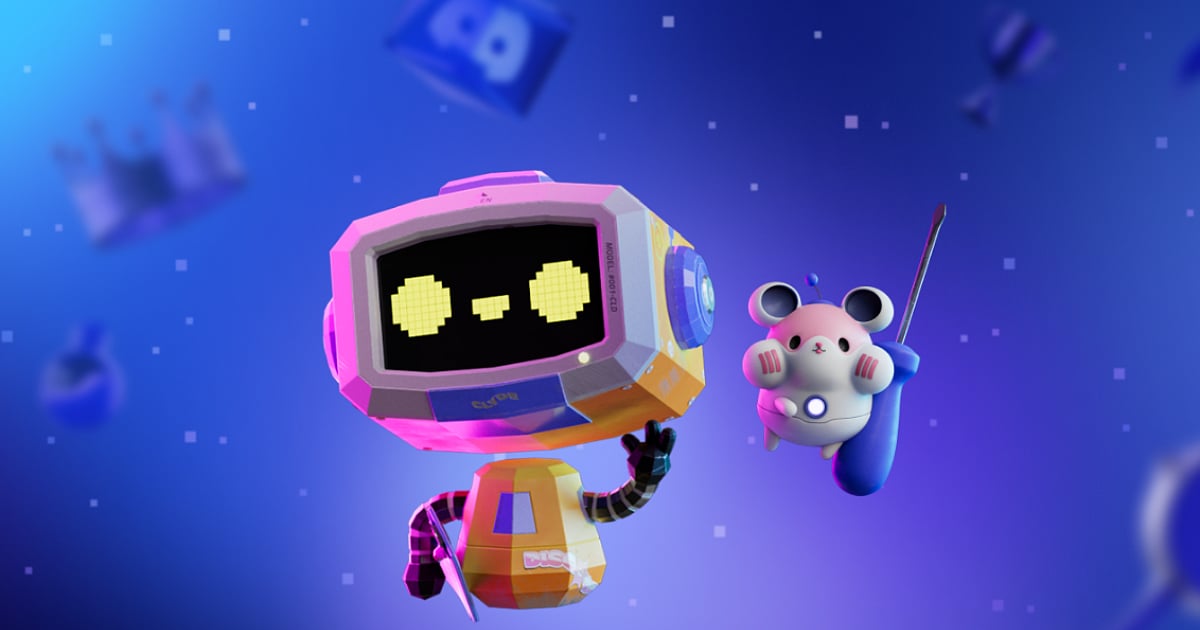






Google Cloud AI launches new agents to automate game development.
Google Cloud AI: The Ultimate Engine for Modern Game Studios
Boost game development with Google Cloud AI! Use Gemini-powered agents and Vertex AI to automate playtesting, slash production costs, and build sentient digital worlds.

Highlights
- Google Cloud AI launched a massive suite of autonomous agents at GDC 2026.
- Gemini-powered tools in Google Cloud AI help studios slash skyrocketing production costs.
- Google Cloud AI now provides industry-first IP protection for major partners like Sony
Game development is getting a massive, AI-powered upgrade. At the 2026 Game Developers Conference (GDC) in San Francisco, Google detailed the next major phase of its 'Living Games' concept. The tech giant is rolling out a massive suite of autonomous Google Cloud AI agents designed to take the heavy lifting out of cloud-based game development. This new platform aims to help studios build highly personalized, dynamic worlds while tackling a critical industry crisis: development costs that have skyrocketed by a staggering 90% since 2017.
Described as a specially designed 'engine' for games, the improved Google Cloud AI platform brings together heavy-hitters like Gemini 3 Pro, Flash, Gemini Enterprise, and Vertex AI. It is built to automate tedious chores like rigorous playtesting and complex code generation, freeing up humans to focus on the creative side of development.
The result is a system that creates responsive, sentient environments for players. Crucially, for studios worried about legal grey areas, Google is backing this technology with an industry-first, two-pronged indemnification that protects creative intellectual property across both the AI's training data and the final generative outputs.
The Rising Industry Demand for Google Cloud AI
According to a 2025 Google Cloud study conducted by The Harris Poll, 90% of game developers are already using some form of AI in their daily workflows. Furthermore, 97% believe generative AI is entirely transforming the industry through dynamic non-playable characters (NPCs) and more efficient production. Meanwhile, 95% say it actively reduces the grind of repetitive tasks, proving the technology is rapidly becoming a staple on the production floor.
Developers are already putting these tools to work to fundamentally change how players experience digital worlds. 10Six Games is using a cloud framework to build its Infinity Platform, which drives a highly personalized apocalypse in their upcoming action-roguelike, You vs Zombies. Studio CEO Susan Cummings stressed that AI is not a replacement for human creativity, noting that they don't use it to write games from the ground up.
Instead, they taught Gemini their specific writing style to turn creative visions into a playable reality. Cummings added that this level of hyper-personalization was previously impossible, and their new technical foundation ensures every apocalypse feels uniquely personal to the player, as reported by Games Industry Biz.
On the technical side, the startup Atlas launched a multi-agent AI system within its Atlas AI Studio, which integrates directly with industry-standard software like Unreal Engine and Unity. Atlas founder Ben James pointed out in a blog post that the games industry has been stuck in a paradigm where AI just means typing a prompt to get an output, a process that is useful for exploration but breaks down in actual production.
Expanding the Google Cloud AI Gaming Ecosystem
Now, developers can describe their creative and technical goals in natural language, and the AI agents will automatically assemble complex pipelines spanning generation, texturing, optimization, and level of detail based on how professional studios actually ship games.
The ripple effects of Google's push are being felt across the gaming landscape. Sony Interactive Entertainment recently rebuilt its Entitlements service—the crucial system that confirms your game ownership—using the Google Cloud Spanner platform. Other notable partnerships include Antstream Arcade, which expanded its Google Cloud collaboration to support personalized features and autonomous community challenges for its massive retro gaming library.
Additionally, Dreamlands, an ambitious AI world-building platform crafted by industry veterans from Ubisoft, Meta, and Unity, demonstrates how AI can be used to construct entirely new, immersive game worlds from scratch.
Jack Buser, Google Cloud's director for games and strategic industries, sees this as a massive shift not just for gaming, but for technology as a whole. He noted that the lessons learned in the games industry, where high-performance real-time loops meet complex agentic behavior, are already providing a blueprint for sectors like retail and media on how to handle AI at scale.
"The future of games is happening right now," Buser stated. "At Google Cloud, we aren't just providing the infrastructure; we’re providing the engine for the next great era of play."

Author
Krishna Goswami is a content writer at Outlook India, where she delves into the vibrant worlds of pop culture, gaming, and esports. A graduate of the Indian Institute of Mass Communication (IIMC) with a PG Diploma in English Journalism, she brings a strong journalistic foundation to her work. Her prior newsroom experience equips her to deliver sharp, insightful, and engaging content on the latest trends in the digital world.
Krishna Goswami is a content writer at Outlook India, where she delves into the vibrant worlds of pop culture, gaming, and esports. A graduate of the Indian Institute of Mass Communication (IIMC) with a PG Diploma in English Journalism, she brings a strong journalistic foundation to her work. Her prior newsroom experience equips her to deliver sharp, insightful, and engaging content on the latest trends in the digital world.




Related Articles