
Monopoly Go
Pocket Casinos: How Mobile Games are Exposing PROGA’s Loopholes
Monopoly Go made $2 billion using slot machine psychology wrapped in a board game. With India's PROGA banning real-money gaming, the social casino loophole deserves scrutiny.

Highlights
- Monopoly Go generated over $2 billion USD in revenue in its first 10 months by combining slot machine psychology with board game branding.
- The legal distinction that keeps social casino games out of gambling regulation globally comes down to the inability to cash out winnings for real money.
- Research has found that 64.5% of adolescents who paid money while playing social casino games reported gambling for real money as a result.
In August 2025, India banned real-money gaming. The Promotion and Regulation of Online Gaming Act (PROGA), which received presidential assent the same month, drew a hard line. Any game where a player pays money with the expectation of financial return is an online money game and is categorically prohibited. It led to an immediate impact on the real money gaming industry. Flutter Entertainment shut its Junglee Games venture and took a $560M impairment charge. Head Digital Works collapsed from over 600 employees to fewer than 180. Asset write-downs across the sector exceeded $840M in the first 90 days after passage.
That is the version of mobile gambling the government could see and categorize. There is another version that it cannot, or at least has not yet tried to. It does not involve offshore rummy platforms or illegal betting apps. It involves some of the most downloaded titles on the App Store and Google Play, games with family-friendly branding, board game nostalgia, and enough slot machine psychology to fill a casino floor. They take real money in. They deliver nothing you can take out. And under the Promotion and Regulation of Online Gaming Act, 2025, every single one of them is a permissible online social game.
How Gambling Found a New Costume
To understand how the mobile social casino genre works, it helps to trace where it came from. The architecture was not invented by mobile game designers. It was borrowed, deliberately and systematically, from behavioural psychology research that the gambling industry had been commissioning for decades.
The slot machine, as designed for physical casinos, operates on what psychologists call a variable ratio reinforcement schedule. Unlike a fixed reward system, where you know exactly what you get for a given input, “variable ratio” systems deliver rewards at unpredictable intervals.
Behavioural research going back to B.F. Skinner's work on operant conditioning consistently shows that variable ratio schedules produce the highest and most persistent players who are resistant to quitting when the rewards stop. Slot machines deliver wins unpredictably, which is precisely why they are more engaging than games with predictable outcomes. The unpredictability is the product that keeps players coming back.
Hasbro
Mobile social casino games took that architecture and stripped away the one element that gambling regulators use to classify something as gambling: the cash-out. Legally, across most jurisdictions, including India, gambling requires three elements:
- Consideration: You pay something to get into the game.
- Chance: The outcomes are random.
- Prize: A prize with real-world monetary value.
If we remove the third element, we successfully remove the regulatory hook without removing the slot machine. Things like the psychological manipulation, the spending pressure, and the legal classification continue to remain.
The gaming industry understood this clearly. Coin Master, the title that established the social casino mobile genre at scale before Monopoly Go overtook it, was described by its own design as the traditional slot machine experience and marrying it with light casual mechanics.
Monopoly Go and the Art of the Disguise
Coin Master's success demonstrated the model, but Monopoly Go perfected it, and did so at a scale that made the mechanics impossible to ignore for anyone paying attention. Scopely launched Monopoly Go in April 2023. In its first month, more than 20M players downloaded it, and it generated approximately $17M.
Within ten months, it had reached $2B in revenue. Full-year 2024 revenue came in at approximately $1.58B, placing it well ahead of Coin Master's $726M in the same period. Sensor Tower data placed it among the top five mobile games globally by player spending in the United States, generating $830M in North American markets alone across 2024.

Moon Active
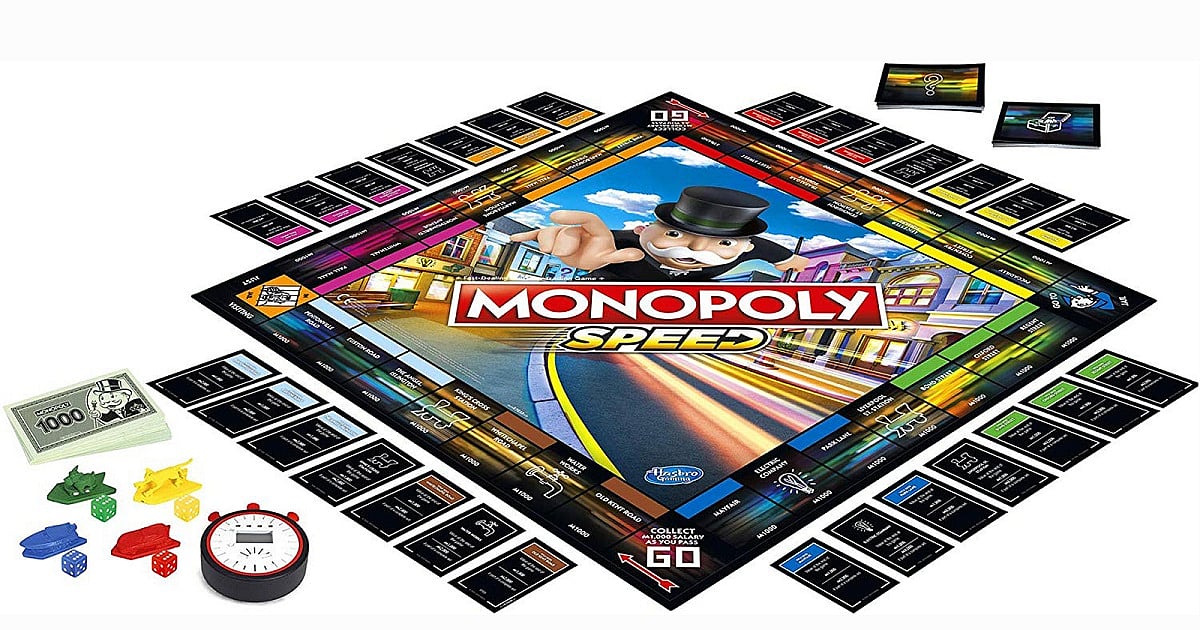
The Monopoly branding is the critical piece. Hasbro's board game carries decades of family association. It is the kind of brand that parents recognize as benign before they have opened the app. Fungies.io, in a trade-facing analysis of Monopoly Go's user acquisition strategy, described this as the game "cloaking a Coin Looter in the guise of a beloved family game," noting that the slot machine market had become too saturated to scale effectively, and that family game branding offered a way to reach audiences that would never have downloaded a game that advertised itself accurately.
What the branding conceals is a monetization architecture that the DarkPattern.games database has documented in considerable detail. The community-sourced platform, which crowdsources reports of psychological manipulation in games, had recorded 250 reported dark patterns in Monopoly Go as of its most recent count. The categories span temporal manipulation, monetary pressure, and social exploitation.
Players report that the game uses sunk cost framing to make quitting feel like a waste and a false scarcity to suggest they are closer to rare rewards than they actually are. There are hourly targeted offers to non-spending players, countdown timers on limited events, and a social attack mechanic in which other players can raid your board, creating an emotional urgency to spend to protect or recover.
The in-game language around the game is specifically designed to obscure what it is. Real money purchases dice rolls. Dice rolls move the player around the board. The board dispenses in-game cash and sticker packs. Stickers complete collections that unlock rewards. The rewards are primarily consumable, which allows players to keep playing. In-game cash builds properties, but properties are just a progress metric. There is no underlying game in the traditional sense. There is a slot machine delivering variable rewards, denominated in a currency with no exit value, dressed in the visual language of a 1935 board game.
The Legal Architecture of the Loophole
The reason this is legal everywhere except in jurisdictions that have specifically expanded their gambling definitions is not incidental. It is structural, and it has been maintained by sustained industry lobbying and strategic legal positioning since social casino games first became commercially significant.
Gambling law in most countries, including India, under both the pre-PROGA regime and PROGA itself, requires the prize to carry real-world monetary value for a transaction to constitute gambling. The UK Gambling Commission concluded after reviewing the social casino sector that virtual currencies without cash-out mechanisms do not meet the legal definition of gambling under the Gambling Act 2005. The same finding has been reached in most US states, in most European jurisdictions, and in most of Asia.

Blizzard Entertainment
PROGA's definition of an online money game rests on the same threshold. A game is classified as a money game if a player "pays fees, deposits money or other stakes in expectation of winning monetary gains or other enrichment." In-game currency without cash-out value does not constitute monetary gain. A game like Monopoly Go, which takes real money and returns dice rolls and stickers, almost certainly falls within PROGA's definition of an online social game. It is likely to receive deemed approval without mandatory registration. Under the light-touch framework that emerged from the PROGA Rules 2026, the Online Gaming Authority of India (OGAI) will investigate social games only if complaints arise.
This creates a regulatory outcome that is worth sitting with. India passed some of the most sweeping anti-gambling legislation in the world in 2025, prosecuting real-money games with criminal penalties, including imprisonment. At the same time, a game that spent $2B in development and marketing to engineer the spending psychology of a slot machine behind a Monopoly board is available on every device in the country, classified as a social game, and subject to complaint-driven oversight only.
The question regulators have consistently deferred is whether the legal distinction between social casino games and regulated gambling has any meaningful relationship to how these products affect users in practice. A study published in PubMed Central (PMC), examining the relationship between social casino game spending and gambling behaviour in adolescents, found that 64.5% of adolescents who paid money while playing social casino games reported subsequently gambling for real money, compared to just 1.3% of non-paying players. The same study found that adolescents who engaged in microtransactions in social casino contexts reported more frequent participation and spending in real-money gambling and more symptoms of problem gambling.
A class action filed against Moon Active, the developer of Coin Master, cited these dynamics directly, alleging that the game promoted and profited from gambling activity under New York state law, and noting that its players were frequently under 18. The Council of Europe's review of risks and harms in online gaming concluded that social casino games "could be a gateway to gambling activities or otherwise normalize the experience of gambling for young people, including children and adolescents," and noted that these games "do not employ strict age verification methods and are thus easily accessed by minors."
South Korea moved furthest on the disclosure side, mandating probability disclosures for all in-game purchases with randomized outcomes from March 2024. Research published in 2025 found that 90 of the top 100 highest-grossing iPhone games in South Korea contained paid loot boxes. Belgium banned loot boxes with transferable value in 2018. Australia, in September 2024, began rating games with paid random items as M or R18+ by default. The US has seen class actions in multiple states arguing that loot box mechanics constitute illegal slot machines under existing state gambling law.
India has done none of these things. PROGA does not address probability disclosures. It does not rate games with paid random mechanics differently from other social games. It does not require social casino games to implement age verification. The PROGA Rules 2026 do require online social game providers to offer age verification and parental controls as user safety features, but these apply to all social games and are enforced on a complaint-driven basis.
The Creep Into Otherwise Legitimate Games
The social casino mechanics that define Monopoly Go and Coin Master have not stayed confined to games that were built around them. They have migrated into titles across genres that were not originally designed as social casino products, and the migration has accelerated as their revenue impact has become clear to publishers.
Loot boxes in major action and sports titles were the first visible manifestation. FIFA Ultimate Team, EA's card pack system within its football game, was described by regulators in Belgium and the Netherlands as gambling and was banned accordingly. Belgian authorities fined EA in 2018. EA removed loot boxes from FIFA in Belgium rather than restructuring the mechanic globally, which itself signals how central the revenue model was to the product. Pan European Game Information’s (PEGI's) new rules, effective from June 2026, will require all games with paid random items to carry a PEGI 16 label by default, an acknowledgment that the mechanic requires an age-based warning.
Battle pass systems, which sell time-gated access to seasonal reward tracks, are now standard in games including Fortnite, Call of Duty, Valorant, and Apex Legends. These are not random-outcome purchases, which distinguishes them from loot boxes in regulatory terms. But they embed the same fear of missing out (FOMO) mechanics that the social casino genre pioneered, like time limits, exclusive items that disappear at season's end, and social visibility of which cosmetics other players have. The psychological architecture is the same, but the legal classification is different.

Hoyoverse
Gacha systems in mobile RPGs like Genshin Impact operate as randomized pull systems, where players spend premium currency for a chance at rare characters or items. Genshin Impact is estimated to have generated over $5B in global revenue, primarily from gacha mechanics. China requires probability disclosures and hard caps on consecutive failures. Japan's Consumer Affairs Agency investigated gacha mechanics as early as 2012. Most other markets have no specific regulation.
The Question PROGA has Not Asked
India's government banned gambling because it concluded, with considerable evidence, that the industry was extracting billions from Indian users through financial risk and reward loops that caused measurable harm. While that conclusion was correct, the question PROGA has not asked yet is whether the games that engineered the same psychological loops without the cash-out belong in the same regulatory conversation.
The legal answer, under the current framework, is no. Social casino games without real-money prizes are online social games and are presumed permissible. The practical answer is more complicated, particularly given what the research shows about the relationship between spending in social casino contexts and subsequent real-money gambling behaviour.
This is not an argument that Monopoly Go should be banned. It is an argument that a regulatory framework sophisticated enough to build a six-member authority, a 90-day determination process, and a two-tier grievance system has not yet grappled with the distinction between real-money gambling and its psychological equivalent. The social casino genre has been engineering that gap since 2012. It will continue to do so until the people writing the rules decide it is worth closing.

Author
Abhimannu Das is a web journalist at Outlook India with a focus on Indian pop culture, gaming, and esports. He has over 10 years of journalistic experience and over 3,500 articles that include industry deep dives, interviews, and SEO content. He has worked on a myriad of games and their ecosystems, including Valorant, Overwatch, and Apex Legends.
Abhimannu Das is a web journalist at Outlook India with a focus on Indian pop culture, gaming, and esports. He has over 10 years of journalistic experience and over 3,500 articles that include industry deep dives, interviews, and SEO content. He has worked on a myriad of games and their ecosystems, including Valorant, Overwatch, and Apex Legends.