





Appa
The Making of Appa: Grief, Games, and a Father's Ghost
Mridul Pancholi on building Appa, a card game about siblings mourning a father and how grief influences artwork.

Highlights
- Appa is a card game about mourning a father, built by animator-filmmaker Mridul Pancholi.
- The siblings in the game make a card game from their nightmares that players can experience.
- With 5K wishlists and minimal marketing, Heat Death Studio is preparing its first major push before launch.
Amidst the games revealed at the India Game Showcase during Summer Game Fest 2026, Appa drew attention for its striking visuals. With its pixel art shifting into impressionism and styles changing mid-scene, the game looked as if it were being drawn and redrawn in real time.
Developer Mridul Pancholi has spent over a decade as an animator, artist, and filmmaker in India. He founded Heat Death Studio and previously released Alter Army, a fast-paced action game. Appa, his next project, is a card game about three siblings who receive news of their father's death while living in Canada, and what it means to grieve someone you’re so far away from.
Pancholi has been building it since a 2023 game jam, where it began as a five-minute story with no cards and no commercial ambitions, designed to assume the player spoke either Hindi or Kannada. Veteran game designer Mangesh Thombare, who previously worked at Pro Shooter VR, is now on board. There is a line from that original jam version that Pancholi says was the story's spine before he even knew what the story was: "I come from a family where generations couldn't figure out how to be happy." He does not remember when it came to him. He just decided to follow it. Structurally, the game goes one level deeper: the protagonists process what they are going through by building a card game out of their own nightmares. That card game is the one you are playing.
From a Jam Game to Steam
Appa began as a Build Your Own Games (BYOG) 2023 game jam entry. The original concept was a five-minute story about a boy mourning his father, with dreamlike elements. It was a design choice that would have made commercial release difficult. The game opened by asking which language the player was comfortable in, Hindi or Kannada, and the story changed substantially based on the answer. Pancholi says, "A person from the west would have a hard time figuring out what the game is.” Keeping that design was not viable for a commercial product, though he was clear it had to stay somewhere in the DNA of Appa.
Pancholi never intended to make his concept commercial. His friends in the gaming industry pushed him back toward development after he had stepped away. He started showing the project to publishers and funding bodies. He explained his decision to build the game for public release, saying, "It was a very iterative and slow process of realizing that hey, there is something good here."
Writing Grief That is Not Simple
The harder question is how you write grief for someone you were already living away from, without the writing becoming either romanticization or resentment. Pancholi answers that the game is not really about grief at all. Each of the three main characters processes the father's death differently. One of them spirals into death anxiety, one wrestles with cultural identity and displacement, and one has old trauma resurface. Pancholi explains, "Grief is a backdrop through all of this. My hope is that I can drench every frame of the game, whether it's funny, dramatic, surreal, with that melancholic grief."
The opponents in the card game are manifestations of those emotional states of the characters. Gameplay shifts register depending on what is happening in the story. It can turn fun, tense, or overwhelming, based on whether the characters are bonding, trauma is resurfacing, or they're in the middle of a sleep-paralysis attack.
Pancholi is deliberate about not explaining all the ways this plays out mechanically, wanting players to find out for themselves. The core of Appa, he says, is about what gets inherited by the next generation and who gets to decide. That includes the grief, the trauma, and the game design itself.
Pancholi’s Creative Vision
Pancholi's background is in animation and art, with screenwriting and short film direction coming in more recent years. Appa's story is written in screenplay format, structured like an 85-minute feature film, then adapted into the game through a blend of manga panels, some of them animated. The influences he names span mediums and cultures, including Tatsuki Fujimoto, Sergio Toppi, Charlie Kaufman, and David Lynch.
Pancholi explained his approach to the game, stating, "What I would describe the game to be is an honest depiction of life. I consider dreams as real and as influential as real life itself."
Heat Death Studio / Steam
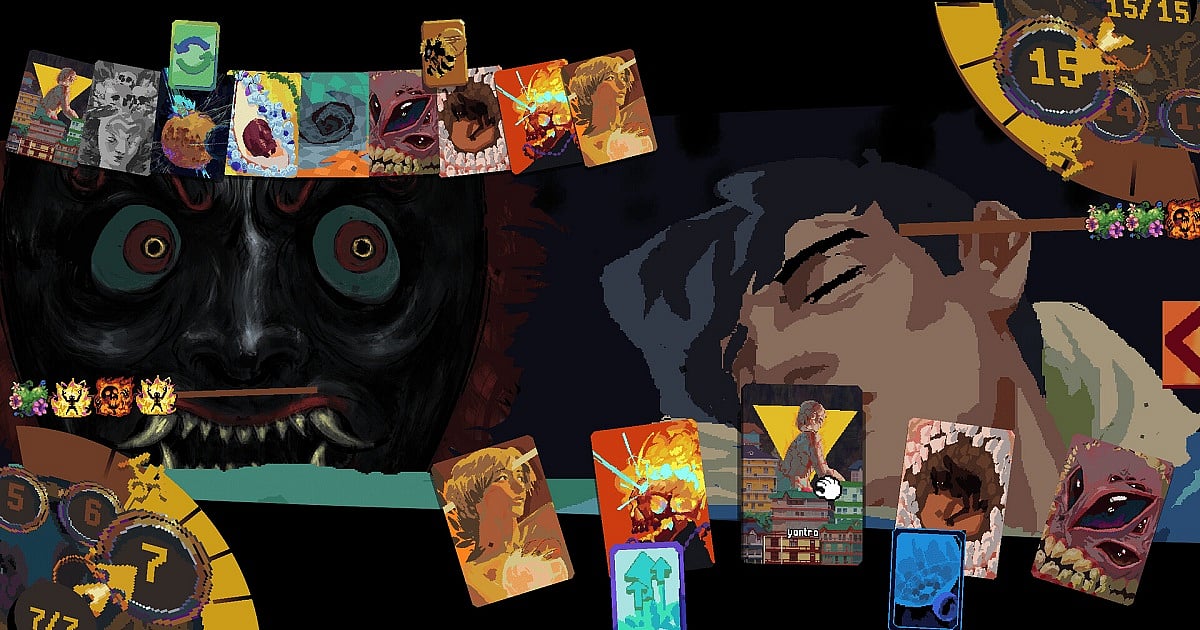
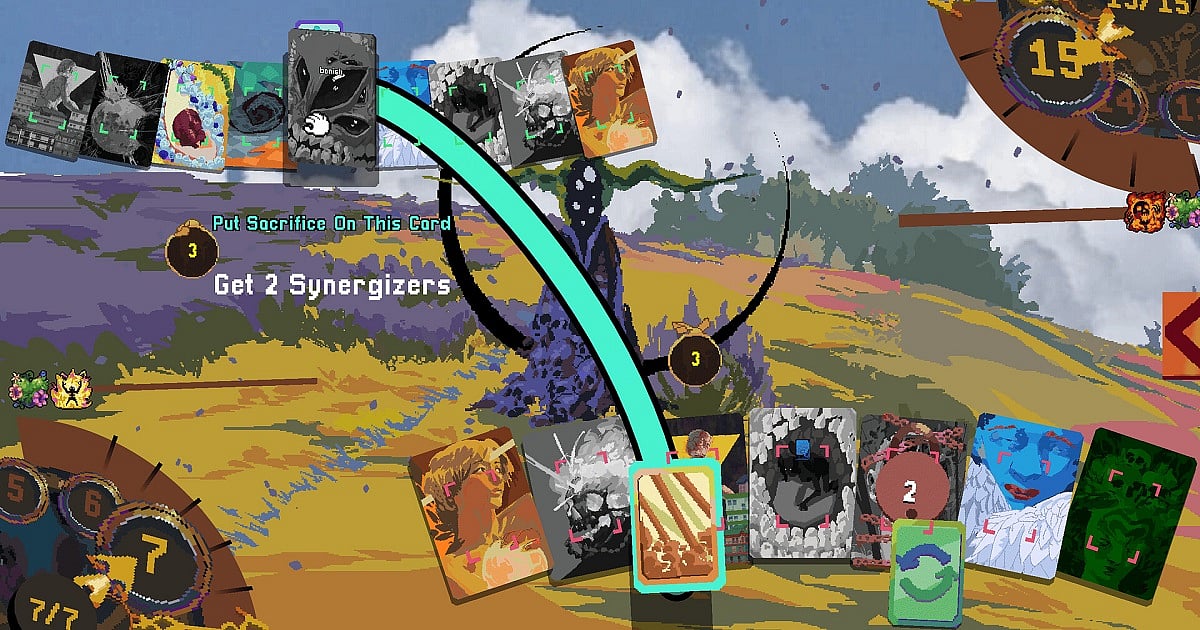
The visual identity shifts alongside the characters' emotional states, moving between pixel art, impressionism, and other styles as the story progresses. The card system underneath was built from first principles by someone who did not come from card games. Early quirks were resolved when Thombare joined. Cards function as verbs, synergizers as adjectives. One synergizer called "Sacrifice" destroys a card and returns something in its place, such as a resource like health. If an opponent destroys your card, you gain from it. The same applies in reverse. Every move carries implications in both directions.
The soundtrack is by Akshay Yagnik, who had worked on OTT series and films before Appa but had never scored a game. The approach was to experiment until a single melody emerged that could carry the idea of the whole game, then build everything else around it. Pancholi's reference points include Radiohead, Low Roar, and Disasterpiece. Yagnik also brought in a Pink Floyd influence.
Finding The Right Players
Appa has crossed 5K wishlists before any real marketing push began. Pancholi says the recent Steam algorithm changes, which shifted visibility away from wishlist counts, may work in their favor. He says, "We are not completely reliant on wishlists as a metric. Steam can help us hyperfocus on trying to find the right players."
Heat Death Studio / Steam
The broader strategy is platform-by-platform and community-first. Instagram has been the strongest channel so far. Reddit is next, with the team working to identify the niche communities where the game is likely to resonate. Plans are also in place for Discord, live streams, and long-form devlogs and art vlogs on YouTube. On the release side, Appa is coming to Steam, Itch, GOG, the Microsoft Store, and Xbox Series X and S.
Pancholi is clear that for him, marketing is not separate from the game itself. He says, "I believe that game marketing starts with and is a part of the game's direction and design itself.” The pre-production groundwork is done, and what matters now is the marketing push and execution.
Building Games in India
The structural challenges of being a small indie studio in India affected the Heat Death Studio team, too. Thombare points to the gap between support that exists on paper and support that actually reaches teams like theirs. Government schemes are difficult to navigate, and it is rarely clear how an indie studio qualifies or benefits. The talent pipeline has its own problem. Most game-related courses do not produce developers who are production-ready, which makes building even a small team harder than it should be.
What has made a tangible difference, Thombare says, are programs like Sony's grants, Xbox's Developer Accelerator, and newer incubator initiatives. The problem is awareness. "Many developers still aren't aware of these opportunities until it's too late."
Appa is, in the end, a game built the hard way. It is an indie project by a filmmaker who taught himself card game design, a team that was assembled slowly, and a story that started as a five-minute jam game. Appa does not have a release date yet. What it has is three years of iteration and a story about a family that could not figure out how to be happy. Whether that is enough to find its audience is the question Pancholi and Thombare are now turning their attention to.

Author
Abhimannu Das is a web journalist at Outlook India with a focus on Indian pop culture, gaming, and esports. He has over 10 years of journalistic experience and over 3,500 articles that include industry deep dives, interviews, and SEO content. He has worked on a myriad of games and their ecosystems, including Valorant, Overwatch, and Apex Legends.
Abhimannu Das is a web journalist at Outlook India with a focus on Indian pop culture, gaming, and esports. He has over 10 years of journalistic experience and over 3,500 articles that include industry deep dives, interviews, and SEO content. He has worked on a myriad of games and their ecosystems, including Valorant, Overwatch, and Apex Legends.