





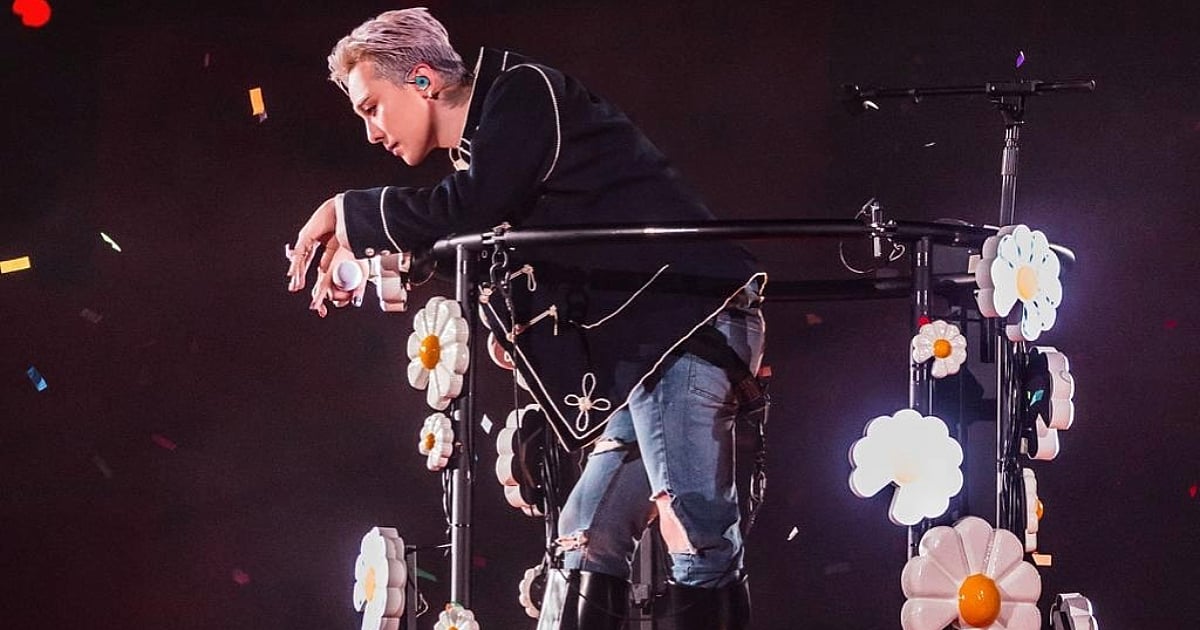
King of K-pop: G-Dragon concludes his record-breaking 56,100-attendee Übermensch World Tour at the Gocheok Sky Dome.
G-Dragon's Übermensch World Tour Redefines K-Pop’s Live Economy
From sold-out concerts to daisy light sticks and premium tie-ins, G-Dragon exemplifies how fans, fashion, merch, global shows, and travel now fuel K-pop's live growth.

- G-Dragon's Übermensch World Tour established a new record for a Korean solo artist, with about 825,000 fans attending 39 of his events worldwide.
- K-pop concert earnings rose in 2025, reaching $228M USD as estimated by Billboard.
- Owing to this trend, fan investment in merchandise, travel, and branding has become a primary driver of K-pop concert economics.
G-Dragon's Übermensch World Tour wrapped up at the Gocheok Sky Dome, jamming 56,100 people together across three nights in Seoul. The 39-show tour reportedly attracted 825,000 people from 12 nations and had multiple sold-out events, setting a new record for a Korean soloist. G-Dragon’s milestone occurs in a year where K-pop's live entertainment economics changes its emphasis, aiming for even larger tours and increased fan involvement.
Touring as a Market Force of K-pop
Amidst a thriving K-pop live scene in 2025, G-Dragon’s solo tours made a significant impact, showcasing strong individual market power by bringing in $27.1 million USD from just nine reported shows. 2025 Billboard Boxscore data further highlighted that K-pop acts made up to 7.7% of the top 100 grossing global tours, reaching $228M by selling 1.6M tickets from 78 reported shows (by May). K-pop concert revenue that year was led by acts like Stray Kids with reported earnings of $185.7M, followed by SEVENTEEN ($142.4M), BTS' J-Hope ($79.9M), ENHYPEN ($76.1M), and ATEEZ ($70M).
G-Dragon Übermensch World Tour Last Show: Fandom Economics in High Gear
Apart from being an economic engine, G-Dragon’s concerts, for many spectators, also served as a grand cultural moment. Almost every fan at the Seoul encore showed off and waved the BIGBANG frontman's Peaceminusone daisy-themed light stick, highlighting a usual ritual. Additionally, merchandising lines started hours before the doors opened for the concert to happen. Nikkei Asia interviewed a fan who said that she spent nearly 20 million KRW (~ $13,785.59) on merchandise and travel between tour stops, highlighting how ancillary spending now accounts for a significant portion of artist revenue.
Concerts have become a hotspot for fashion, media coverage, and travel. G-Dragon's status as a global Chanel ambassador, as well as his fashion upgrades throughout the tour and the year, emphasized the confluence of haute culture with pop performance.
Industry Context and Outlook
K-pop's structural shift to live performance can be seen through mid-year Billboard figures from 2025, which reveal a 79% increase in touring revenue, following a rise of 93% in 2023. This depicts that K-pop concert revenue has tripled in merely two years, indicating the genre's most rapid growth phase on the global charts.
This evolution of K-pop has also positioned streaming and merchandising as the industry's key growth engines, surpassing traditional record sales, as highlighted by G-Dragon's latest tour. The BIGBANG leader's tour showcases how solo brands are capable of maintaining premium, arena-level runs, marking a feat that elevates K-pop from the margins to the core of global concert economics. Also, by translating digital momentum into filled venues, the genre has established a high-scarcity, high-engagement paradigm that will shape the international entertainment market through 2026.

Author
Diya Mukherjee is a Content Writer at Outlook Respawn with a postgraduate background in media. She has a passion for writing content and is enthusiastic about exploring cultures, literature, global affairs, and pop culture.




Related Articles