





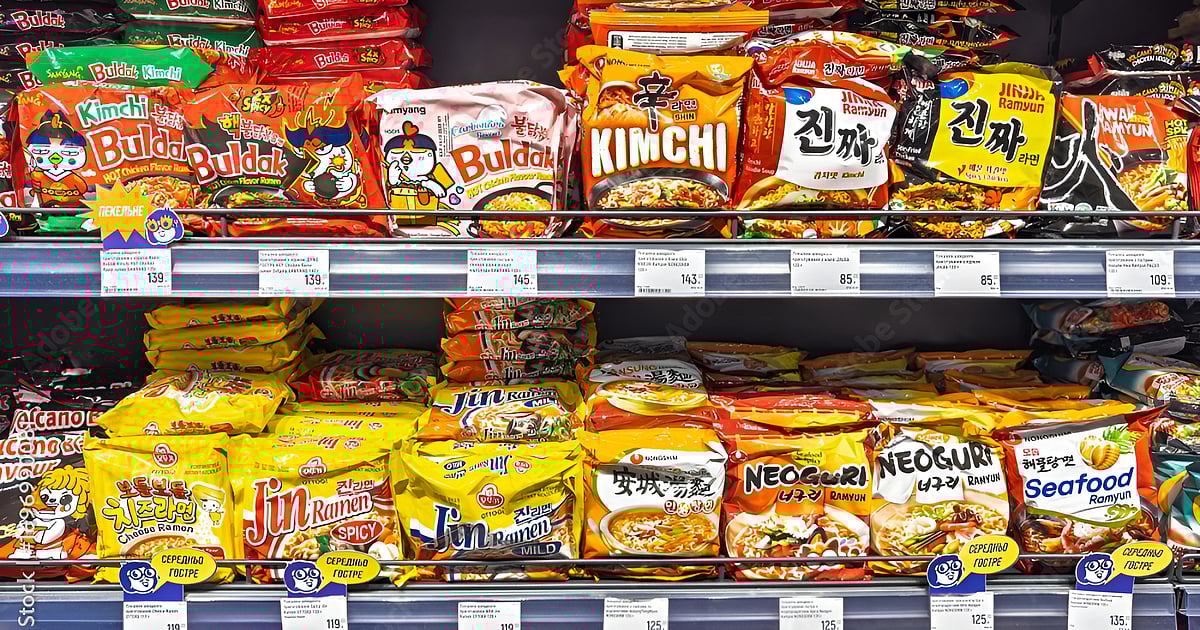
South Korea to boost K-food exports as global demand skyrockets
South Korea to Export More K-Food Via MoUs Valued at $27M
South Korean authorities call for stricter controls, pushing for a Japan-style certification system to protect authenticity amidst an export increase.

- The South Korean Ministry of Agriculture, Food and Rural Affairs is pushing for a $27M export deal to help K-food attain a $16B global target by 2026.
- KPop Demon Hunters, the current K-culture juggernaut, is converting Korean pop culture influence into real demand, boosting a rare $1.52B instant noodle export figure led by Nongshim.
- Amidst the boom, Korea Agro-Fisheries & Food Trade Corporation warns of counterfeit K-food products undermining authentic global growth.
South Korea’s aim to become a global "food superpower" has reached new heights last week as the Ministry of Agriculture, Food and Rural Affairs stated that memorandums of understanding (MOUs), worth a staggering value of $27 million USD, were signed during the Buy Korean Food Plus fair. The event, according to the Korea JoongAng Daily, drew in about 143 buyers from 45 countries, and is the primary booster behind Seoul’s ambitious goal, which is to reach $16 billion in food and agricultural exports by the end of 2026.
KPop Demon Hunters: A Cultural Juggernaut Bolstering K-Food Growth
At the core of this is KPop Demon Hunters, whose influence on food exports has been just as immense. According to Korea Customs Service data reported by the Korea Herald, South Korea's instant noodle exports attained a record figure of $1.52B in 2025, up 21.8% annually. The animated movie, notably, prominently depicts noodle dishes translating into real-world consumer demand.
As per the data from the authority stated above, China accounted for the sharpest rise with 47.9%, as shipments reached $385M. Additionally, exports to the United States (part of North America) grew 18.1% to $255M, although a 15% tariff weighed on that growth rate. Last month, President Lee Jae-myung responded to this K-food boom by announcing an export strategy exclusively tied to the brand of the food items. This strategy will help channel the momentum into a long-term backing for Korean food businesses abroad.
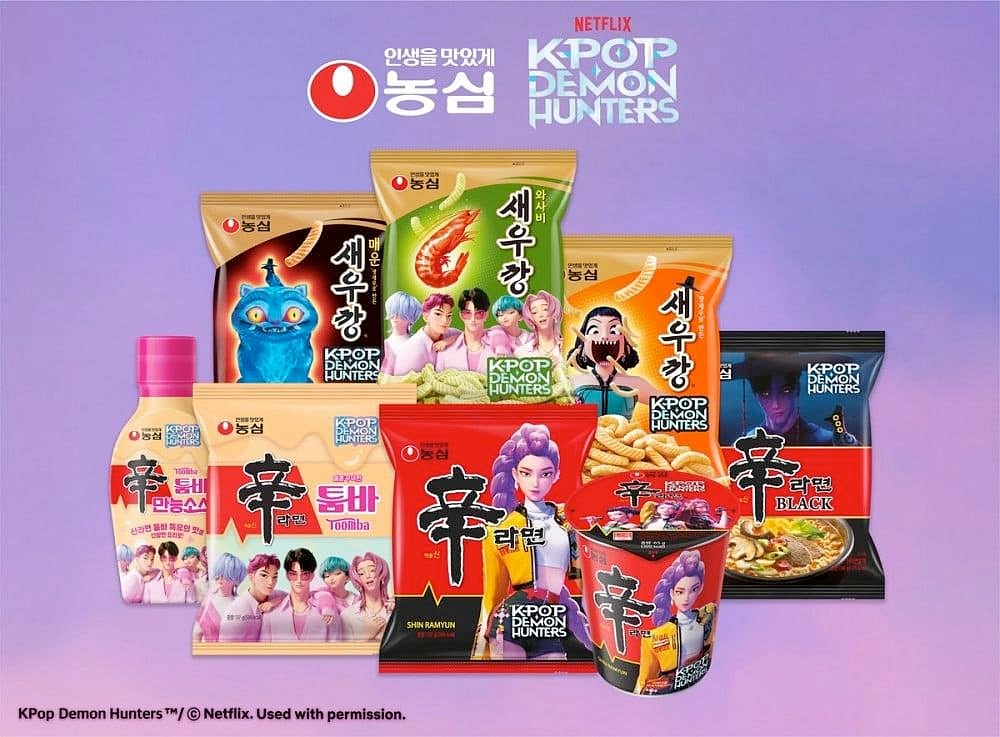
KPop Demon Hunters x Nongshim
Interestingly, Nongshim, the maker of Shin Ramyun noodles, is a massive instance of K-food growth. The company released KPop Demon Hunters character-themed packaging and reported growing exports to the United States, Canada, and Australia.
North America’s Interest in K-Food Rises Alongside Asia and Europe
Furthermore, as per the Global Hallyu Trends Analysis (covering Oct. 2023–Sept. 2024), Korean cuisine has officially overtaken K-pop as the most covered Hallyu category in North America. It accounted for 26.7% of media coverage in the region.
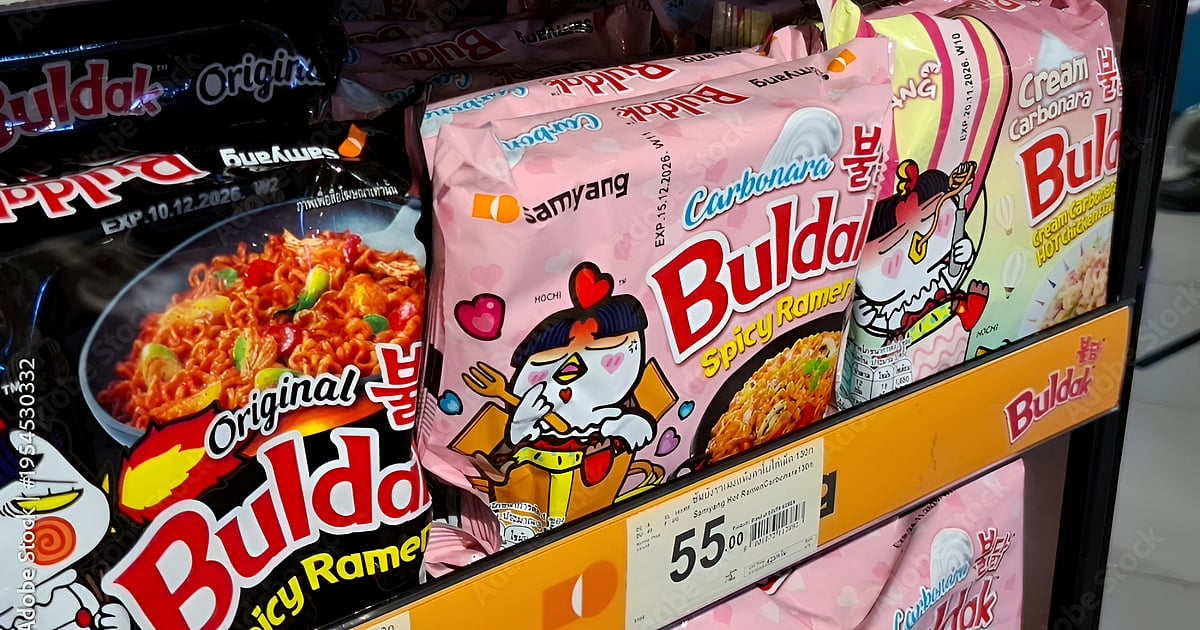
In 2024, the North American region logged popularity of staples like kimchi, soju, and bibimbap, alongside viral items like Buldak Ramen and frozen kimbap. This surged as well as established K-food as the key cultural touchpoint for a large part of the Western audiences.
Nevertheless, North America’s news coverage of the South Korean region accounted for a lesser percentage of 13.6%. However, Asia still leads the total Hallyu-related news coverage at 50.6%, followed by Europe at 27.5%, showcasing evolving interest.
K-Food’s Southeast Asian Foothold Increases with Vietnam Bid
While the West persistently consumes the K-food trend, Korean companies are looking to anchor the industry in Southeast Asia. Amidst this, Vietnam has emerged as a strategic hub. According to Insight Korea, the country had recently overtaken South Korea as the world’s top ramen-consuming nation with 81 servings per capita annually.
Rungphailin - stock.adobe.com
K-food industry giants like Orion and Daesang are no longer just exporting items but are "localizing." According to Insight Korea, Orion’s Vietnam sales recently surpassed ₩514.5B (~ $350M), while Daesang peaked in the local seaweed market. This “territorial expansion,” as defined by the government officials, was further solidified by President Lee Jae-myung’s recent Vietnam visit, which put K-food at the center of cooperation and one of the bilateral diplomatic agendas.
The Warning: A Looming Turning Point for K-Food?
Despite the “K-food boom,” a potential precarious future looms. As per Seoul Economic Daily, Hong Moon-pyo, president of the Korea Agro-Fisheries & Food Trade Corporation (aT), recently spoke from New York, warning about a “critical turning point” for the industry over the next two to three years.
Hong’s primary concern is the expansion of “knockoff” K-food, like Chinese and American-made items using Korean names and packaging to cash in on the trend. “Currently, there is no way to stop counterfeit food products,” Hong stated, observing the compromise on authentic flavors abroad as restaurants bring in non-Korean chefs to save on labor costs.
Securing the Legacy of K-food
To overcome this obstacle, Hong intends to call for a national certification system, a framework modeled after a Japanese initiative of the same nature, to guarantee the authenticity and quality of the product. This policy push, coupled with aT’s growth outlook into logistics hubs like Houston, Texas, intends to protect the “K-brand” while also highlighting and solving domestic structural risks like rural aging and low feed self-sufficiency.
As South Korea chases its $16B aim, the challenge posed is clear: the industry must walk beyond a viral trend and root in a regulated, authentic global framework that can hold out against the rise of counterfeit products.

Author
Diya Mukherjee is a Content Writer at Outlook Respawn with a postgraduate background in media. She has a passion for writing content and is enthusiastic about exploring cultures, literature, global affairs, and pop culture.




Related Articles