



Highlights
- Nex Playground nears 1M sales, driven by strong 2025 momentum, Black Friday demand, and broad U.S. retail expansion.
- AI-powered, controller-free design targets family living rooms, using camera-based motion tracking instead of traditional gamepads.
- Lower pricing and subscriptions fuel growth, with a $249 base price, $199 promos, and an $89 Play Pass supporting recurring revenue.
The Nex Playground console, an AI-powered, motion-based gaming system designed for families, is on pace to surpass 1M lifetime unit sales in the first half of 2026, according to its maker.
Built by U.S.-based start-up Nex Team, the console has posted an unusual late-cycle hardware breakout in North America, driven by holiday demand, broad retail placement, and a focus on controller-free play.
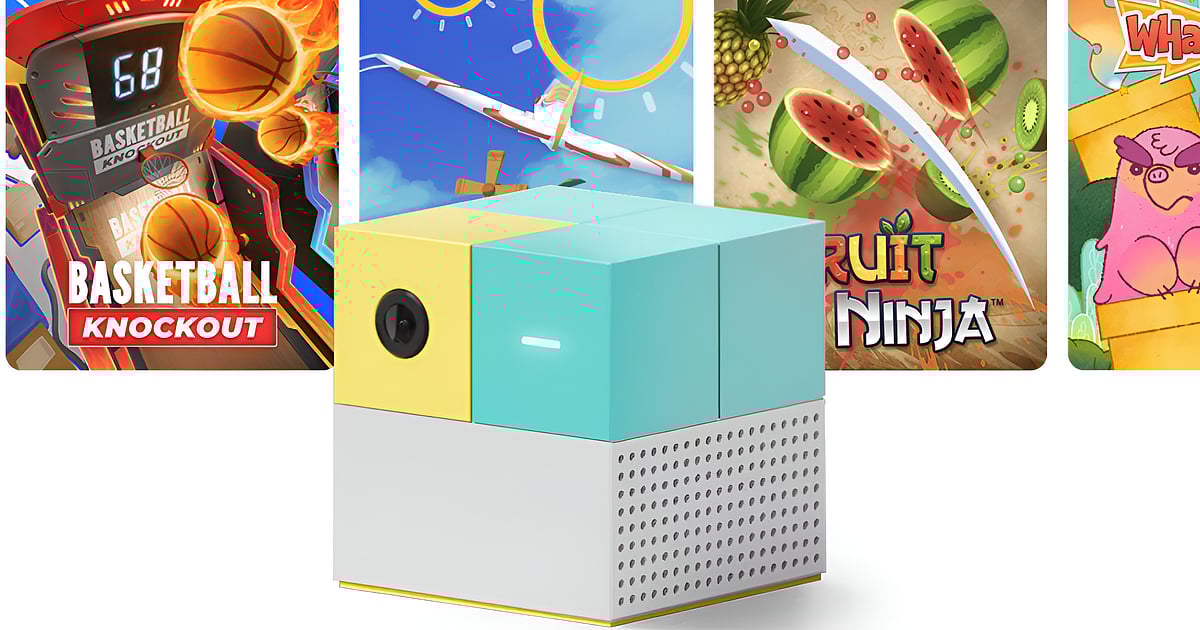
Launched in December 2023, Nex Playground uses a built-in RGB camera and on-device AI to track body movement, This allows players to control games without handheld controllers, with a clear focus on shared, family-friendly living-room play rather than high-end performance gaming.
Sales growth has been steep, with Nex shipping about 5K units in 2023 before rising to roughly 150K units in 2024 after securing shelf space at Walmart, Target, Best Buy, and online e-commerce platforms such as Amazon.
In 2025, the company has sold more than 635K consoles thus far, bringing cumulative sales close to 800K units. Nex expects to cross the 1M mark by mid-2026, even as high demand has made the console difficult to find at times.
Amazon
Nex Playground Console Sales Surge After Black Friday
The console’s profile rose sharply during Black Friday, when a temporary price cut to $199 from its $249 list price helped accelerate demand.
Circana data showed Nex Playground briefly surpassing Xbox in weekly U.S. unit sales, ranking second for the week ending Nov. 22, 2025, and third the following week. The appearance marked a rapid shift for a device that had barely registered in industry tracking earlier in the fall.
Holiday pricing, unchanged Xbox prices, and wide distribution across major retailers and social commerce channels combined to drive the spike. Nex sold more than 300K units in the 12 days leading up to Nov. 22 and is now tracking toward roughly 600K units sold for the year.
For 2025, the company projects more than $150M in revenue and expects to break even for the first time.
Nex Playground
Nex Playground Console: AI-Powered Gaming Console Built on Motion, not Specs
Nex Team’s approach reflects lessons learnt from earlier motion-based systems such as Nintendo Wii and Microsoft Kinect, but replaces dedicated sensors with software-driven AI. The console runs on Android-based hardware with modest graphics targets, while investing in a neural processing unit to power real-time motion tracking.
“We built something that people wanted, but we built for the wrong platform,” co-founder and CEO David Lee said, describing how the company’s earlier mobile hit, the AI-powered basketball app HomeCourt, revealed far higher engagement when played on TVs.
That insight led Nex to commit to dedicated hardware after failing to find a smart TV platform that could support its ambitions. “Having a hardware component allows us to deliver the best experience,” Lee said.
Affordability has been central to the strategy, with Nex Playground priced at a Recommended Retail Price (RRP) of $249 and dropping to $199 during peak promotions. “It was really important to keep the price affordable, because we serve families,” Lee said, adding that the single-camera setup eliminates the need for multiple controllers, keeping costs well below next-generation gaming consoles such as Xbox Series S (from $399.99), Switch 2 ($449.99), Xbox Series X (from $599.99), and PS5 ($549.99 with a disc drive).
The business model centers around a $89 annual subscription, Play Pass, which provides access to the game library. Lee stated subscriptions allow Nex to continue investing in content while aligning with parents’ expectations around predictable spending.
Most games on Nex Playground are exclusive, split between internal development and second-party projects created with partner studios. Licensed properties, including Bluey, Barbie, Unicorn Academy, and Teenage Mutant Ninja Turtles, have played a role in building trust with parents and recognition with children. “Having something like Bluey on our platform helps build credibility,” Lee said.
The company has also expanded into sports content through partnerships such as the National Hockey League (NHL). President Thomas Kang said interest from other leagues has followed, as Nex positions games as an entry point for children to learn rules and skills before participating in real sports.
Backed by investors including Mark Cuban, Blue Pool Capital, Samsung Ventures, and high-profile athletes and entertainers, Nex Team says it is approaching a self-sustaining position and is not seeking new funding. International expansion is planned for Europe in 2026, followed by select Asian markets, with a measured rollout focused on localization.
As growth slows across traditional gaming hardware, Nex Playground’s rise underscores how AI-powered gaming consoles aimed at families can still scale by targeting underserved audiences rather than competing on specifications.