



Highlights
- Strategy games accounted for 12% of India's mobile game IAP revenue in 2025, with revenue growing 40% year-on-year.
- Familiar decision-making in cricket and traditional games may help explain why strategy experiences resonate with Indian players.
- A maturing, paying audience is creating new opportunities for Indian developers to build strategy games.
This story was authored by Kashyap Reddy, Co-Founder and CEO of Metasports Interactive.
Indians have always enjoyed games that make you think.
Long before gaming became something we did on phones, we were playing chess, cards, carrom and countless other games where anticipating the next move mattered. Cricket is perhaps the biggest example. At its best, cricket is not just about physical ability. It is about reading the situation, understanding matchups, managing limited resources and making a decision now for something that may play out several overs later.
So, the rise of strategy games in India doesn't feel like the arrival of a completely new behavior. It feels like technology has given an existing one a new format.
The Numbers Behind the Behavior
The market is beginning to reflect the change. According to MIXI Global's India State of Play Report 2026, strategy accounted for 12% of India's mobile game IAP revenue in 2025, second only to shooters at 43%. More interestingly, strategy game revenue grew 40% year-on-year, making it one of the fastest-growing major gaming categories. Sensor Tower also recorded 42M strategy game downloads across Asia in 2025.
But the numbers alone don't explain why strategy works particularly well in India.
A lot of our everyday games are built around imperfect information. You don't know what card the other person is holding, or what your opponent will do next. You have to make the best decision with what you know and adapt when the situation changes. There is a certain satisfaction in being right not because you reacted faster, but because you understood the situation better.
That is the feeling strategy games can recreate.
Steam / Microsoft
We've seen this closely while building Hitwicket. Cricket gives players an immediate connection because they already understand the sport. But familiarity alone doesn't keep someone playing. What keeps them engaged is the ability to make decisions: which player to pick, how to approach an opponent, when to take a risk, how to recover from a mistake. The sport gets you through the door; the decisions give you something to master.
A strategy-driven experience leaves room to learn from one's own decisions; to experiment, make mistakes, and approach the next match differently. That produces a deeper engagement loop than winning or losing on its own, one built around gradually getting better at reading the game itself.
And that distinction is becoming more important as India's gaming audience matures.
A Maturing, Paying Audience
The strategy player isn't necessarily a person who would describe themselves as a "gamer." MIXI Global's data shows that 46% of Indian strategy players are aged 25 - 44. This is an audience that has grown up with games, but is also increasingly looking for experiences that give them agency and depth rather than simply demanding faster reactions.
The audience is expanding geographically too. Tier-2 and Tier-3 India is becoming an increasingly important part of gaming, as access to smartphones, payments and better connectivity removes barriers. Indian mobile game IAP revenue has doubled between 2020 and 2025, suggesting that this isn't just an audience that is playing more; it is also becoming more willing to spend on experiences it values.
Steam
Even the way people pay is changing. Niko Partners reports that 31.5% of Indian players prefer purchasing in-game content outside traditional app stores, through web stores, third-party stores and top-up cards. For developers, that is a sign of a gaming audience becoming more sophisticated in both its expectations and its behavior.
For us, the interesting question isn't simply why strategy games are growing. It is what Indian developers can build by starting with behaviors that already feel familiar.
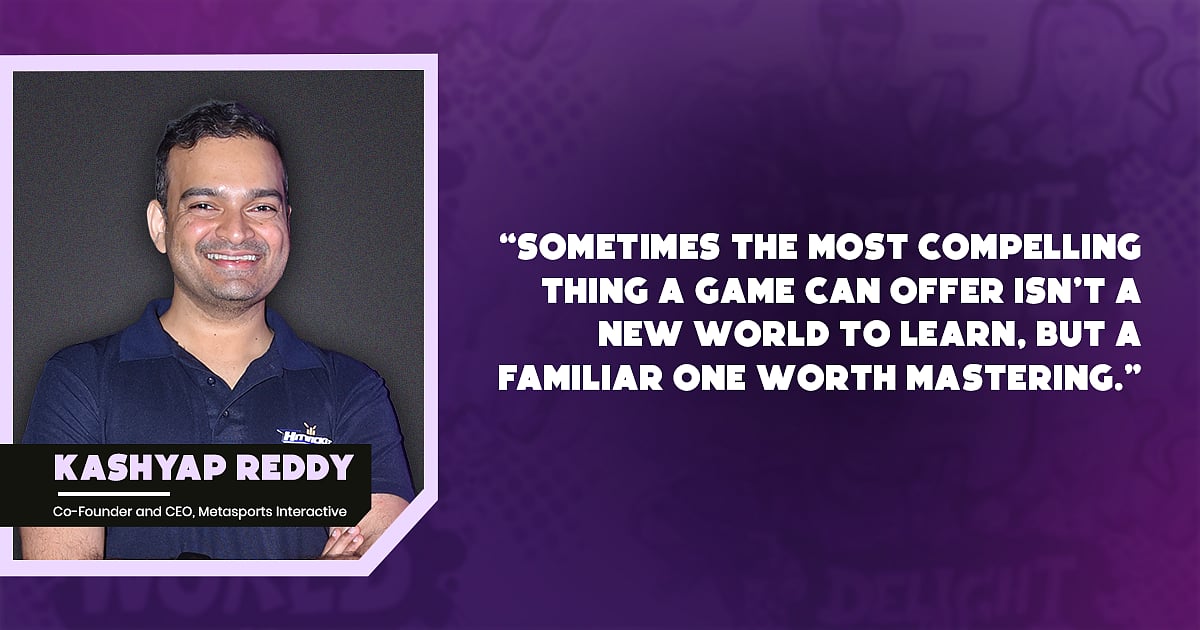
Sometimes the most compelling thing a game can offer isn't a new world to learn, but a familiar one worth mastering.