




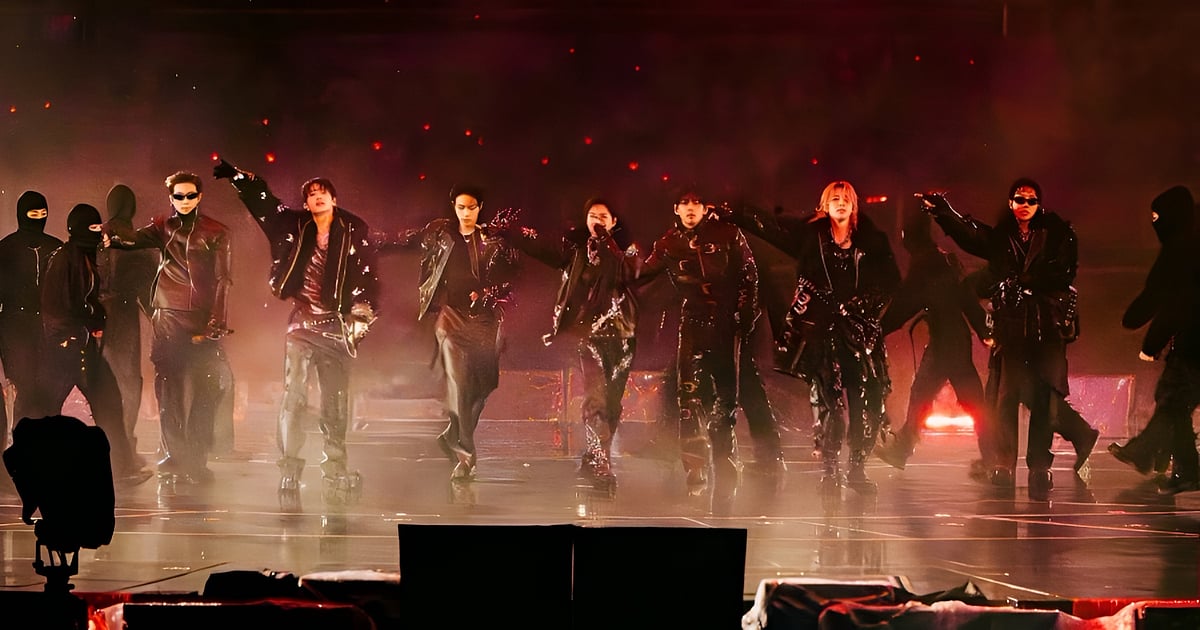
- BTS turned a three-night concert run into a ₩55.5 billion (~$37.3M) economic engine, demonstrating that live shows can generate high-density revenue.
- This fandom tourism is further boosted by repeat attendance and group travel, with most visitors from Asia.
- Areas around Goyang Stadium saw growth in local spending, especially at cafes and convenience stores, emphasizing the immediate impact of concerts on small businesses.
The music was only one half of the story when the lights lit up at the Goyang Stadium in South Korea, kicking off the BTS Arirang world tour this April. Over the course of three nights, the group turned the stadium and its surrounding areas into an economic powerhouse, producing a remarkable ₩55.5 billion (~ $37.3 million USD) in foreign consumer spending. Data released around April 13 to April 14 by Hana Card and the Korea Culture and Tourism Institute showed that the “BTS economy” grew faster and more strongly than conventional tourism models.
The figures released were as loud as the fans in the Goyang Stadium. About 30,000 visitors from abroad visited between April 9 and April 12, 2026, with each of them spending an average of ₩1.85M (~ $1,248.3). Reports confirmed that these visitors were not casual tourists, but devoted Korean pop culture fans, BTS followers, who purchased an average of 2.1 tickets per person. As per the company's findings, this purchasing pattern exposes a unique trend of repeat attendance, with fans returning for multiple shows within a single tour run.
Fandom Travel Tied to BTS Concerts Drives Revenue Surge
Moving past an individual’s personal commitment to the band, the numbers emphasize a culture of shared experience. In many cases, these visitors or fans are not attending the concerts solo but are bringing companions to share the experience and scale of the spectacle. Such collective experiences act as a key driver for high-volume, multi-show attendance and regional travel. This is further substantiated by additional data, which revealed that 1.1M foreigners entered South Korea in the first three weeks of March, indicating a 32.7% jump from last year. Notably, the heaviest influx was made by fans in their teens and twenties.
Although the fandom is global, the core of this expenditure remains regional. Of all overseas buyers, Japan led the charge at 32%, followed by Taiwan at 12%, the Philippines at 7%, and Hong Kong and the United States, both at 5%. All in all, data showcases that more than 75% of the attendees came from Asian countries, reiterating the regional power and popularity held and sustained by the K-pop industry in these areas.
Hyperlocal Spending Rewrites Retail Patterns
The economic ripple did not just stop at the stadium gates but crowded the local streets as well. In the commercial districts around Goyang Stadium, foreign card transactions surged by 807% in comparison to the week before the three-night show, reported Korean media outlets like The Korea Times, The Seoul Economic Daily and The Dong-a Ilbo. Additionally, the total number of cards used soared by over 1,200%. The hyper-local effect of these BTS concert dates was best visible in convenience stores and cafes, where transactions shot up by more than 1,000%. Restaurants and retail outlets weren't far behind, and logged profits amounting to roughly 600%.
These fans spend in a distinctive manner that separates them from a conventional tourist. According to the Hana Card and the Korea Culture and Tourism Institute data, they focus more on the experience over souvenirs, spending an average of ₩616,000 (~ $416) on airfare and ₩480,000 (~ $324) on accommodation. Although their general shopping expenditures of ₩314,000 (~ $216) were lower than the ₩396,000 (~ $267) spent by normal tourists, they had an increase in on-site consumption at cafes and convenience stores. This pattern of concentrated, instant spending brings a vital, short-term life to small businesses and neighborhood retailers.
K-pop Concert Economics Becomes South Korea’s National Strategy
This "concert effect" is becoming a common template of profitability in South Korean economics. During BTS’ earlier comeback performance at Gwanghwamun, retail giants like GS25 and CU saw sales at adjacent stores climb as much as 6.5 times. In today's era, the cumulative economic ripple effect of a single BTS concert is now projected to range between ₩619.7B and ₩1.22T (~ $418M to $823M).
BTS performs at Gwanghwamun Square during their first full-group concert in nearly four years. The open cube stage was designed by Florian Wieder and Guy Carrington. (Credit: BigHit Music/Netflix)
As Hana Card officials noted, large-scale events such as the one tied to BTS have become the core of South Korean tourism. They drive huge amounts of foreign capital into the country within a short period of time. Through platforms like Nol Universe, the industry is now using similar data to build personalized services for a fandom that doesn't just watch a show, but moves markets with sheer force. As for Goyang and the rest of South Korea, BTS is a revenue generator worth multi-billion won.