K-pop’s rapid release model sparks “fast fashion” debate as its global production system reshapes the music industry.
Beyond the Fast Fashion Factory: Is K-pop Being Unfairly Labeled?
As K-pop begins to industrialize creativity globally, it's facing a bias of a certain kind from Western pop systems.

- K-pop’s release model emphasizes frequency and collectible value, making music a product that is refreshed continuously via multiple cycles instead of being a single artistic event.
- This rapidity has enabled a “fast fashion” critique of K-pop to surface that often ignores similar industrial practices that exist worldwide, showcasing uneven cultural scrutiny, rather than highlighting true structural differences.
- What is depicted as a formula-based framework on the surface, is actually a coordinated system made in order to test, refine, and scale creativity; further embedding it deep into enduring cultural storytelling.
The aesthetic of K-pop is highly glossy, but the logic is very much industrial in nature. As the genre solidifies its status as a global phenomenon, a polarizing question has risen, asking if K-pop has become the "fast fashion" of the music world?
High-Output Comebacks and Algorithm-Driven K-pop
K-pop’s structural comparison made with “fast fashion” can be almost impossible to ignore. Much like the rapid-fire inventory cycles of fast fashion brands, the K-pop genre functions on a model of continuous output. Although Western acts like Taylor Swift or Billie Eilish might spend two to three years crafting a single project, any well-known K-pop group can churn out fifteen to twenty songs yearly throughout a series of "comebacks." This includes the surge of mini-albums as well, which are short-form records usually under twenty to thirty minutes (for instance FACE by BTS Jimin), sold in multiple physical versions with merch like photobooks and photocards to emphasize more on the collector demand over coordinated artistic statements.
Shortening of sound production through various mediums in K-pop has radically altered the product. Contemporary sonic arrangements are often optimized today for five-second scrolls, moving away from usual bridges and thinning production to aim for social media virality. Like fast-fashion brands replicating runway trends, K-pop agencies now use data-driven marketing to create concepts, like dark, cute, retro, or Y2K nostalgia to catch up to the upcoming commercial wave before it breaks. Additionally, many allege on social media platforms and forums like Reddit that K-pop often tracks Western house music to create most of their concepts.
Is the “Fast Fashion” Critique A Cultural Bias Against K-pop?
Perhaps, no. Several experts are of the opinion that such labels carry a unique cultural dilemma. They argue that Western labels also utilize similar tools to K-pop, like rotating songwriting teams and market-tested sounds, without facing the same dismissive branding.
This, according to many social media discussions, indicates that the criticism may be less about the music and more about an existing bias against the Asian genre’s origins, which is now experiencing an industry-wide shift owing to the present streaming economics in play; with such elements in the scenario, it almost feels like the labels are being regarded as a uniquely Korean flaw, which might not be the exact case.
K-pop as a Scaled-up Creativity System
Viewing the K-pop system only through the lens of mechanical reproduction could cause structural misreading. Notably, Han Sang-jin, a professor emeritus at Seoul National University and a well-known sociologist, writes in the Korea Herald that for K-pop, what appears as a standardization on the outside is potentially a "knowledge-based system of cultural production," in reality.
By citing the "new intellectual" framework proposed by ex-Korean President Kim Dae-jung in 1999 at the National Convention for Rebuilding Korea, Han opines in his Korea Herald article that corporate and cultural entities like HYBE and BTS showcase that creativity is only scaled by an organizational structure. “What is being systematized is not simply labor, but the process through which creativity is generated, tested and expanded,” he wrote in the publication.
Furthermore, Isaac Lee of HYBE America defines the K-pop system as a "synchronized" architecture that is based on a repeatable methodology. And this methodology incorporates development, production, and engagement, which is adaptable across borders.
For instance, the evolution of BTS could serve as a key case study for the introspection of this idea. The group's comeback, dubbed as "BTS 2.0," has seen a tactical reduction in choreography, yet a high-end focus on musical identity. This reveals that BTS isn't just adjusting; it is re-examining the principles of the system that created K-pop.
It showcases that K-pop today has dismantled its old, unidirectional broadcast model which traveled from label to radio to listener. By utilizing Weverse and AI translation, the genre today has replaced the traditional methods and gatekeepers with a live feedback loop, to sustain a continuous global dialogue with the fans around the world.
From Mass Production to Cultural Narrative Power
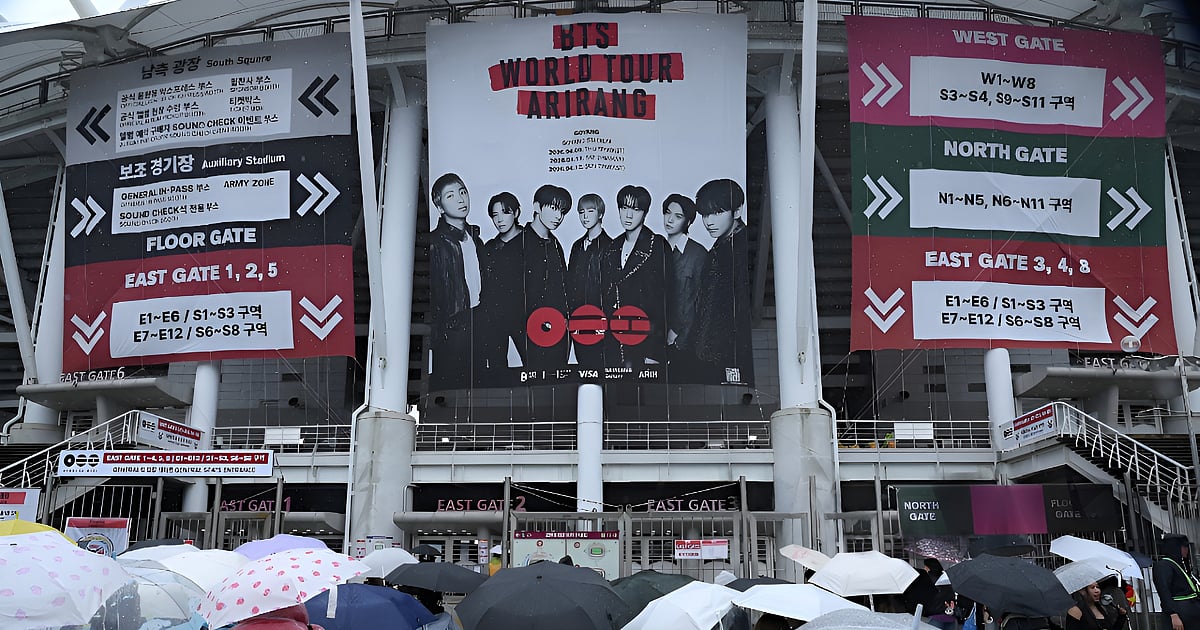
The symbolic weight of this pivot was showcased in BTS’ Gwanghwamun concert in Seoul, which linked heritage with modern media circulation. Through this, the K-pop industry depicted that it is now creating layered cultural narratives, instead of just producing songs.
If K-pop is in fact the “fast fashion” of music, then it is a type of the industry, a kind of “factory,” that has learned to codify creativity without minimizing it. However, the real question today does not lie in the organizational capability of the system; it rather points towards a deeper skepticism asking why global observers are quick to tag this success as a mere "exception," when most of them potentially bypass the similar functionalities of other industries.
Author
Diya Mukherjee is a Content Writer at Outlook Respawn with a postgraduate background in media. She has a passion for writing content and is enthusiastic about exploring cultures, literature, global affairs, and pop culture.

Related Articles