



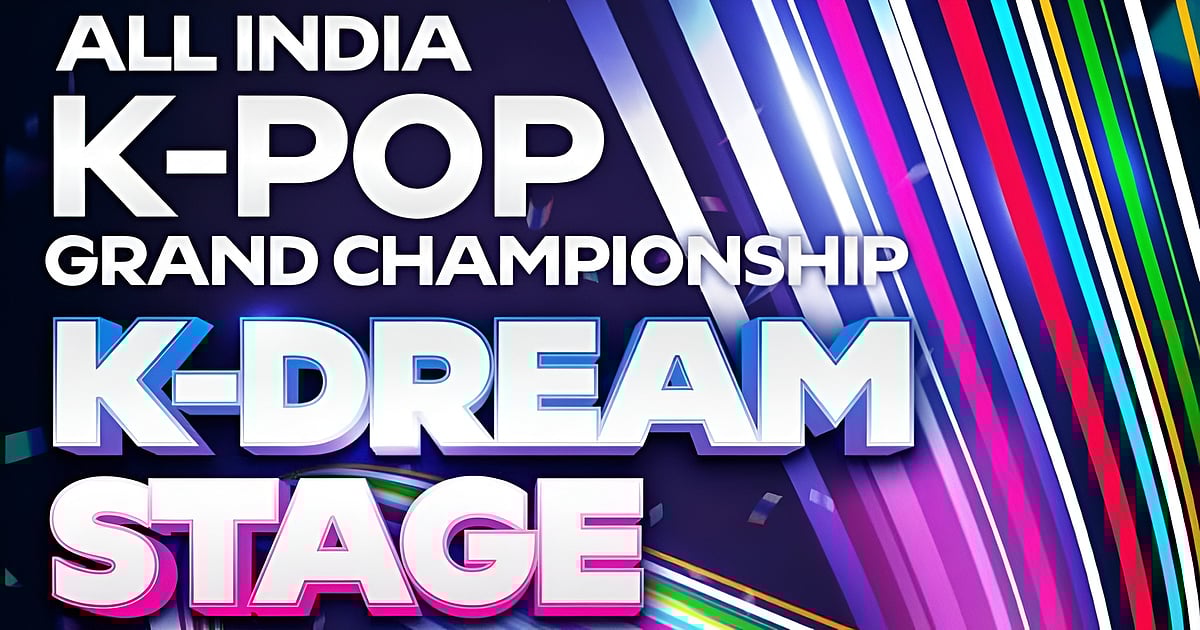
- The K-Dream Stage 2026 at the Yashobhoomi Center, New Delhi, blended competition and concert, with top talent alongside a premier guest list.
- Organized by Korean Cultural Centre India, the event showcased the deepening cultural ties between India and Korea, in the presence of South Korea’s First Lady Kim Hea Kyung and JYP Entertainment founder Park Jin Young.
- Backed by K-pop fans, the convention center's “mini Seoul” environment mirrored the genre’s emergence as a mainstream cultural force in India.
On Monday, April 20, Yashobhoomi in Dwarka, New Delhi, tuned to beats and synchronized choreography set to Korean lyrics, indicating the massive success of the K-Dream Stage 2026. This wasn’t just another localized K-pop event in India, but a full-blown competition, a concert, that highlighted the growing South Korean cultural influence in India.
What was the K-pop event held in Delhi?
The K-Dream Stage: All India K-Pop Grand Championship 2026 acted as a premium arena for the country’s top-tier performers. This K-pop event featured a level of talent that closed the gap between India and South Korea, featuring soulful vocalists and K-pop dance performance that India won’t soon forget. The stage very much mirrored the professional rigor the global K-pop industry is known for. The event featured live performances by popular Indian singer Dhvani Bhanushali and the South Korean group Younite and X:IN, integrating local vocal prowess with international idol energy.
Who organized the K-pop competition in Delhi?
The All India K-pop contest was a Korean Cultural Centre India event, which converted the Delhi Arena into an entertainment hub, as well as the core of diplomatic and cultural exchange. The importance of the event was highlighted by the presence of the South Korean First Lady, Kim Hea Kyung. After seeing the number of K-culture enthusiasts at the show, she noted that culture has a unique power that transcends borders. She further described this event as a fusion of "India’s passion" and "Korea’s dreams." The judging panel also reflected the prestige of the show, as it featured Lee Woo Chang, Head of HYBE India, renowned dancer Lip J, and Park Jin Young, Co-chair of the Popular Culture Exchange Committee and the founder of JYP Entertainment, all of whom noted the burgeoning evolution of K-content in the region.
Why was Delhi called 'mini Seoul' during the event?
The "Delhi mini Seoul event" tag emerged not because of the stage, but due to the audience. A diverse crowd encompassing all age groups and genders didn't just watch the show; they participated. The chants of Korean words like daebak (awesome) and saranghae (I love you) created an immersive experience that made it hard to believe that the venue was in Delhi rather than in Seoul. This Delhi Kpop event highlighted that the "Hallyu" or the Korean wave has crossed beyond the observation phase and has been generating active, bilingual participation in recent years. Therefore, it effectively turned a small area of the Indian capital into a vibrant base of Seoul’s music scene.
South Korean First Lady and JYP Entertainment founder J.Y. Park attending the K-Dream Stage: All India K-Pop Grand Championship 2026 in New Delhi, India. (Image Credit: X/Yonhap/Korea JoongAng Daily)
How big is the K-pop fanbase in India?
The magnitude of this Delhi K-pop performance emphasizes a huge, organized pivot in the local media consumption. K-pop fans in India have notably grown from casual listeners into self-sustaining, cosmopolitan communities. Apart from the massive event of the All India K-pop contest, these fans come together for domesticized events like listening parties and celebrations for artists' birthdays and film & music releases. Also, global groups like BTS and BLACKPINK have structurally changed the landscape, showcasing that language is no longer an obstacle for non-Koreans, including the urban Indian youth.
Why is K-pop so popular in India?
The catalyst of K-pop’s popularity in India is the global standardization of non-English hits. As Korean culture in India continues to flourish, songs like BTS’ Dynamite and BLACKPINK’s How You Like That have become common music choices on Indian streaming platforms. By overcoming the linguistic monopoly of Western pop, K-pop has given the music industry and the fandom culture a new template—one that is built on high-production values, relatable digital personas, and a shared dream,” an idea that the First Lady also aptly identified. What the K-pop event Delhi witnessed on Monday was something more than India’s affinity with Korean music and its broader culture. It shows that India is no longer chasing the Korean pop culture trend, but rather is making it an integral part of its very own, unique cultural climate.