





The 2025 Hallyu report confirms K-pop as global gateway to South Korea, with BLACKPINK leading individual media coverage with a massive 14.2% share.
K-pop Bolsters South Korea’s Soft-Power Surge: Govt. Report
Food, travel, and streaming are driving Korea's soft-power economy, says a government review that examined 1.5 million global media citations.

- K-pop continued to be the primary driver of Hallyu media attention in 2025 in all significant overseas markets.
- Beyond music, the Korean Wave spread to other industries, including literature, food, travel, and streaming hits.
- K-content's position as a strategic economic asset was further strengthened by strong global interest and streaming expansion.
Over the past year, K-pop has continued to be the main force behind the global dissemination of Korean cultural content. According to South Korea's 2025 Global Hallyu Trend Analysis Report, the genre received the most international media coverage across major regions.
The Korea Culture Information Service Agency and the Ministry of Culture, Sports, and Tourism released the study on February 25. Between October 2024 and September 2025, data was gathered from 30 different countries, encompassing 1.5 million articles and social media posts from foreign media.
K-pop's media dominance
K-pop continues to dominate the "Hallyu" trend, receiving the greatest amount of media attention in all international markets. The report shows that coverage of the genre accounts for 38.1% of Hallyu-related media in Latin America, 32.3% in North America, 31.8% in Asia, and 24.5% in Europe.
K-pop media share by artist/member, 2025:
- BLACKPINK (group) — 14.2%
- Rosé — 9.0%
- BTS — 7.3%
- Jennie — 5.0%
- Lisa — 5.0%
- NewJeans — 3.0%
- Jisoo — 2.6%
With a commanding 14.2% share, BLACKPINK remains the center of this worldwide coverage. Rosé ranked second individually with 9%, followed by BTS at 7.3% and NewJeans at 3%. Individual brand strength within BLACKPINK is also on the rise, with Jennie and Lisa at 5% each and Jisoo at 2.6%.
The United States continues to be the leading force behind Hallyu discourse worldwide, followed by Vietnam, Argentina, and India as important secondary locations for Korean cultural coverage. K-pop continued to dominate the U.S. market in particular, making up 33.8% of all Korean content media. Movies (21.8%), TV shows (12.7%), and K-food (11.6%) trailed far behind music, underlining its role as the entry point for Korean culture in the West.
The Broadening Korean Wave
The report also documented the expanding global influence of other Korean cultural exports, particularly in streaming, tourism, and cuisine.
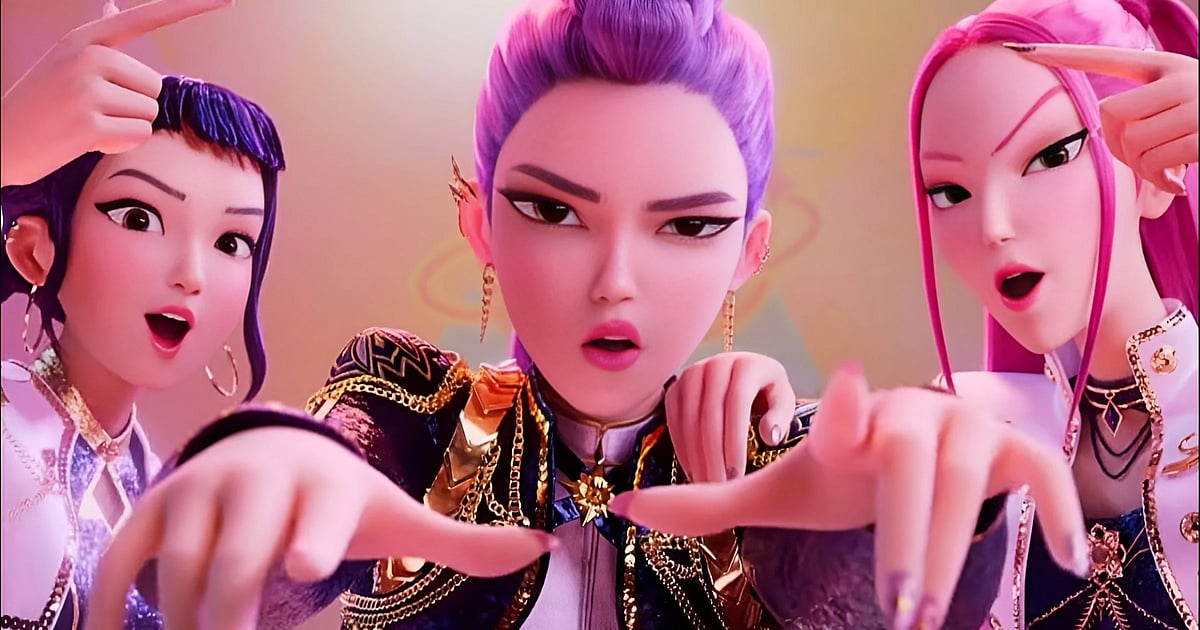
KPop Demon Hunters, Netflix's animated film, attracted a massive international audience after surpassing 300 million views on the platform, and increased demand for Korean cultural products in a number of regions.
The platform's When Life Gives You Tangerines rekindled interest in Jeju Island as a travel destination after its release. Shortly after its premiere, Squid Game Season 3 topped streaming charts in 93 countries, further extending the franchise's global reach.
Korean food also gained ground overseas. Terms like "kimchi," "soju," "ramen," and "bibimbap" trended worldwide, boosted by their appearances in widely watched content like Squid Game and culinary competition shows like Culinary Class Wars.
The report also indicated that Hallyu's cultural influence was expanding through Korean literature. In African countries, K-literature gained substantial traction, while K-films received the most attention in Oceania.
Market indicators and economic context
Despite a recent decline in domestic physical sales in South Korea, K-pop has posted record-breaking growth worldwide. According to Korea Customs Service data, physical album exports topped $301.7 million in 2025, up 3.4% from a year earlier. The gap points to a "decoupling" in which demand abroad now operates independently of domestic patterns.
K-pop's digital presence kept pace with the industry's broader expansion. Global music streaming reached 5.1 trillion plays in 2025, a roughly 10% increase from the previous year, according to Luminate's year-end report. K-pop artists continued to play a significant role in the genre's sustained performance on streaming platforms.
Policy and strategic importance of K-content
Officials described the Korean Wave as a "strategic national asset," citing its importance as a driver of the nation's industrial edge and soft power. Lee Eun-bok, director of overseas public relations policy at the Ministry of Culture, said the findings will now guide the next generation of international outreach policies.
From the worldwide K-food boom to the viral explosion of K-pop, Korea's cultural output has developed into a sustainable economic ecosystem across media, tourism, and lifestyle sectors, strengthening the nation's global influence and reshaping consumer habits around the world.

Author
Diya Mukherjee is a Content Writer at Outlook Respawn with a postgraduate background in media. She has a passion for writing content and is enthusiastic about exploring cultures, literature, global affairs, and pop culture.